

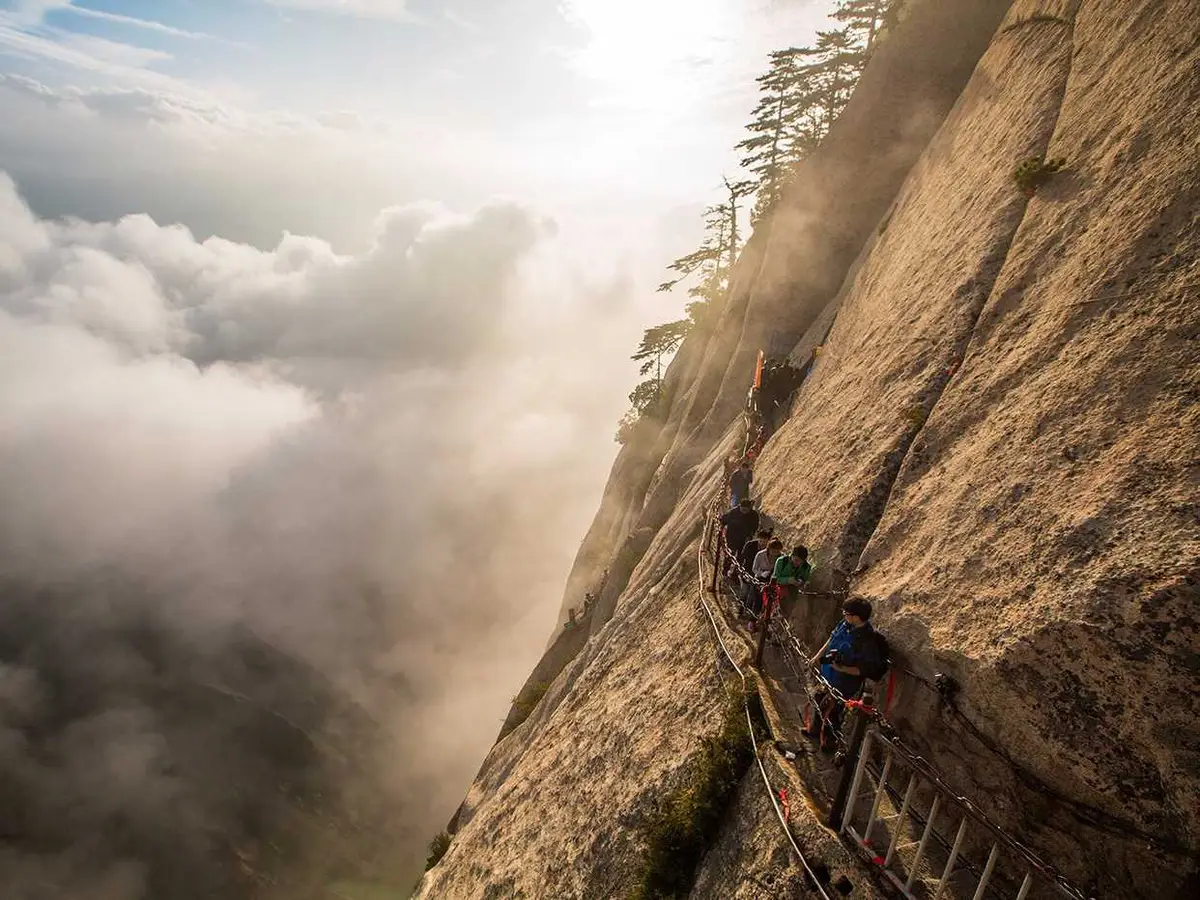
Some trails whisper.
Some sing.
And some look you straight in the eye and dare you to take another step.
Hiking can feel like stepping into a painting. But in certain corners of the planet, the canvas is painted with cliffs, volcanoes, toxic air, and trails so narrow they seem drawn by a trembling hand. These are not casual Sunday walks. These are conversations with gravity, weather, and mortality itself.
Let’s step carefully.
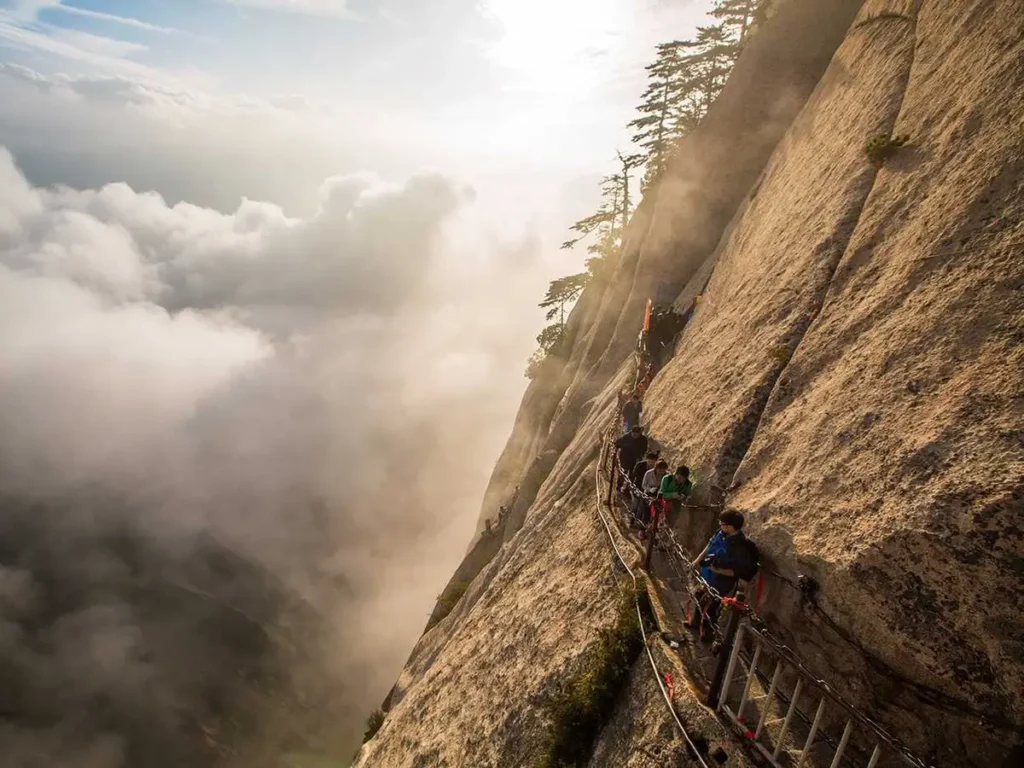
Mount Huashan Plank Walk – China
On the cliffs of Mount Huashan, hikers clip themselves to a chain and shuffle across wooden planks bolted into a sheer rock face thousands of feet above the ground. There is no wide trail. There is no comforting railing. There is only a board, a harness, and your heartbeat tapping Morse code in your ears.
Originally built by Taoist monks, this path was never meant for thrill seekers. Today, it is one of the most infamous hikes on Earth. One slip without proper equipment would not forgive easily.
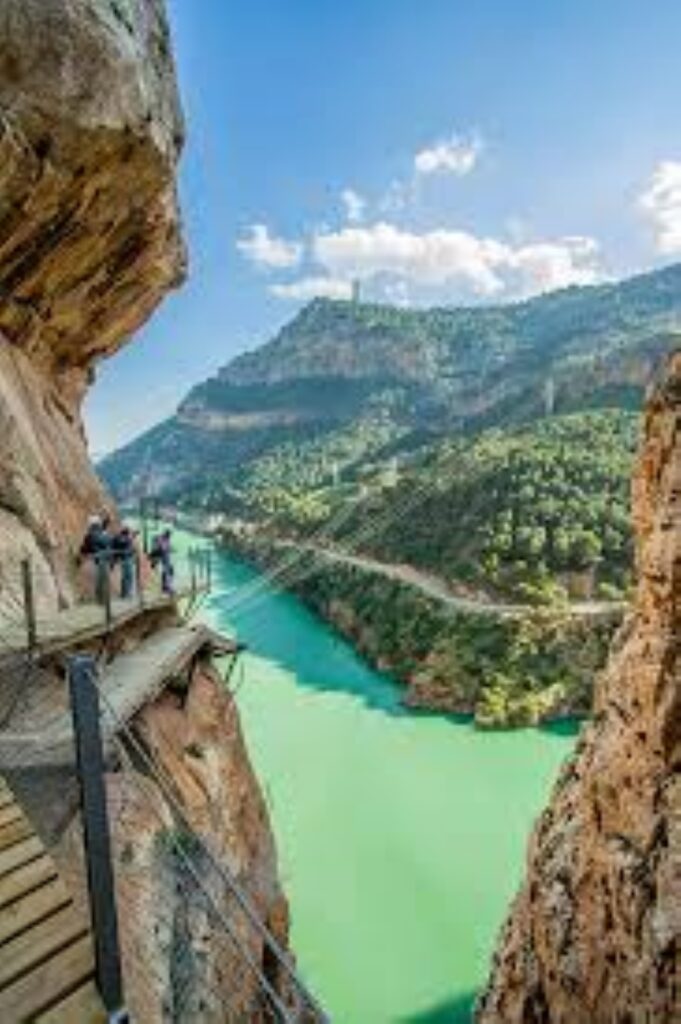
El Caminito del Rey – Spain
Suspended along the walls of a steep gorge near Malaga, El Caminito del Rey once earned the nickname “the most dangerous walkway in the world.”
Before its restoration, parts of the path had crumbled away entirely. Hikers balanced on metal beams or risked stepping over gaps with nothing but air beneath them. Although it has been rebuilt and made significantly safer, its history remains a reminder of how fragile a path can be when it clings to a cliff.
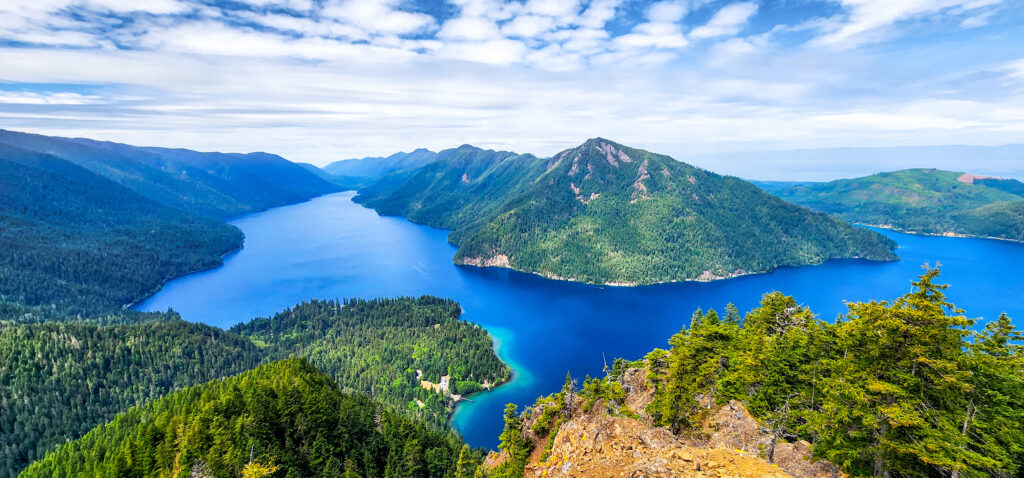
Mount Washington – United States
Do not let its height fool you.
Mount Washington is modest compared to Himalayan giants, yet it is home to some of the most extreme weather ever recorded. Winds have exceeded 230 miles per hour. Temperatures can plummet without warning. Fog can swallow visibility whole.
Hikers often underestimate it. The mountain does not shout its danger. It simply changes its mood in seconds.
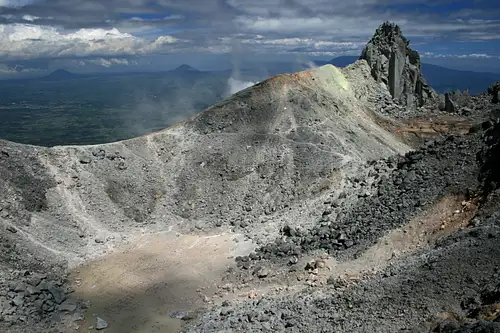
Mount Sinabung – Indonesia
Mount Sinabung is not just a mountain. It is an active volcano.
After centuries of silence, it began erupting again in 2010. Ash clouds, lava flows, and toxic gases make this region highly unstable. Hiking near active volcanic zones carries the risk of sudden eruptions or poisonous air.
When the Earth breathes fire, it does not schedule an appointment.
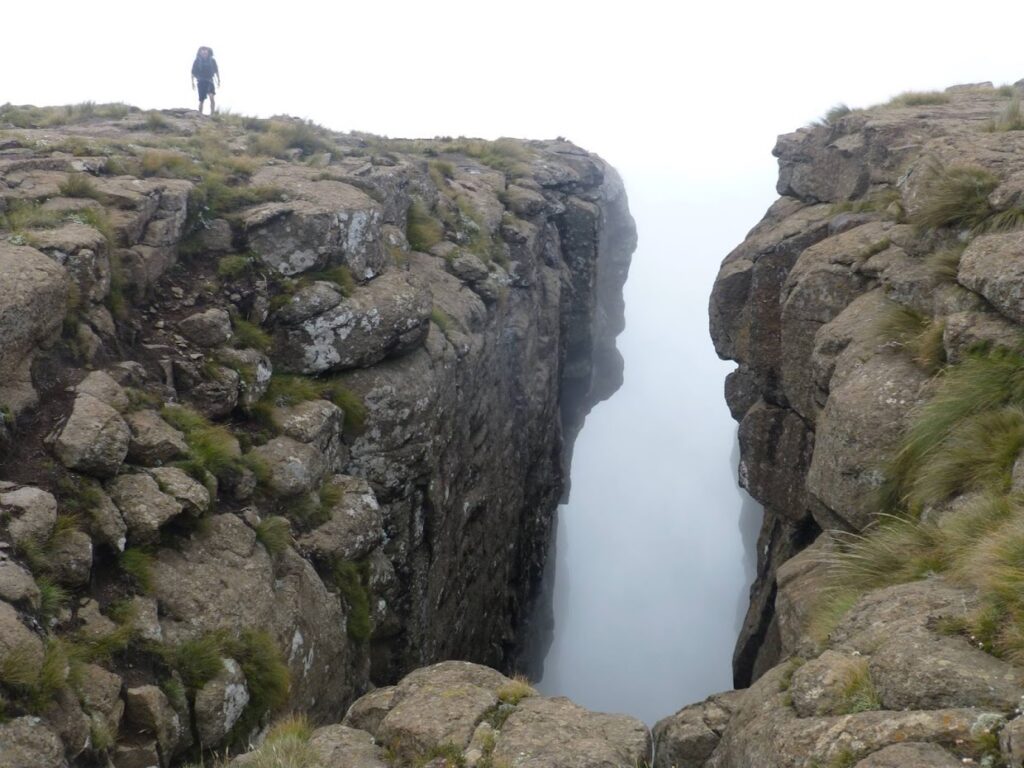
Drakensberg Traverse – South Africa
The Drakensberg Mountains are beautiful, dramatic, and unforgiving. The traverse includes chain ladders fixed to vertical rock faces, unpredictable storms, and long stretches with no marked trail.
Navigation errors here can lead hikers toward sheer drops. Add lightning storms rolling in over the escarpment, and the experience shifts from scenic to survival.
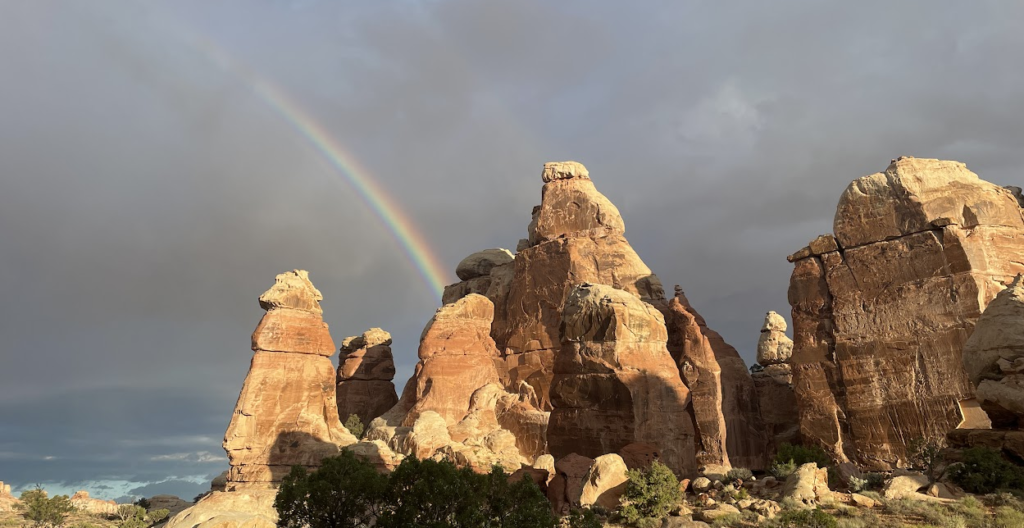
The Maze – Canyonlands National Park, USA
In Canyonlands National Park lies The Maze, a remote desert labyrinth where trails blur into sandstone corridors.
There are no convenience stores here. No cell signal. Temperatures soar in summer, and dehydration can creep in quietly. Many rescues occur because hikers underestimate distance and overestimate their sense of direction.
The desert does not chase you. It waits.
Why Do People Go?
Because danger sharpens the senses. Because the edge of fear feels like being awake for the first time. Because standing somewhere wild and improbable reminds us that we are both small and astonishingly brave.
But danger does not care about bravery.
The most hazardous hikes in the world demand preparation, research, weather awareness, proper gear, and often professional guidance. They are not challenges to ego. They are negotiations with nature.
And nature always holds the final signature.
So if you ever choose one of these paths, go humbly. Go prepared. And walk like the ground matters.
Because sometimes, it is the only thing between you and the sky. 🌍