

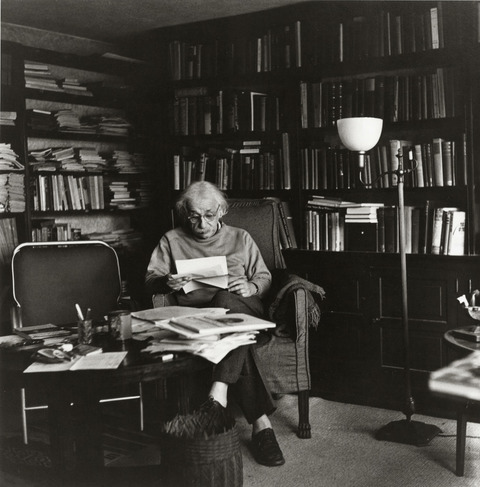
Albert Einstein did not just rethink physics. He redefined imagination.
Born in 1879 in Ulm, Germany, Einstein grew into one of the most influential thinkers in human history, not through authority or convention, but through curiosity and independence. As a child, he struggled in rigid academic systems, often misunderstood as slow or unfocused. In truth, his mind simply refused to move at anyone else’s pace.
Einstein approached the universe as a question, not a machine. While working as a patent clerk, far from academic prestige, he developed ideas that would transform science forever. His theory of relativity dismantled long-held assumptions about time, space, and motion. Time was no longer absolute. Space was no longer fixed. Reality itself became relative to perspective.
What made Einstein extraordinary was not calculation alone, but imagination. He relied on thought experiments, visualizing himself riding on beams of light or falling freely through space. To Einstein, imagination was not opposed to logic. It was essential to discovery. He famously believed that imagination was more important than knowledge, because knowledge is limited while imagination embraces possibility.
Despite his scientific rigor, Einstein never lost a sense of wonder. He saw science as a deeply human pursuit, connected to creativity, humility, and awe. The universe, he believed, was intelligible but mysterious, and understanding it brought responsibility as well as insight.
Einstein was also a moral voice. He spoke openly against nationalism, militarism, racism, and blind authority. The rise of fascism forced him into exile, and although his work contributed indirectly to nuclear technology, he later became an outspoken advocate for peace and global cooperation. He understood that intelligence without ethics was dangerous.
Beyond equations, Einstein left behind reflections on art, education, and life itself. He valued simplicity, independence of thought, and intellectual courage. He warned against conformity and encouraged questioning, not rebellion for its own sake, but honesty in pursuit of truth.
Einstein never sought to be a symbol, yet he became one, not of genius alone, but of freedom of mind. His unruly hair and playful demeanor concealed a thinker who took responsibility seriously and certainty cautiously.
Albert Einstein changed how we measure the universe, but perhaps his greatest legacy is how he taught us to think: slowly, imaginatively, and with humility.
He reminded us that the most profound discoveries begin not with answers, but with the courage to ask better questions.