
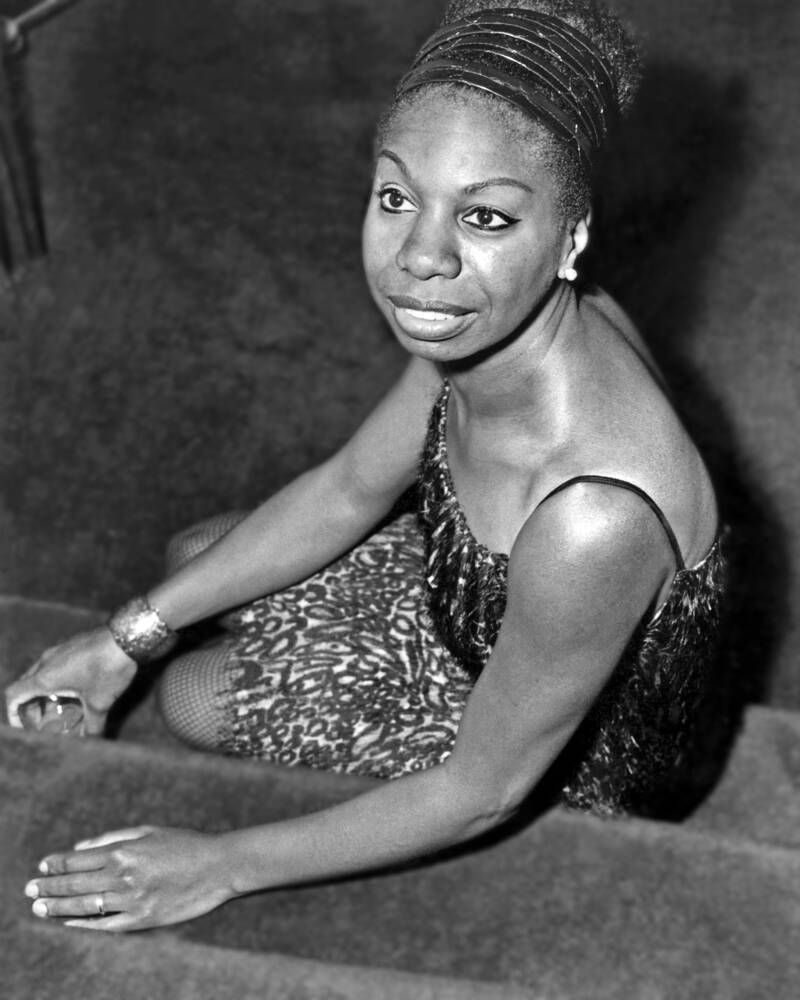
Nina Simone did not perform music. She testified.
Born Eunice Kathleen Waymon in 1933 in North Carolina, Nina Simone was trained as a classical pianist long before the world knew her as a singer. Bach shaped her discipline. The church shaped her power. Racism shaped her politics. When the doors of classical music closed to her, she did not knock again. She built something new.
Simone’s music defies categories. Jazz, blues, classical, gospel, folk, protest. These were not genres to her, but languages she used as needed. Her voice could whisper tenderness one moment and strike like iron the next. At the piano, she was precise and commanding, blending European technique with African American musical tradition in a way that felt inevitable and revolutionary.
What set Nina Simone apart was intention. Every note carried weight. Every pause mattered. She believed that art was not decoration but responsibility. During the Civil Rights Movement, her music turned openly confrontational. Songs like “Mississippi Goddam” were not metaphors. They were declarations. Simone did not soothe injustice. She named it.
This courage came at a cost. Simone was blacklisted, misunderstood, and pressured to soften her message. She refused. For her, music that ignored suffering was dishonest. She once said that an artist’s duty is to reflect the times, and she lived by that principle even when it isolated her.
Beyond activism, Simone’s interpretations reshaped familiar songs into psychological landscapes. She could slow a melody until it revealed its bones, transforming love songs into meditations on longing, rage, or survival. Her performances were unpredictable, charged with raw emotion and intellectual depth. Audiences did not simply listen. They confronted themselves.
Simone’s life was marked by brilliance and struggle. She battled mental health challenges, exile, and exploitation, yet her artistry never lost its force. Even in pain, she remained uncompromising. Her honesty was her instrument.
Today, Nina Simone’s influence echoes across music, film, and political art. She is sampled, studied, and cited not just for her sound, but for her fearlessness. She proved that beauty and protest are not opposites, and that the most powerful art often comes from refusal.
Nina Simone did not ask to be understood. She demanded to be heard.
Her legacy is not only in recordings, but in the reminder that truth, when sung without apology, can change how the world listens.