
A nuclear attack is one of the most frightening scenarios people can imagine. The fear comes not only from the weapon itself, but from uncertainty, misinformation, and panic. Survival in such an event is not about heroics or special equipment. It is about timing, distance, shelter, and clear decisions in the first minutes and days.
This article focuses on civilian survival, not politics or military strategy, and emphasizes what actually increases your chances of staying alive.
First: Understand the Real Dangers
A nuclear detonation creates several threats, but they do not all reach you at once.
The main dangers are the blast wave, intense heat and light, radiation, radioactive fallout, and long-term contamination. Most injuries and deaths occur because people do not get out of the open fast enough or do not shelter correctly afterward.
Distance and shielding matter more than anything else.
If You See a Flash: What to Do Immediately
If you see a sudden, extremely bright flash that lights up the sky, do not look at it. Turn away instantly and drop to the ground if you are outside. Cover your face and exposed skin.
If you are near buildings, get inside immediately. The blast wave follows the flash and can arrive seconds later, shattering glass and causing severe injuries.
Your first goal is to get indoors and away from windows.
Shelter Is Survival
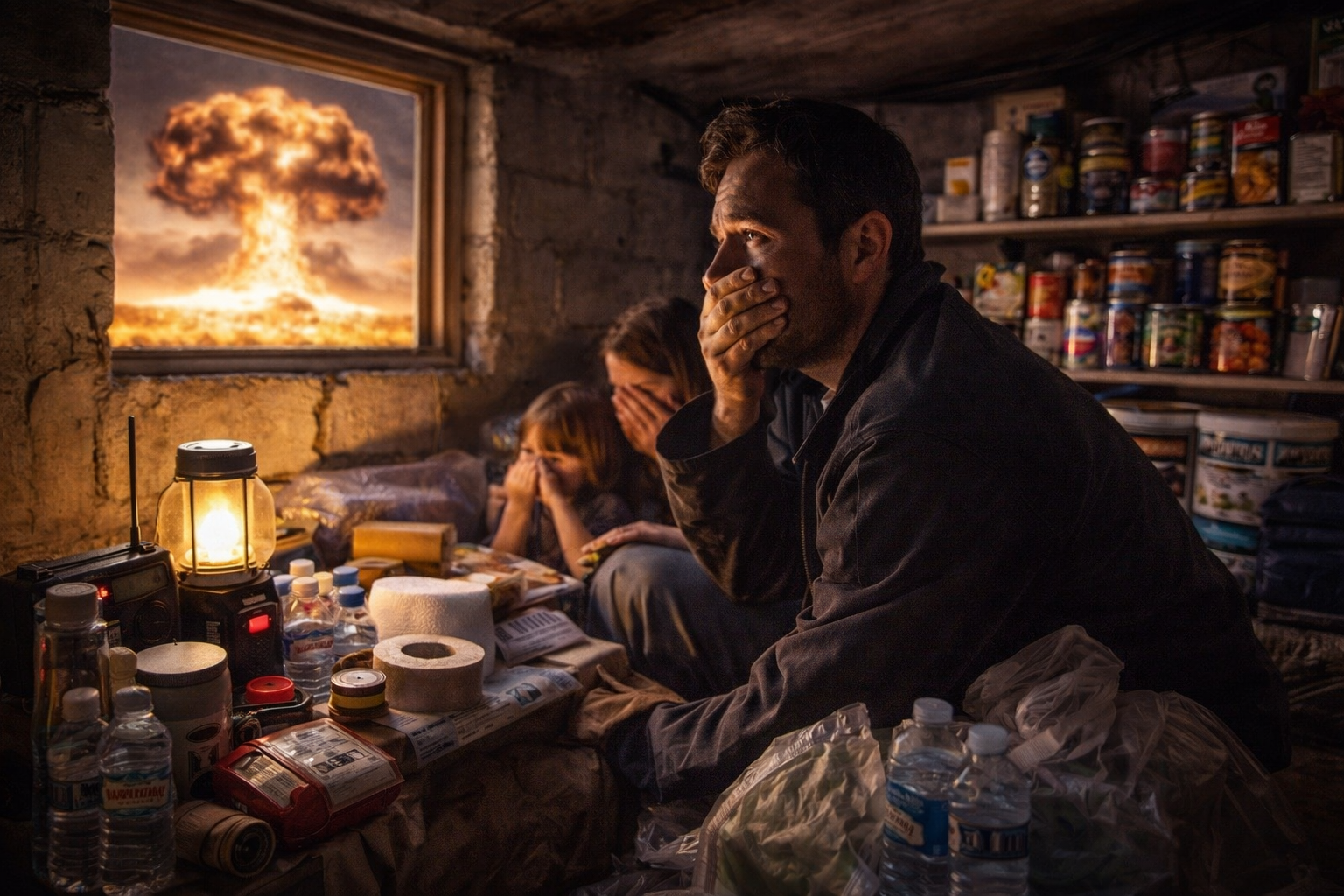
The safest place after a nuclear explosion is inside a solid structure, as deep and shielded as possible.
Basements, underground garages, subway stations, and interior rooms without windows offer the best protection. Thick walls, concrete, earth, and multiple layers between you and the outside reduce radiation exposure dramatically.
If you cannot get underground, go to the center of the building, away from exterior walls and roofs.
Fallout, not the blast, is the greatest danger for most survivors.
Stay Inside. Do Not Rush Outside.
Radioactive fallout is made of tiny particles that fall back to the ground in the hours following a detonation. These particles emit dangerous radiation, especially in the first 24 to 48 hours.
Stay inside your shelter for at least 24 hours, longer if authorities advise it. The radiation level drops rapidly with time. Every hour you stay sheltered significantly increases your chances of survival.
Leaving too early is far more dangerous than staying put.
Reduce Contamination
If you were outside when the explosion occurred and managed to get indoors, remove outer clothing immediately. Place it in a sealed bag and keep it away from people. Shower with soap and water if possible. Do not use conditioner, as it can bind radioactive particles to hair. If water is unavailable, wipe exposed skin gently with a damp cloth.
This step alone can remove a large percentage of radioactive contamination.
Food and Water Safety
Do not eat food or drink water that was exposed to fallout. Use sealed food and bottled water only. If water safety is uncertain, use stored water or purification methods designed for fallout conditions.
Radiation is invisible, but contamination spreads easily through dust and water.
Communication and Information
Keep a battery-powered or hand-crank radio if possible. Follow official guidance. Do not rely on rumors or social media speculation. Authorities will advise when it is safer to move or evacuate.
If phones work, conserve battery power. Communication may be intermittent.
Medical and Health Concerns
Most people who survive the initial blast and stay sheltered properly will not experience immediate radiation sickness. Symptoms such as nausea, vomiting, weakness, or burns should be addressed with basic first aid and medical attention when available.
Mental health matters too. Fear and shock impair judgment. Calm routines, hydration, and rest help preserve clarity.
Evacuation: Only When Advised
Do not evacuate unless authorities instruct you to do so or your shelter becomes unsafe. Evacuation routes are planned based on fallout patterns and wind direction. Leaving blindly may expose you to higher radiation levels.
When evacuation is required, cover your skin, wear long sleeves, hats, and masks if available, and bring only essential supplies.
What Not to Do
Do not go outside to “see what happened.”
Do not look at the explosion.
Do not drink exposed water.
Do not eat exposed food.
Do not spread dust indoors.
Do not panic and flee without information.
Preparation Makes Survival More Likely
Basic preparedness dramatically improves outcomes. A shelter plan, emergency kit, stored water, shelf-stable food, a radio, and knowledge reduce fear and save lives.
Survival is not about strength. It is about knowing what to do first and what to avoid.
Final Thought
A nuclear attack is terrifying, but it is not instant death for everyone. History and science show that most people who survive the initial moments and shelter correctly can survive the event.
Knowledge replaces panic. Shelter replaces exposure. Time works in your favor.
You do not need to be fearless.
You need to be informed, sheltered, and patient.