
David Hockney never stopped looking. And because he never stopped looking, art never stood still around him.
Born in 1937 in Bradford, England, Hockney emerged as one of the most influential artists of the modern and contemporary era by refusing to accept that any single way of seeing was enough. Painting, drawing, photography, stage design, and digital media all became tools in his ongoing investigation of perception. For Hockney, art is not about style. It is about attention.
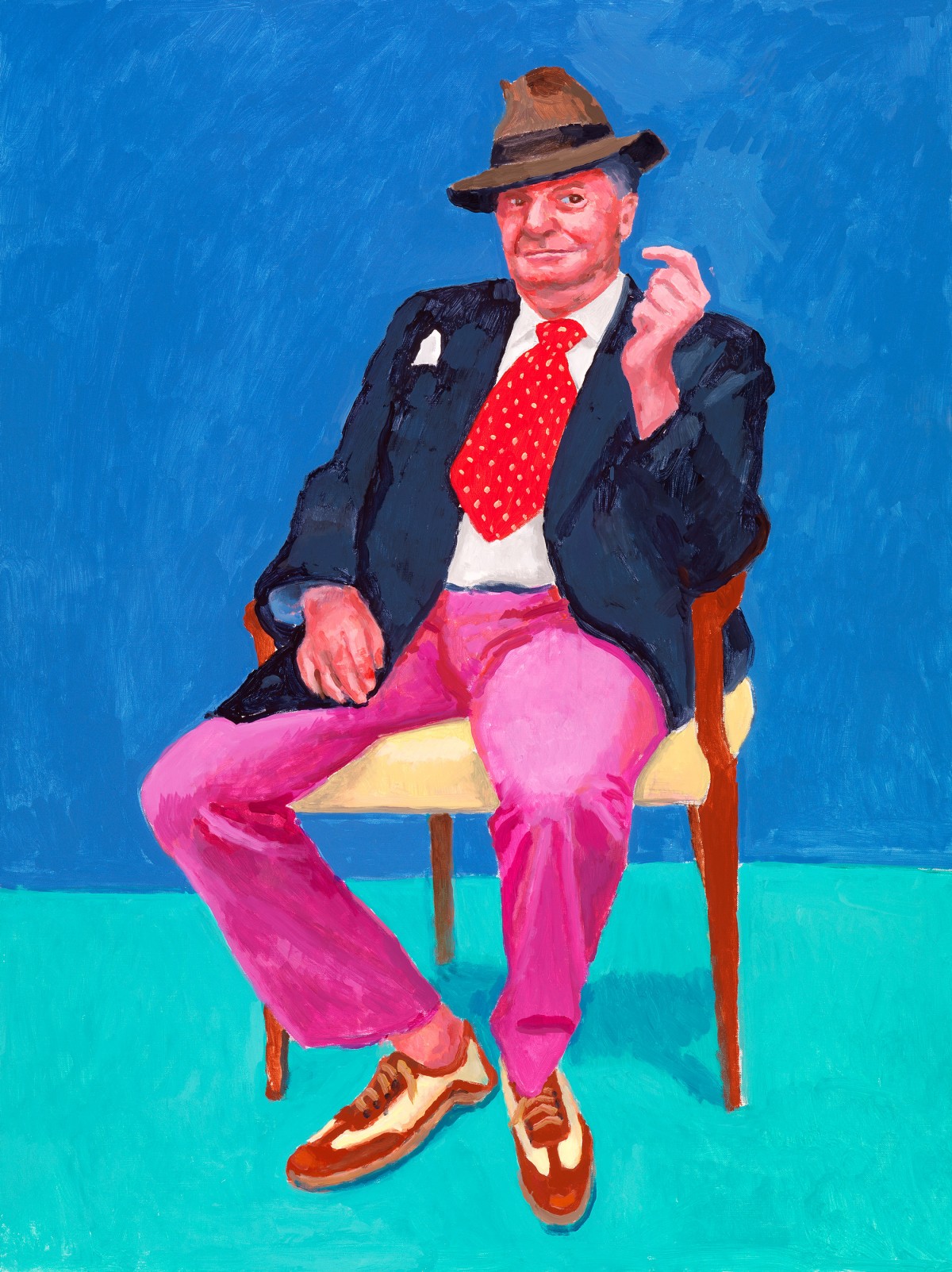
Hockney rose to prominence in the 1960s, bringing with him a bold visual language filled with saturated color, clarity, and openness. His California pool paintings, sunlit and deceptively simple, became icons of modern life. Yet beneath their brightness lies precision and thought. Water becomes geometry. Light becomes structure. Leisure becomes a study in time and movement.
What truly defines Hockney’s work is his challenge to perspective. He rejected the idea that a single vanishing point could represent how humans actually see. Instead, he explored multiple viewpoints, fractured space, and layered time. His photo collages, assembled from dozens of images, reject the frozen instant in favor of lived experience. Seeing, for Hockney, is an active process.
Landscape holds a special place in his practice. Returning repeatedly to the Yorkshire countryside, he painted the same roads, trees, and seasons again and again, revealing how time alters perception. These works are not nostalgic. They are observational, analytical, and deeply present. Nature, in Hockney’s hands, is not background. It is collaborator.
Hockney has never feared technology. From fax machines to iPads, he embraced new tools not as novelties but as extensions of drawing itself. His digital works carry the same discipline and joy as his early sketches, proving that innovation does not erase tradition, it expands it.
Equally important is Hockney’s intellectual curiosity. He has written extensively about art history, optics, and vision, questioning long-held assumptions about how old masters saw and worked. He treats art history not as a museum of answers, but as a living debate.
Despite his fame, Hockney remains driven by curiosity rather than legacy. His work radiates confidence without arrogance, joy without superficiality. Color, in his paintings, is never decoration. It is thinking made visible.
David Hockney reminds us that art begins with paying attention. That to truly see the world, we must be willing to see it again, differently, and without fear.
His legacy is not a single image, but a way of looking that remains endlessly alive.