
In extreme survival situations, food is not about pleasure, routine, or fullness. It is about energy, function, and decision-making. The wrong food increases thirst, slows movement, spoils quickly, or drains strength. The right food keeps your body working when stress, cold, heat, and uncertainty are already pushing it to the edge.
Survival food is chosen with a single goal in mind: maximum usefulness with minimum burden.
The Survival Food Rule
Every food item you carry should answer three questions clearly:
Does it provide energy?
Can it be eaten without preparation?
Will it survive heat, cold, and time?
If the answer is no to any of these, it does not belong.
Calories Matter More Than Variety
In extreme conditions, your body burns calories fast. Walking, carrying weight, stress, cold, and fear all increase energy consumption. Survival food should be calorie-dense, meaning it provides a lot of energy in a small, lightweight package.
High-fat and balanced-protein foods are especially valuable because fat provides long-lasting energy and helps maintain body temperature.
Energy Is Survival Currency. Spend It Carefully.
Best Types of Food for Extreme Survival
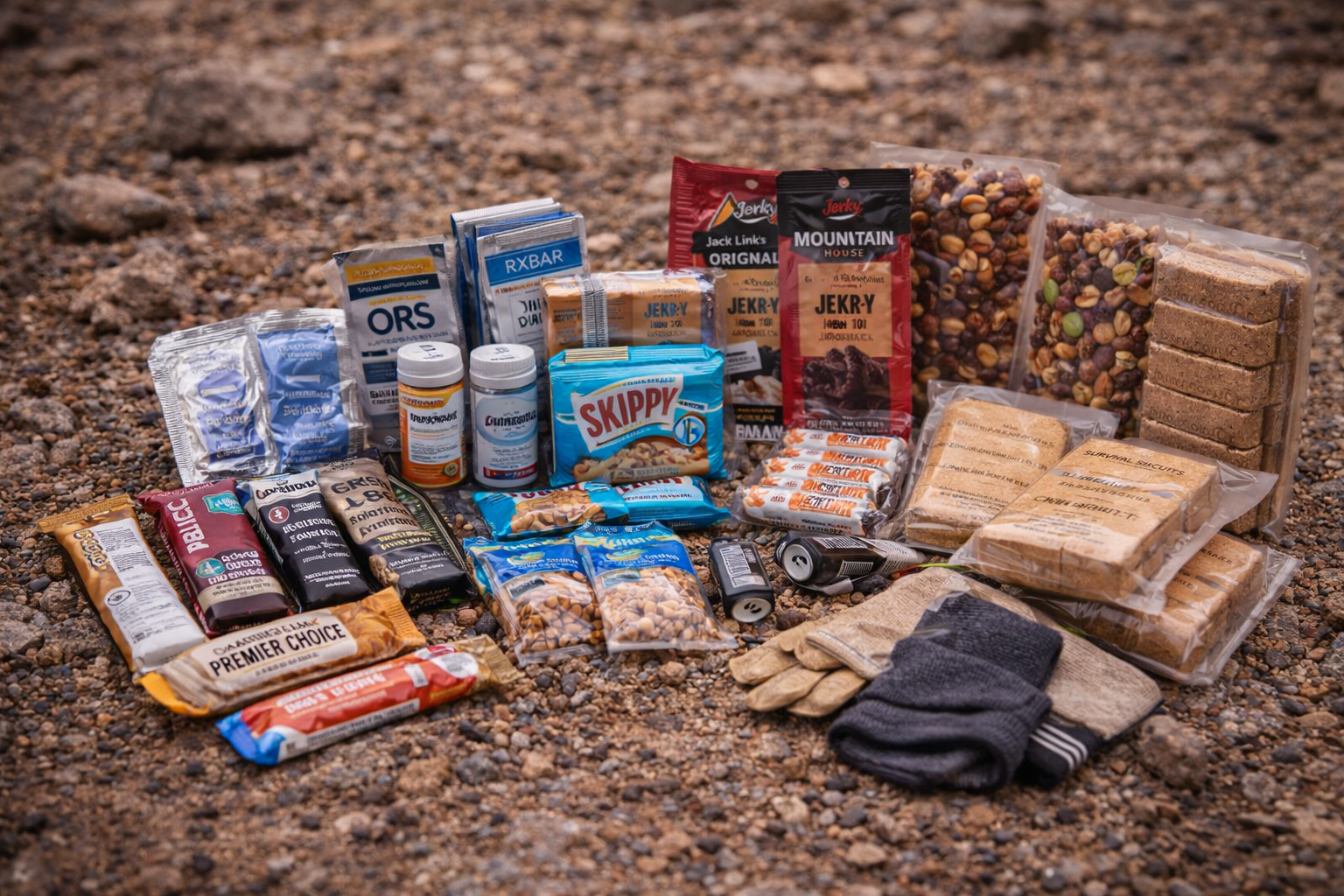
Energy bars and protein bars are among the most efficient survival foods. They are compact, stable, and designed for endurance. Choose bars that do not melt easily and do not require water to digest comfortably.
Nuts and trail mix provide fat, protein, and quick calories. They store well, are easy to ration, and can be eaten while moving. Dried fruit adds quick sugars for immediate energy but should be balanced with fat or protein to avoid energy crashes.
Jerky, dried meat, or fish offers protein and salt, which helps replace electrolytes lost through sweat. These foods last long, tolerate temperature changes, and require no cooking.
Nut butters, especially in single-serve packets, are powerful survival foods. They are calorie-dense, easy to eat, and provide sustained energy. A small packet can replace a full meal.
Hard crackers or survival biscuits offer slow-burning carbohydrates and long shelf life. They are not exciting, but they are reliable.
In survival, boring food is often the best food.
Hydration and Food Must Work Together
Food that increases thirst is dangerous if water is limited. Avoid overly salty or sugary foods unless you have reliable water access. Pair survival food with oral rehydration salts or electrolyte solutions whenever possible.
Dehydration reduces digestion efficiency, making even good food less effective.
If water is scarce, food choices become more critical than quantity.
Foods You Should Avoid Carrying
Canned food is heavy and inefficient unless vehicle-based. Cooking-required foods waste time, fuel, and water. Fresh foods spoil quickly and attract pests. Sugary snacks cause energy spikes followed by crashes. Dairy and soft foods spoil fast and create sanitation problems.
If food smells strongly, melts easily, or requires utensils, it is a liability.
Survival food should disappear quietly, not demand attention.
Rationing and Eating Strategy
In extreme situations, do not eat on a normal schedule. Eat small amounts regularly to maintain steady energy and mental clarity. Large meals increase fatigue and water needs.
Listen to your body, not your habits.
Special Considerations
Children need more frequent energy intake and familiar textures. Elderly individuals may need softer foods and careful electrolyte balance. People with medical conditions must prioritize compatible food even if it limits variety.
Survival planning is personal. Food must match the body that eats it.
Weight Versus Energy Balance
Every extra ounce you carry costs energy. Food must justify its weight. The best survival foods offer the highest calorie-to-weight ratio and minimal packaging.
Carry less food than you think you want, but more than you think you need.
Final Thought
In extreme survival situations, food is not comfort. It is fuel. It keeps your mind sharp, your muscles working, and your morale intact long enough to reach safety.
You can survive hunger longer than you can survive exhaustion, dehydration, or bad decisions.
Choose food that supports movement, endurance, and clarity.
Eat with intention.
Carry fuel, not cravings.