

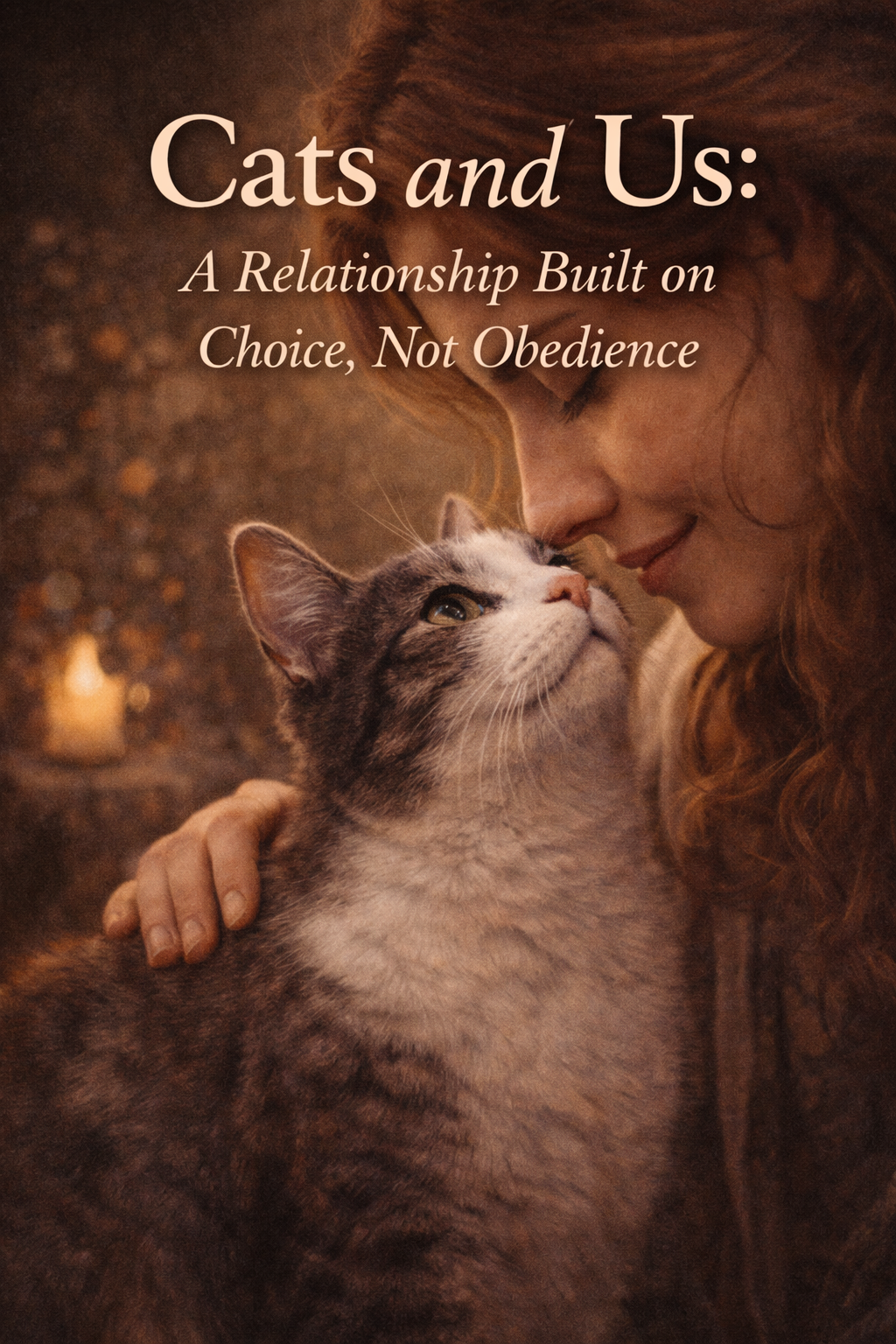
Cats did not follow humans out of loyalty.
They stayed because it suited them.
That single difference explains nearly everything about the bond between cats and people. While dogs evolved alongside humans through cooperation and command, cats entered human life on their own terms. The relationship that followed was quieter, subtler, and deeply psychological.
Cats were never meant to serve us.
They were meant to coexist with us.
From Useful Presence to Emotional Companion
Cats first appeared around early agricultural societies, drawn by rodents attracted to stored grain. Humans tolerated them for practical reasons, and cats tolerated humans for access to food and warmth. But unlike other domesticated animals, cats were never fully controlled.
They retained their independence, their hunting instincts, and their personal boundaries. Over time, that independence became their defining appeal.
What began as a practical arrangement evolved into something more intimate. Cats stayed. They returned. They chose certain people over others. And in that choice, humans found something rare: affection that was not guaranteed.
Why Humans Are Drawn to Cats
Cats offer companionship without submission. They do not perform love on demand. They approach when they want to, retreat when they need to, and make their preferences unmistakably clear.
For many humans, that autonomy feels honest.
Cats mirror emotional states in quieter ways. They sit near us rather than on us. They watch rather than intervene. Their presence is grounding, not overwhelming. In moments of grief, stress, or solitude, cats provide calm without intrusion.
They allow humans to feel accompanied without being managed.
The Psychology of the Cat-Human Bond
Living with a cat requires attentiveness. Cats communicate through posture, gaze, tail movement, and tone. Humans who bond deeply with cats learn to read subtle signals and respect boundaries.
That mutual respect builds trust.
Cats often form strong attachments to specific people, choosing their humans carefully. When a cat seeks closeness, it feels earned. This reinforces emotional validation for humans who value consent, autonomy, and emotional nuance.
The bond may look distant to outsiders, but for those who understand it, it is deeply intimate.
Cats as Emotional Anchors
Cats thrive on routine and stability, and in doing so, they create structure in human lives. Feeding times, quiet rituals, shared spaces. These small consistencies become anchors.
Cats are especially drawn to calm, emotionally aware environments. They respond to energy. They avoid chaos. In this way, cats shape the emotional tone of a household as much as they adapt to it.
For many people, cats become silent witnesses to their lives. They are present through breakups, illnesses, moves, and reinvention. They don’t comment. They don’t judge. They stay.
Modern Life and the Cat Connection
In an age of overstimulation, cats feel aligned with modern emotional needs. They require care, but not constant engagement. They offer affection, but not obligation. They remind humans that connection doesn’t always need noise.
Cats invite us to slow down. To observe. To exist quietly in the same space.
They also remind us of something essential: love does not have to be loud to be real.
What Cats Teach Humans
Cats teach boundaries.
They teach consent.
They teach presence without pressure.
They show us that relationships can be deep without being demanding, meaningful without being performative. They ask humans to meet them halfway, emotionally and psychologically.
And when that meeting happens, the bond is unmistakable.
The relationship between cats and humans is not built on ownership or command. It is built on recognition. Two independent beings choosing, again and again, to share space, warmth, and time.
Not because they must.
But because they want to.




bbtl6u