

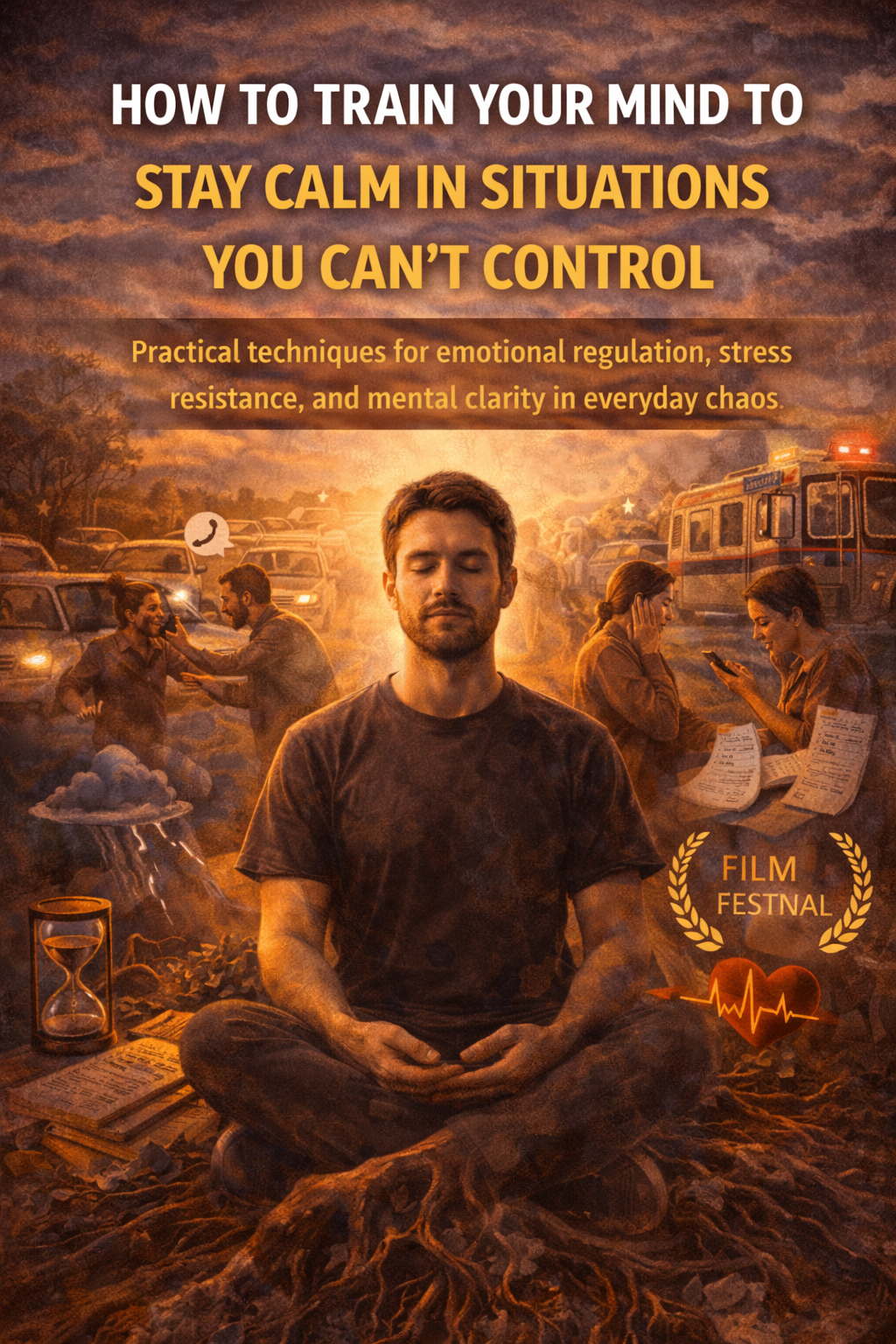
Practical techniques for emotional regulation, stress resistance, and mental clarity in everyday chaos
Life rarely asks for permission before it disrupts your plans. Traffic jams, unexpected news, conflict, financial pressure, health scares, other people’s behavior. Most stress does not come from what happens, but from the moment you realize you have no control over it.
Calm is not the absence of chaos. Calm is a skill. And like any skill, it can be trained.
Understand What You Can and Cannot Control
The mind panics when it tries to control the uncontrollable.
A simple mental filter helps: separate events into two categories. What you can influence and what you cannot. Your response, attention, words, breathing, and next action belong to you. Other people’s reactions, timing, outcomes, and past events do not.
Stress escalates when energy is wasted fighting reality. Calm begins when you redirect energy toward response instead of resistance.
Train Your Nervous System, Not Just Your Thoughts
Calm is physiological before it is psychological.
When the body is in threat mode, logic has little power. Slow breathing sends a signal of safety to the nervous system. Try extending the exhale longer than the inhale. This simple shift reduces internal urgency within minutes.
Grounding techniques help anchor attention. Notice physical sensations. Feet on the floor. Air on the skin. Sounds in the room. This pulls the mind out of catastrophic thinking and back into the present moment.
You are not calming the situation. You are calming the system reacting to it.
Practice Emotional Naming Instead of Suppression
Ignoring emotions does not make them disappear. It makes them louder later.
Silently naming what you feel creates distance. Frustration. Fear. Disappointment. Anger. Naming reduces intensity because it engages awareness instead of reflex.
You do not need to justify the emotion. You only need to acknowledge it. Calm grows when emotions are recognized rather than fought.
Build a Pause Between Trigger and Reaction
Most chaos becomes worse because reactions are automatic.
Train yourself to pause before responding. One breath. One question. What response helps me most right now.
This pause is where choice lives. With practice, it becomes instinctive.
Calm people are not slow. They are deliberate.
Reduce Mental Noise Through Selective Attention
Attention is fuel. Whatever you focus on grows.
Limit exposure to information that amplifies anxiety without offering solutions. Endless news cycles, repetitive conversations, and social comparison exhaust mental clarity.
Choose inputs intentionally. Silence is not emptiness. It is recovery.
Mental calm often improves not by adding techniques, but by subtracting noise.
Reframe Control as Adaptability
Control is rigid. Adaptability is resilient.
Instead of asking how to stop change, ask how to move with it. Flexibility reduces fear because it assumes movement rather than resistance.
People who stay calm are not those with stable lives. They are those who trust their ability to adjust.
Strengthen Daily Habits That Support Calm
Calm is built outside crisis moments.
Sleep, nutrition, movement, and routine regulate emotional baseline. A regulated baseline recovers faster under stress.
Simple rituals matter. Morning quiet. Evening wind-down. Consistent meals. These habits act as shock absorbers when chaos hits.
You do not rise to the occasion. You fall back on what you practice.
Accept That Calm Does Not Mean Comfort
Calm can exist alongside discomfort.
You can feel uneasy without spiraling. You can feel uncertainty without panic. Calm is not denial. It is stability within instability.
The goal is not to feel good all the time. The goal is to stay centered when things feel uncertain.
Training your mind to stay calm is not about mastering life. It is about mastering your response to it.
Chaos will keep arriving. Calm is what you bring with you.