
Thomas Merton listened where others spoke.
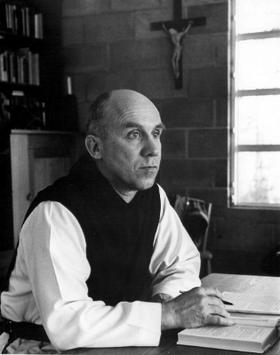
Born in 1915 in France and raised across Europe and the United States, Merton lived many lives in one. He was a poet, essayist, social critic, mystic, and ultimately a Trappist monk. Yet to reduce him to a religious figure alone would miss his true impact. Merton was a bridge, between faith and doubt, East and West, solitude and responsibility.
Merton entered the Abbey of Gethsemani in Kentucky seeking silence, not influence. Ironically, it was from this cloistered life that his voice reached millions. His autobiography, The Seven Storey Mountain, became a spiritual landmark, not because it offered easy answers, but because it revealed an honest struggle with ego, ambition, loneliness, and the hunger for meaning.
At the heart of Merton’s thought was contemplation. He believed that modern life numbs the soul through noise, speed, and distraction. Silence, for Merton, was not emptiness but presence. It was the place where one confronts oneself without masks. In that confrontation, he believed, compassion is born.
Unlike many spiritual writers, Merton refused isolation from the world’s pain. From within the monastery, he wrote passionately against war, racism, nuclear weapons, and injustice. He corresponded with civil rights leaders, peace activists, poets, and thinkers, insisting that inner transformation and social responsibility were inseparable. To be awake spiritually, he argued, was to be accountable morally.
Merton was also deeply curious. He studied Zen Buddhism, Sufism, Taoism, and Hindu philosophy, seeking common ground between traditions rather than dominance of one over another. Long before interfaith dialogue became mainstream, Merton was already practicing it, guided by humility and listening rather than certainty.
His writing is quiet but piercing. Merton does not command. He invites. His words slow the reader down, creating space to reflect rather than react. He believed that the deepest form of freedom comes not from asserting the self, but from seeing through it.
Thomas Merton died in 1968 at the age of 53, yet his relevance has only grown. In a world saturated with performance and opinion, his work remains a refuge for those seeking depth, clarity, and stillness.
Merton taught that silence is not withdrawal. It is preparation. And that in learning to truly see ourselves, we may finally learn how to see one another.