

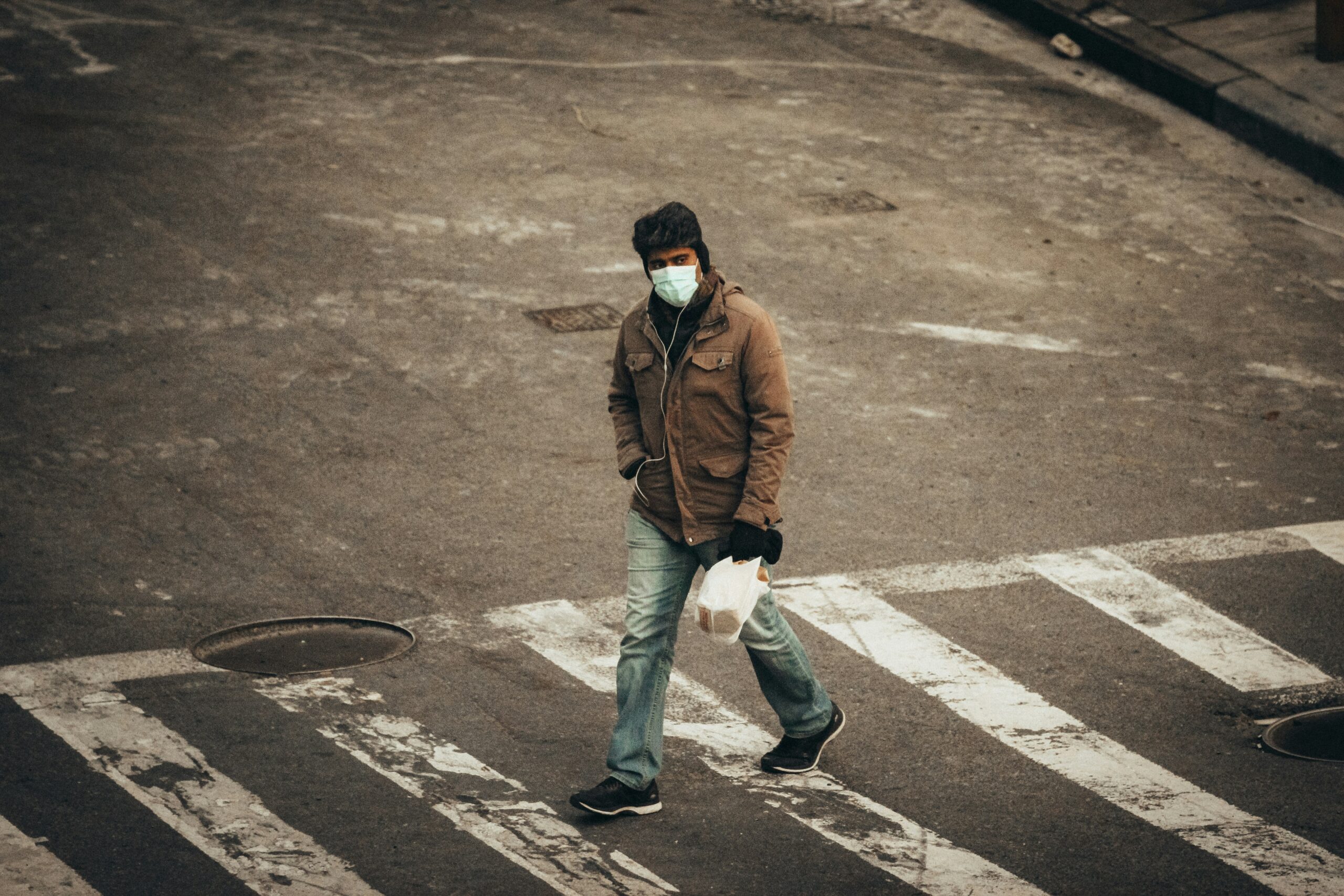
In a crowded market, a handshake.
On a bus, a cough.
At a family dinner, a laugh shared over a table.
Moments like these are tiny threads in the fabric of daily life. Yet sometimes, woven into those ordinary moments, an invisible passenger moves from body to body—a virus, a bacterium, a microscopic hitchhiker that doesn’t care about borders, politics, or plans.
Days later, hospitals fill. Streets empty. Entire countries pause.
The world realizes it has stepped into an epidemic—or worse, a pandemic.
What are epidemics and pandemics, really?
At their heart, both are about one simple idea:
a disease spreading faster and farther than usual.
– Epidemic:
An outbreak of a disease that affects many people in a community, region, or country. It’s bigger than expected for that place and time.
– Pandemic:
An epidemic that has spread across multiple countries or continents, affecting a large number of people. COVID-19 is the most recent and globally familiar example.
The cause is biological—viruses, bacteria, sometimes other organisms. They are natural, as old as life itself. But how far and fast they spread often depends on us.
The tiny invaders
Pathogens are masters of opportunity.
Viruses
– Tiny packages of genetic material wrapped in protein.
– Cannot reproduce on their own—they hijack human (or animal) cells to make copies of themselves.
– Spread through droplets, air, body fluids, contact, sometimes through animals or insects.
Bacteria
– Single-celled organisms, some harmless or even helpful, others capable of causing severe disease.
– Spread through contaminated food, water, surfaces, air, bodily fluids, or vectors like insects.
To them, we are not nations or families—we are potential hosts. All they “want,” in a mindless biological sense, is to survive and replicate.
How a spark becomes a wildfire
A new disease rarely arrives like a cinematic explosion. It begins with a few infections—often unnoticed.
-
Spillover or emergence
– A virus jumps from animals to humans (as with many emerging diseases).
– A new strain appears through mutation.
– A known disease finds a new opportunity in crowded, unprotected populations. -
Silent spread
– People with mild or no symptoms move through cities, workplaces, and homes.
– Travel carries the pathogen across regions, sometimes across oceans, before anyone realizes something is wrong. -
Recognition
– Hospitals notice unusual clusters of illness.
– Doctors raise alarms.
– Laboratories begin to hunt for the cause. -
Acceleration
– Once identified, sometimes the pathogen is already everywhere.
– Exponential spread means numbers double, and double again, until systems strain under the weight of the sick.
In a connected world, an infection in one city can become a global crisis in a matter of weeks.
The human factor: fuel for the spread
Pathogens are natural, but their spread is supercharged by how we live:
– Crowded cities make close contact inevitable.
– Airplanes move infected people between continents in hours.
– Deforestation and wildlife trade bring humans into closer contact with animal pathogens.
– Poverty, weak health systems, and misinformation leave communities vulnerable.
– War and displacement push people into cramped, unsanitary conditions, where disease can rip through refugee camps and shelters.
Sometimes human behavior helps the pathogen more than biology alone ever could.
The shock to the body—and the system
Epidemics and pandemics cause more than fever and coughs.
Health impacts
– Hospitals overwhelmed with patients.
– Doctors and nurses working to exhaustion, sometimes getting sick themselves.
– Regular care disrupted: surgeries postponed, chronic illnesses neglected, vaccinations delayed.
– Vulnerable groups—elderly people, those with other illnesses, poor communities—hit hardest.
Economic and social impacts
– Businesses closing, jobs lost.
– Schools shut, children learning (or not) from home.
– Travel restrictions, quarantines, lockdowns.
– Supply chains disrupted: empty shelves, delayed medicines, rising prices.
Psychological impacts
– Anxiety about loved ones, about money, about the future.
– Grief for those lost and for lives suddenly derailed.
– Loneliness from isolation and distancing.
– A constant feeling that the world is both too small (the virus is everywhere) and too large (help feels far away).
In a true global pandemic, no aspect of life stays untouched.
The paradox of proximity and distance
Epidemics and pandemics create strange contradictions:
– We need each other more, yet we are told to stay apart.
– We fear strangers in the grocery store but rely on strangers in hospitals, labs, and delivery trucks.
– Borders close, but the pathogen has already crossed them.
They reveal how interconnected we really are—and how fragile that connection can feel under threat.
Science against the unseen
Humanity does not face epidemics helplessly. We have built powerful tools to fight back:
– Surveillance systems to detect unusual outbreaks.
– Laboratories to identify pathogens and decode their genetic material.
– Vaccines to train the immune system to recognize and defeat specific invaders.
– Antiviral drugs, antibiotics (when dealing with bacteria), and supportive care.
– Public health strategies: masks, hygiene, distancing, contact tracing, quarantine.
But these tools work only as well as our willingness to use them wisely:
– Misinformation can spread faster than the disease itself.
– Distrust in authorities or science can undermine vaccination campaigns.
– Inequality can mean some countries or communities get protection while others are left exposed, allowing the pathogen to continue mutating and returning.
The virus is natural. The scale of the disaster is often human.
Lessons written in antibodies and memory
Every major epidemic or pandemic leaves behind more than scars. It leaves knowledge:
– Which systems broke first: hospitals, supply chains, communication.
– What helped the most: early action, clear communication, international cooperation, or local resilience.
– Where we failed: communities left behind, warnings ignored, science misused or mistrusted.
These lessons are written in:
– New safety protocols in hospitals and public spaces.
– Improved disease-tracking networks.
– Policies (good or bad) that will shape responses to future outbreaks.
– The hearts and memories of those who lived through it.
The next pathogen will be different. The question is whether we will be.
Living in a world of invisible neighbors
Viruses and bacteria have always shared this planet with us. Most are harmless; some are essential; a fraction are deadly. They are part of the natural world, not invaders from outside it.
Epidemics and pandemics remind us that:
– We are never truly alone; we live in constant contact with microscopic life.
– Our choices—about environment, health systems, travel, and justice—shape how dangerous that contact becomes.
– No country can fully protect itself while others are left without resources or care.
In every handshake, every shared room, every trip, there is risk—but also responsibility.
The next crisis may start with a single infection in a place most people can’t find on a map.
By the time the world knows its name, it may already be everywhere.
Our defense is not fear, but preparation, solidarity, and respect—for science, for each other, and for the simple truth that in the face of invisible tides, humanity’s best chance is to stand together, even when we have to stand apart.