

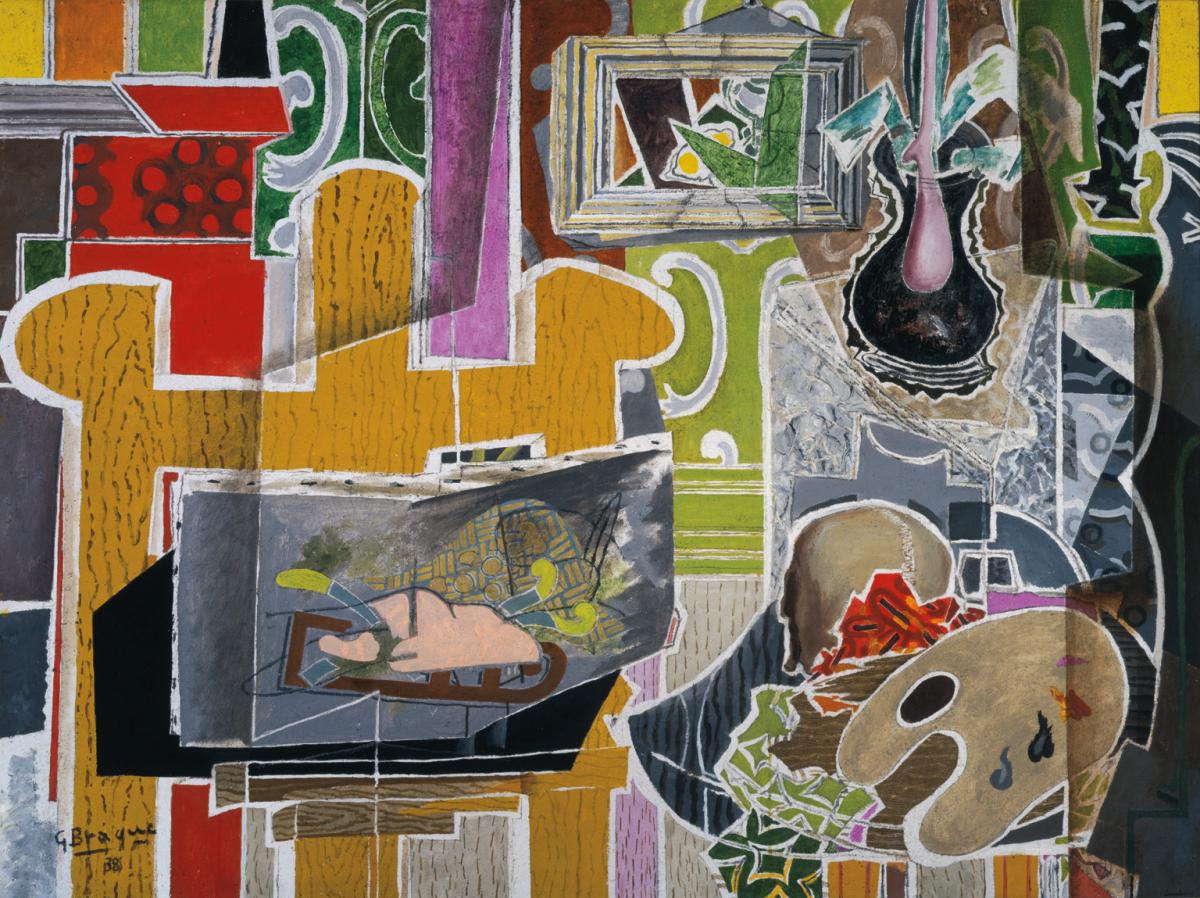
Georges Braque did not seek attention. He sought understanding.
Born in 1882 in Argenteuil, France, Braque became one of the quiet architects of modern art. While history often pairs his name with louder figures, his influence is foundational. Braque helped dismantle centuries of visual tradition not through shock, but through disciplined inquiry. He did not destroy form. He questioned how it functioned.
Braque began as a Fauvist, experimenting with intense color and expressive freedom. Yet color alone was never enough. He wanted structure, logic, and depth beyond illusion. This search led him to Cubism, developed in close collaboration with Pablo Picasso. Together, they shattered the idea that a painting should represent a single moment from a single viewpoint.
Braque’s Cubism was analytical rather than theatrical. Objects fractured into planes. Space folded inward. Perspective became unstable. A violin, a table, a bottle were no longer depicted as the eye sees them, but as the mind understands them over time. Seeing, Braque believed, was an active process, not a passive one.
One of Braque’s most radical contributions was the introduction of collage into fine art. By incorporating everyday materials like newspaper and wallpaper into paintings, he collapsed the boundary between art and life. Reality entered the canvas directly, not as illusion, but as fact. This gesture permanently altered what art could include and how it could speak.
Unlike artists driven by drama, Braque embraced restraint. His palette became muted. His compositions slowed down. Silence entered his work. This quiet intensity gave his paintings a meditative quality, inviting prolonged looking rather than instant impact. He once said that art is meant to disturb, but only in order to clarify.
Braque’s later work softened Cubism without abandoning its intelligence. Color returned, form became lyrical, and space opened again. Yet the lessons remained. Painting was no longer about copying nature, but constructing meaning. For Braque, art was a way of thinking made visible.
His influence can be felt across modern and contemporary art, from abstraction to conceptual practice. Yet Braque himself remained modest, focused on process rather than legacy. He believed that the true work of art was not the object, but the transformation it demanded of the artist.
Georges Braque rebuilt painting by slowing it down and breaking it apart. He showed that clarity can come from fragmentation, and that meaning emerges not from certainty, but from careful, deliberate looking.
His legacy endures wherever art dares to think rather than decorate.


HBrE