

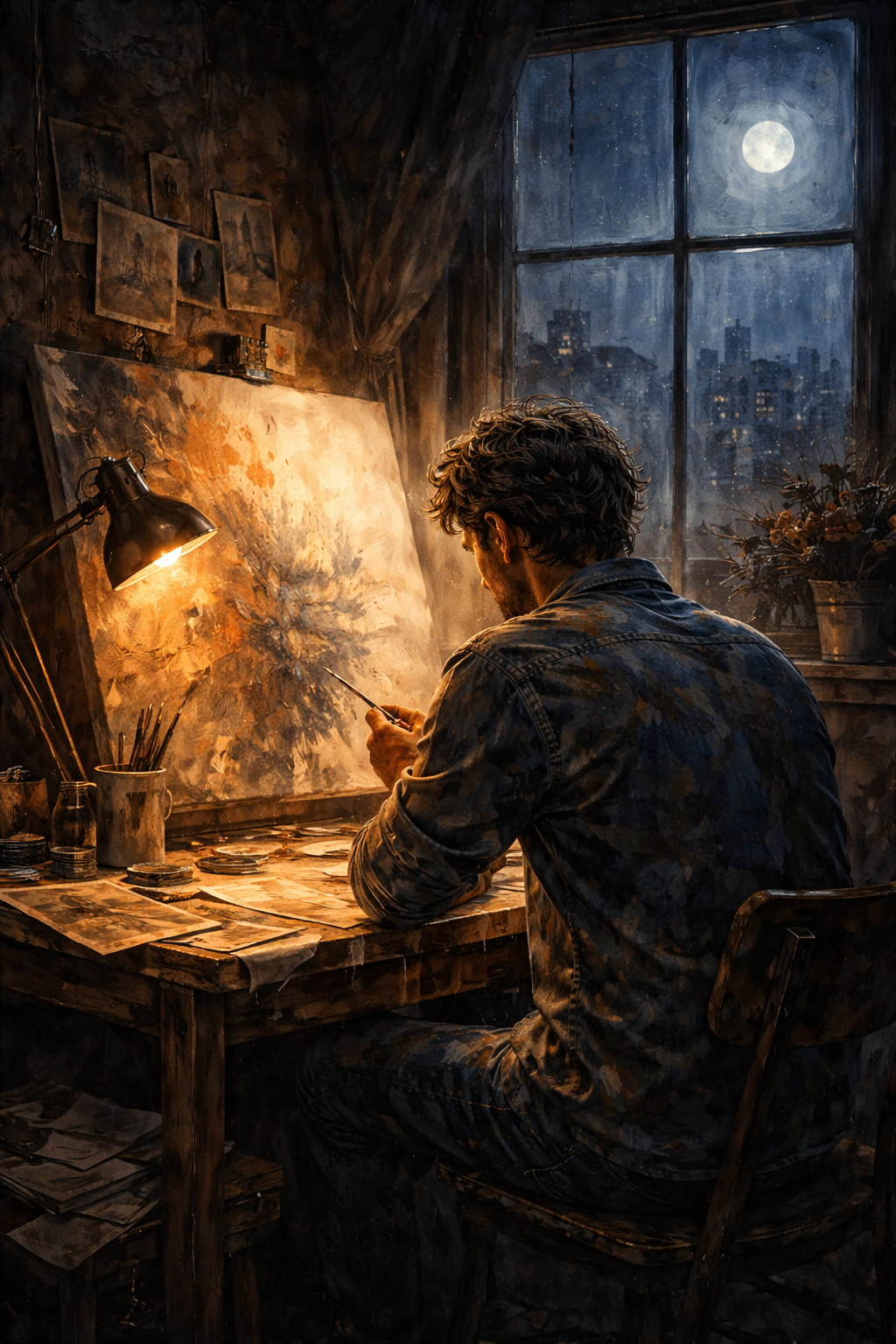
Loneliness is often treated as a weakness, something to be cured or avoided. For artists, however, loneliness is frequently a condition of the work itself. It is not always chosen, but it is rarely accidental. Creation requires distance from noise, from consensus, and often from comfort. In that distance, something difficult and powerful begins to take shape.
The artist is alone not because they reject the world,
but because they are listening to it differently.
Creation Requires Separation
To create something original, an artist must step outside shared language and expectation. This separation can feel isolating. While others move in rhythm with trends, the artist pauses, observes, and questions.
Loneliness becomes the space where ideas form.
Without quiet, there is no depth.
Seeing What Others Don’t
Artists often notice details that others overlook. This heightened perception can create emotional distance. When you see cracks beneath surfaces, conversations can feel shallow, and connection can feel rare.
This doesn’t mean artists lack social bonds.
It means their attention is oriented inward and outward simultaneously.
Loneliness Sharpens Self-Awareness
In solitude, artists confront themselves honestly. Doubt, fear, desire, and contradiction become unavoidable. This confrontation is uncomfortable, but it deepens self-knowledge.
Great work often emerges from this tension.
Loneliness removes distraction.
Art as Companion
When human connection feels limited or incomplete, art becomes a companion. The process itself provides structure, meaning, and dialogue. The work listens back.
Creation fills emotional gaps not by replacing people, but by transforming isolation into expression.
Loneliness becomes productive rather than paralyzing.
The Outsider Perspective
Many artists exist slightly outside dominant culture. They question norms, resist simplification, and refuse easy answers. This outsider status can create social distance.
But it also grants clarity.
From the edges, patterns become visible.
Emotional Risk and Withdrawal
Making art involves emotional exposure. Sharing unfinished ideas or vulnerable themes can feel risky. Artists often withdraw to protect the work before it’s ready.
Isolation becomes a form of care.
It allows fragility to mature privately.
Why Loneliness Appears Across Art History
From writers to painters to composers, loneliness appears repeatedly in artistic biographies. This isn’t coincidence. Art asks for sustained attention and deep emotional processing, both of which require solitude.
Loneliness is not the goal.
It is the side effect.
When Loneliness Turns Dangerous
Romanticizing loneliness can be harmful. Extended isolation without support can damage mental health. Healthy artistic loneliness includes return. Sharing. Community.
The goal is not withdrawal forever.
It is oscillation.
Connection Through Distance
Paradoxically, artists often connect most deeply with others through work created in solitude. The private becomes public. The isolated becomes shared.
Loneliness fuels empathy.
It sharpens emotional precision.
Why Audiences Feel Seen
Great art often resonates because it captures feelings people experience alone. The artist articulates what others couldn’t say.
Loneliness becomes universal.
The artist’s solitude speaks to collective experience.
The Quiet Engine of Great Work
Loneliness strips life down to essentials. It removes distraction, amplifies emotion, and forces confrontation with inner truth.
Not all loneliness produces art.
But much great art emerges from the courage to stay with it.
The artist does not escape loneliness.
They transform it.
And in doing so, they offer others the comfort of recognition, reminding us that even our most solitary feelings are shared.

934ssy
k1ml60
k8q1z5