
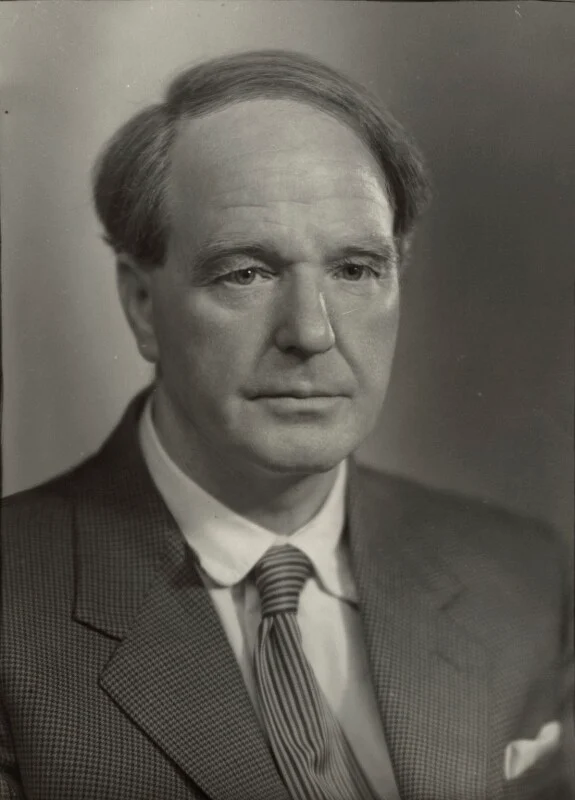
Henry Moore reshaped the human body by breaking it open.
Born in 1898 in Yorkshire, England, Moore would become one of the most influential sculptors of the 20th century, transforming how sculpture related to space, landscape, and the human experience. At a time when realism still dominated expectations, Moore chose abstraction not as an escape from humanity, but as a deeper way to understand it.
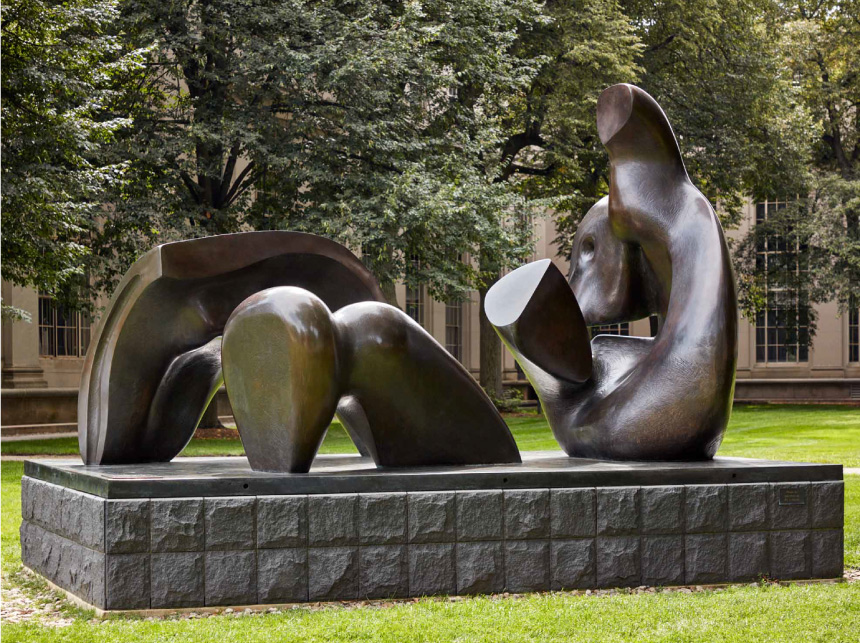
Moore is best known for his reclining figures, monumental forms that appear both ancient and modern, solid yet hollow. These figures are not portraits of individuals. They are symbols. By piercing, stretching, and simplifying the body, Moore revealed something universal beneath anatomy: resilience, shelter, vulnerability, and strength. His sculptures feel less like objects and more like presences.
Nature was Moore’s greatest teacher. Bones, stones, shells, hills, and eroded cliffs informed his sense of form. He believed that sculpture should feel as though it belongs to the earth itself, shaped by time and pressure. This is why many of his works are placed outdoors, where light, weather, and landscape complete the sculpture. Space, for Moore, was not empty. It was active.
During World War II, Moore served as a war artist, documenting Londoners sheltering in underground stations during air raids. These drawings deeply influenced his sculptural language. The curved, protective forms that would later define his work echo themes of refuge and endurance. Even at monumental scale, Moore’s sculptures carry a quiet human tenderness.
Unlike sculptors who sought polish and perfection, Moore embraced rough surfaces and visible process. His bronzes retain the memory of the artist’s hand, reminding viewers that creation is physical, imperfect, and deeply human. Abstraction, in Moore’s hands, never feels cold. It feels compassionate.
Moore believed that art should be accessible, not confined to elite spaces. His sculptures were placed in public parks, university campuses, and open landscapes, inviting people to walk around them, touch them, and live with them. He wanted art to be part of daily life, not removed from it.
Henry Moore expanded sculpture beyond the pedestal and into the world. He showed that abstraction could still carry emotion, memory, and meaning, and that the human figure could be reinvented without losing its soul.
His legacy stands not only in bronze and stone, but in the way sculpture learned to breathe, opening itself to space, nature, and the shared human experience.