
Pablo Picasso did not evolve quietly. He detonated tradition.
Born in 1881 in Málaga, Spain, Picasso became one of the most radical and influential artists in modern history by doing something deceptively simple: he refused to repeat himself. At every moment when mastery could have become comfort, Picasso changed direction. His career reads less like a straight line and more like a series of revolutions.
Picasso mastered classical drawing at a young age, but technical skill was never his destination. He understood the rules deeply so he could dismantle them with intention. His early Blue and Rose periods revealed empathy for the poor, the lonely, and the marginalized, using color as emotional atmosphere rather than decoration. Even then, Picasso was already painting states of mind, not appearances.
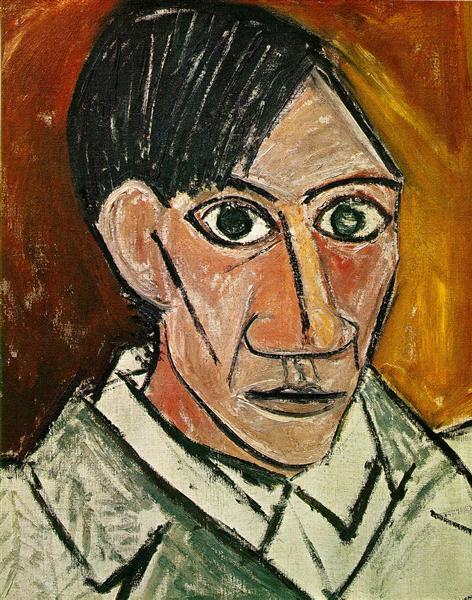
With Cubism, Picasso permanently altered how we see reality. By fragmenting form and presenting multiple perspectives at once, he challenged the idea that truth could be captured from a single viewpoint. Faces became architecture. Objects dissolved into geometry. What looked chaotic was, in fact, deliberate intelligence. Cubism was not abstraction for its own sake, but a philosophical argument: reality is complex, unstable, and layered.
Picasso believed that art was not meant to be polite. It was meant to confront. This belief reached its most powerful expression in Guernica, his monumental response to war and violence. Painted in stark tones, the work screams without sound, transforming suffering into a universal symbol of protest. Picasso proved that art could be both formally innovative and morally urgent.
Throughout his life, Picasso worked obsessively, moving between painting, sculpture, ceramics, printmaking, and drawing. He treated creativity as a daily act, not a moment of inspiration. For him, ideas were not sacred. Movement was. Reinvention was survival.
Picasso was often controversial, both as an artist and as a person, but his impact is undeniable. He expanded what art could be, who it could speak to, and how boldly it could speak. He showed generations of artists that style is not identity, and that creative freedom requires constant risk.
Pablo Picasso did not seek perfection. He sought truth through motion. His legacy is not a single masterpiece, but a permission slip, reminding artists that standing still is the only real failure.