
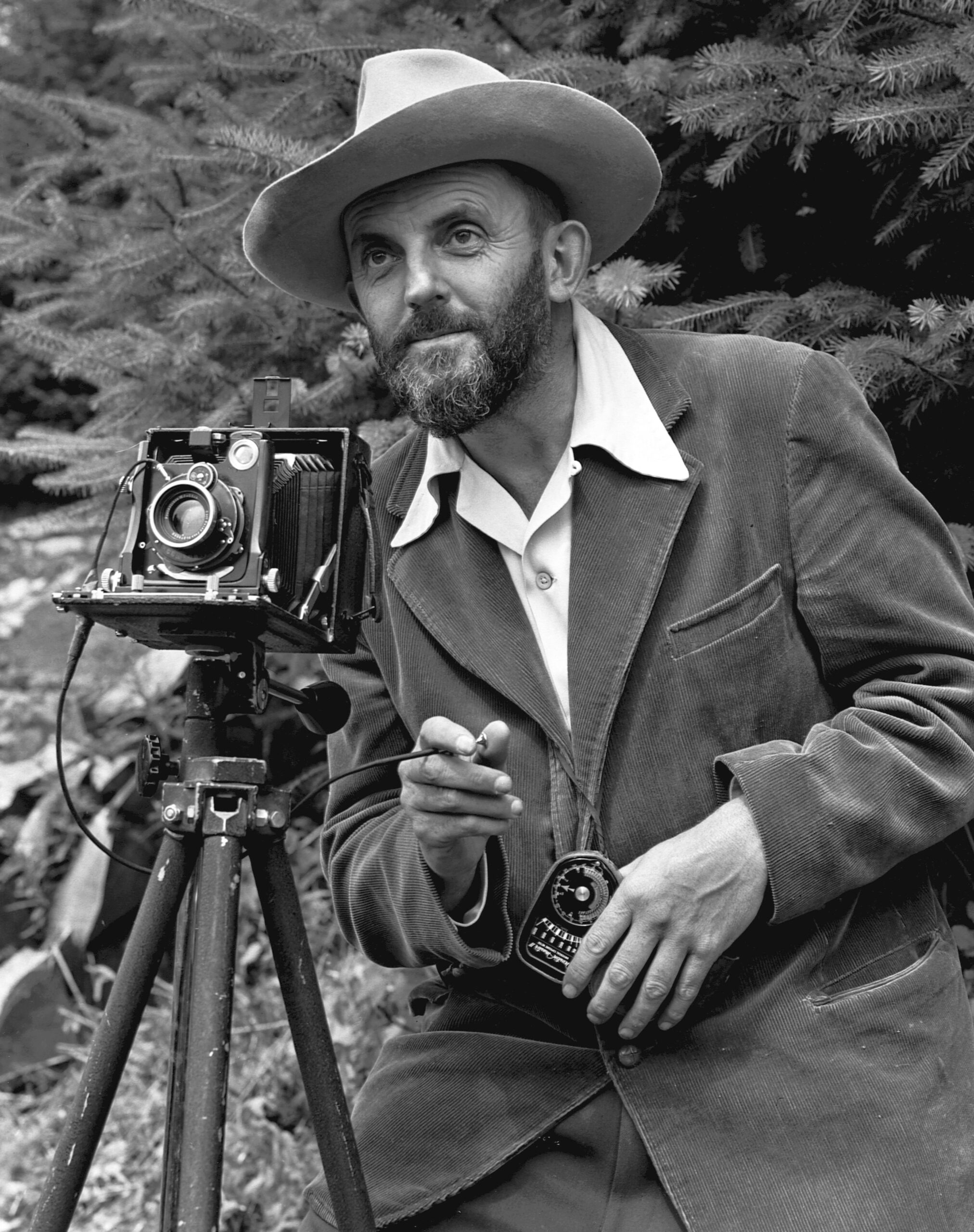
Ansel Adams did not photograph landscapes to admire them. He photographed them to defend them.
Born in 1902 in San Francisco, Adams grew up surrounded by the raw beauty of the American West. From an early age, nature shaped both his character and his vision. What began as fascination became commitment, and eventually, a lifelong mission to reveal the grandeur of the natural world with honesty, discipline, and reverence.
Adams is best known for his black-and-white photographs of national parks, especially Yosemite. His images are precise yet emotional, monumental yet intimate. Mountains rise with authority. Clouds move with intention. Light becomes architecture. Adams did not wait for chance. He studied light, weather, timing, and composition obsessively, treating photography as both art and science.
Central to his practice was control. Adams believed that a photograph should reflect the photographer’s intention, not accident. He co-developed the Zone System, a technical method that allowed photographers to predict and control exposure and contrast with extraordinary precision. Yet despite this technical rigor, his images never feel mechanical. They feel alive.
For Adams, photography was a form of translation. He did not aim to copy nature, but to interpret it. Black and white allowed him to strip away distraction and focus on structure, contrast, and emotional weight. In his hands, a river became movement, a tree became endurance, and a mountain became permanence.
Adams was also a passionate environmentalist. His photographs played a significant role in the conservation movement, helping to protect national parks and wilderness areas. He believed that seeing clearly could lead to caring deeply, and that art could influence policy by shaping public conscience. His images were arguments for preservation, rendered without words.
Beyond his own work, Adams was a teacher, writer, and advocate for photography as a serious art form. He helped elevate photography from documentation to fine art, insisting that photographers deserved the same respect as painters and composers. His books and lectures influenced generations of artists who followed.
What sets Ansel Adams apart is conviction. He believed that beauty carries responsibility, and that artists must honor their subjects through discipline and integrity. His photographs are not nostalgic. They are urgent reminders of what exists, and what can be lost.
Ansel Adams left behind more than iconic images. He left a visual ethic, one that insists clarity matters, intention matters, and that protecting the natural world begins with learning how to truly see it.