
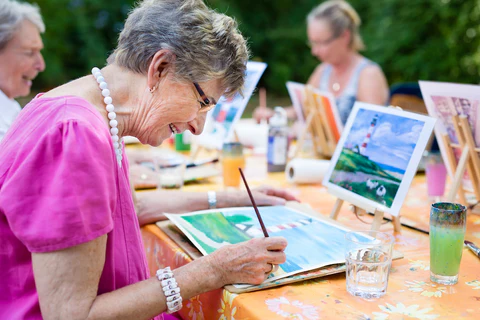
Many people believe creativity belongs to youth, to fresh talent and early ambition. Yet again and again, people discover art later in life. They begin painting in their forties, writing in their fifties, sculpting in their sixties, or finally picking up the instrument they once abandoned. This is not coincidence. It is a natural shift shaped by psychology, experience, and the changing priorities of the human brain.
Life experience creates deeper expression
As people age, they accumulate stories, losses, joys, regrets, and insights. These experiences create emotional depth, and art becomes a way to organize and release it. Younger minds often focus on proving skill or seeking approval. Older minds focus on meaning. Art becomes less about perfection and more about truth.
With time, people also develop a clearer sense of identity. They are less concerned with fitting in and more interested in expressing what feels authentic. This freedom allows creativity to surface without fear of judgment.
The brain changes, but imagination expands
While certain cognitive speeds may slow with age, other mental abilities strengthen. Pattern recognition, emotional intelligence, and reflection increase over time. These are powerful tools for artistic creation. Older adults often connect ideas more intuitively and bring symbolism and nuance into their work.
Neuroscience shows that creativity does not depend on speed alone. It thrives on connection, memory, and emotional integration. The aging brain becomes especially good at weaving these elements together.
Time, space, and permission
In earlier stages of life, people are often consumed by survival, responsibility, and structure. Careers, children, financial pressure, and expectations leave little room for creative exploration. Later in life, schedules may open up. There is more mental space to ask long-postponed questions like: What do I enjoy? What do I want to express?
Many people also give themselves permission later in life. They stop waiting for approval or ideal conditions. Art becomes something they do for themselves, not for validation.
Healing, reflection, and self-discovery
Art in later life often serves a therapeutic role. Creating helps process grief, transitions, identity shifts, and existential reflection. Painting, writing, music, or crafting can calm the nervous system and provide emotional clarity.
For some, art becomes a way to reconnect with parts of themselves that were set aside earlier. For others, it becomes a new language for understanding aging, memory, and time itself.
Freedom from fear of failure
One of the greatest creative barriers is fear. Fear of being judged, failing, or not being good enough. With age, this fear often loosens its grip. People realize that expression matters more than outcome. This mindset unlocks experimentation and play, the core ingredients of creativity.
Ironically, letting go of pressure often leads to stronger, more honest work.
Conclusion
People often become more artistic later in life not because creativity suddenly appears, but because the conditions finally allow it to breathe. Experience deepens expression. Emotional awareness strengthens vision. Fear fades. Art becomes less about ambition and more about connection, healing, and truth. In later years, creativity does not decline. It often finally finds its voice.