
Staying safe at home, avoiding crowds, and protecting your family.
Civil unrest and sudden lockdowns disrupt daily life faster than most emergencies. Streets change mood overnight. Normal routines collapse. Information becomes fragmented, emotional, and often unreliable. The greatest danger is rarely a single event. It is being in the wrong place at the wrong time, driven by urgency, fear, or curiosity.
Survival during unrest depends on restraint, awareness, and preparation long before tension peaks.
Understand how unrest actually escalates
Civil unrest rarely starts everywhere at once. It concentrates around transportation hubs, government buildings, commercial centers, and symbolic locations. What begins as protest can shift quickly due to crowd psychology, misinformation, or aggressive response.
Most injuries occur not to participants, but to bystanders who underestimate proximity risk. The safest position during unrest is distance, not observation.
Stay home whenever possible
Home is protection. Lockdowns and unrest favor those who are already where they need to be. Avoid unnecessary travel. Postpone errands. Delay curiosity-driven movement.
If movement is unavoidable, go early, go quietly, and return quickly. Time outside becomes exposure, not freedom.
Avoid crowds completely
Crowds are unpredictable systems. One trigger can flip behavior instantly. Panic spreads faster than logic. Stampedes, clashes, and misidentification are common.
Never move toward gatherings, even if they seem peaceful. Never linger near law enforcement lines, protest fronts, or blocked roads. Distance reduces risk more than any defensive tool.
Protect your home without advertising it
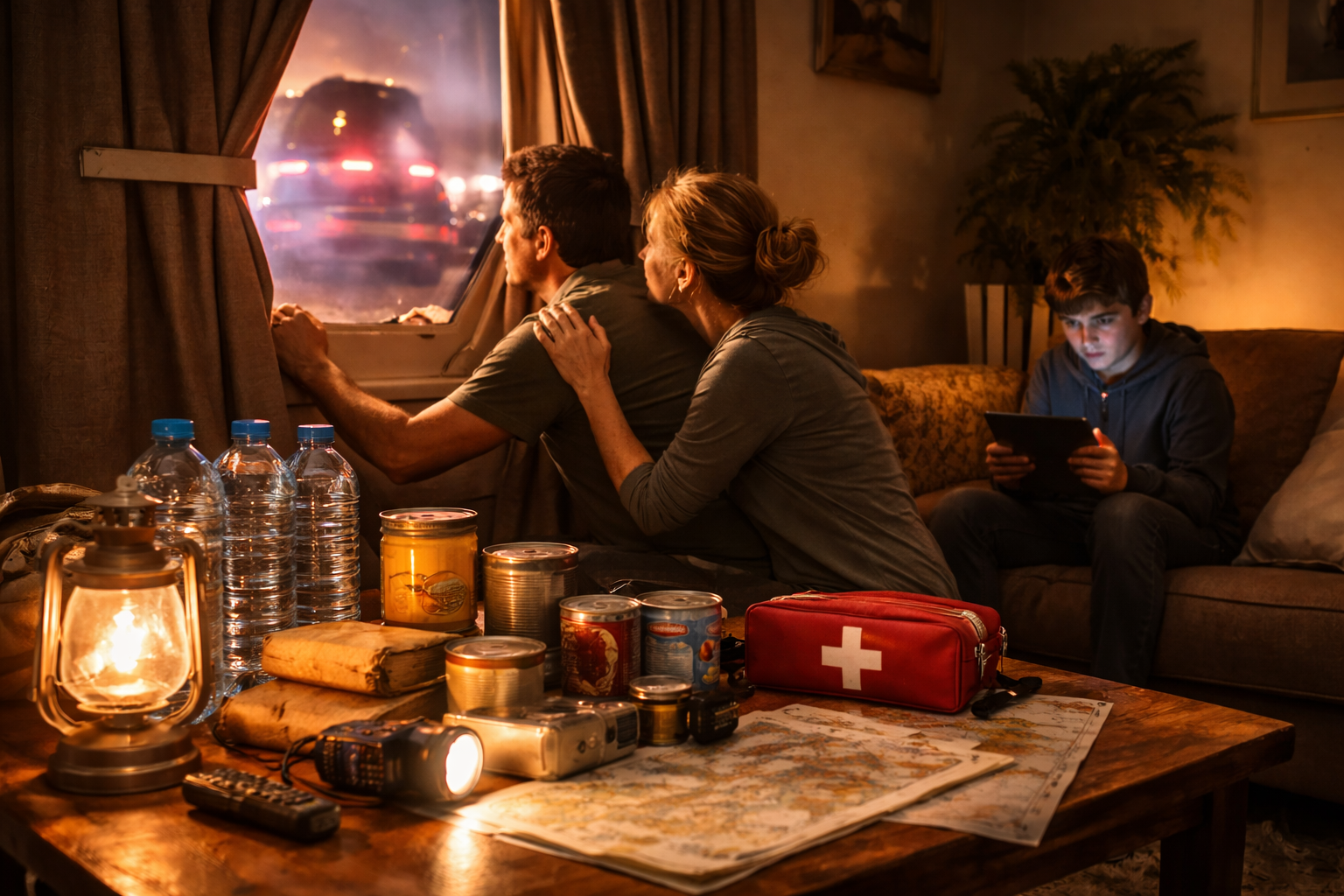
Secure doors and windows discreetly. Exterior lights should be minimal at night to avoid drawing attention. Keep valuable items out of sight. Close curtains once darkness falls.
Avoid posting real-time locations or conditions online. Information spreads faster than people expect. Visibility creates vulnerability.
Manage information carefully
During unrest, misinformation becomes fuel. Rumors, manipulated videos, and emotional narratives circulate rapidly. Limit exposure to verified sources. Avoid constant scrolling, which increases anxiety and distorts judgment.
Make decisions based on confirmed conditions, not viral urgency. Calm assessment beats fast reaction every time.
Prepare for temporary isolation
Lockdowns can disrupt food access, medical care, fuel availability, and emergency response times. Keep basic supplies on hand: food, water, medications, hygiene items, batteries, and first aid.
Plan for communication outages. Write down emergency contacts. Establish family meeting plans if separation occurs. Preparation prevents desperate movement later.
Protect children emotionally as well as physically
Children absorb tension even when adults stay quiet. Explain situations calmly without graphic detail. Maintain routines as much as possible. Familiar schedules restore stability.
Limit children’s exposure to news footage and social media. Fear spreads faster in young minds than facts.
Know when leaving is safer than staying
While staying home is usually safest, exceptions exist. Fires, targeted violence, or loss of utilities may force relocation. If leaving becomes necessary, do so early, before conditions deteriorate.
Choose low-profile routes. Avoid main roads, checkpoints, and known hotspots. Travel during daylight if possible. Late evacuation is far more dangerous than early relocation.
Mental discipline keeps families safe
Stress leads to impulsive decisions. Fatigue lowers risk awareness. Establish quiet routines, shared responsibilities, and regular check-ins within the household.
Avoid arguments, panic buying, or confrontational behavior. Stability inside the home reduces risk outside it.
The deeper truth
Civil unrest does not reward bravery or involvement. It rewards distance, discretion, and preparation. Most harm comes not from intent, but from proximity.
When tension rises and systems strain, the safest choice is often the least dramatic one: stay home, stay quiet, stay informed, and protect the people who depend on you.
In times of unrest, your greatest strength is knowing when not to move.