

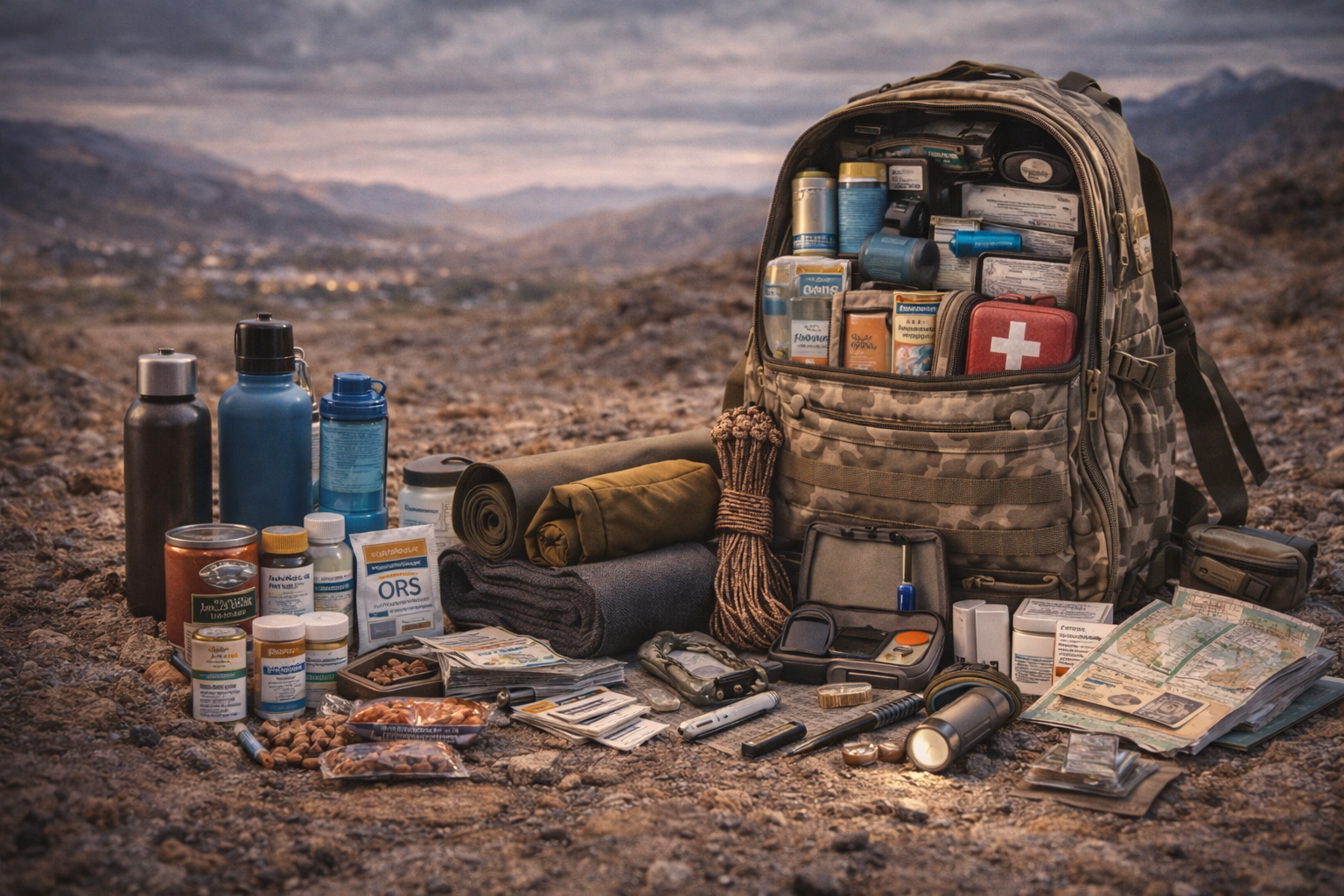
What to Keep in a Bug Out Bag and How to Build It Correctly
A bug out bag is not about fear or fantasy. It is about time. Time to leave safely, think clearly, and reach a safer place when staying put is no longer an option. Whether the cause is natural disaster, evacuation order, infrastructure failure, or sudden instability, a well-built bug out bag keeps you functional for the first critical 72 hours.
A bug out bag is not a camping backpack. It is a mobility survival system designed for speed, endurance, and adaptability.
First Rule: Define the Purpose Before You Pack
Before adding a single item, decide what your bug out bag is meant to do.
A bug out bag is designed to help you:
– Leave quickly
– Travel on foot or by vehicle
– Survive without services
– Reach a safer location
It is not meant to be heavy, comfortable, or complete. It is meant to keep you alive and moving.
Choose the Right Bag
The bag itself matters more than most people think.
Choose a sturdy backpack with:
– Comfortable shoulder straps and a waist belt
– Weather-resistant material
– Neutral color
– Enough space without encouraging overpacking
If it is uncomfortable when empty, it will be unbearable when full.
Water: The Non-Negotiable Core
Nothing in your bug out bag matters if you cannot hydrate.
Include:
– At least one durable water bottle or bladder
– Water purification tablets or filter
– Collapsible container if space allows
You can survive days without food, but not without water.
Food: Lightweight, High Energy
Bug out food should require no cooking and minimal water.
Pack:
– Energy bars or protein bars
– Nuts, dried fruit, or jerky
– Shelf-stable, ready-to-eat foods
Avoid bulky cans or foods that increase thirst.
The goal is energy, not comfort.
Medical and Health Essentials
This section saves lives more often than any tool.
Include:
– Personal prescription medications (minimum 3–7 days)
– Pain and fever reducers
– Anti-diarrheal medication
– Antihistamines
– Oral rehydration salts
– Small first aid kit
If you have a chronic condition, your medical supplies are more important than tools or weapons.
Clothing and Weather Protection
Your body is your primary survival tool.
Pack:
– Weather-appropriate layers
– Compact rain poncho
– Hat and gloves if climate requires
– Extra socks
Wet, cold, or overheated bodies fail fast.
Light, Power, and Communication
Darkness and silence increase danger.
Include:
– Flashlight or headlamp
– Spare batteries or power bank
– Solar or hand-crank charger if possible
– Battery-powered or hand-crank radio
Information keeps you from walking into danger.
Navigation and Documents
Technology fails. Paper survives.
Include:
– Printed maps of your area and evacuation routes
– Waterproof copies of IDs and documents
– Emergency contact list
– Small amount of cash
If systems are down, proof and paper matter.
Hygiene and Sanitation
Illness spreads fast when hygiene fails.
Pack:
– Hand sanitizer
– Wipes
– Toothbrush and toothpaste
– Toilet paper or compressed wipes
– Gloves
Clean hands prevent more emergencies than medicine.
Basic Tools
Keep this minimal.
Useful items include:
– Multi-tool or small knife
– Duct tape
– Zip ties
– Whistle
– Fire starter or waterproof matches
Avoid heavy or specialized gear unless you know how to use it.
Personal Safety and Comfort
Mental stability matters.
Add:
– A small comfort item
– Earplugs or eye mask
– Notebook and pen
Stress exhaustion causes bad decisions.
How to Build It the Right Way
Pack your bug out bag in layers:
– Items you need most go on top
– Heavier items close to your back
– Rare-use items at the bottom
Once packed:
– Carry it for 15–20 minutes
– Adjust straps
– Remove anything unnecessary
If you wouldn’t carry it under stress, it doesn’t belong.
Customize for Your Reality
A bug out bag for a city is different from one for rural areas. A family bag is different from a solo bag. Children, elderly family members, pets, climate, and distance all change what belongs inside.
There is no universal perfect bag. There is only your correct bag.
What Should Never Be in a Bug Out Bag
Do not pack:
– Unused gear you don’t know how to use
– Heavy food cans
– Homemade medications
– Excessive weapons
– Items “just in case” without purpose
Weight kills mobility. Confusion kills judgment.
Final Thought
A bug out bag does not guarantee safety. It guarantees options. It gives you the ability to leave instead of freeze, to move instead of panic, and to protect yourself long enough to reach stability.
The best bug out bag is the one you can lift, carry, and actually use when everything feels urgent.