

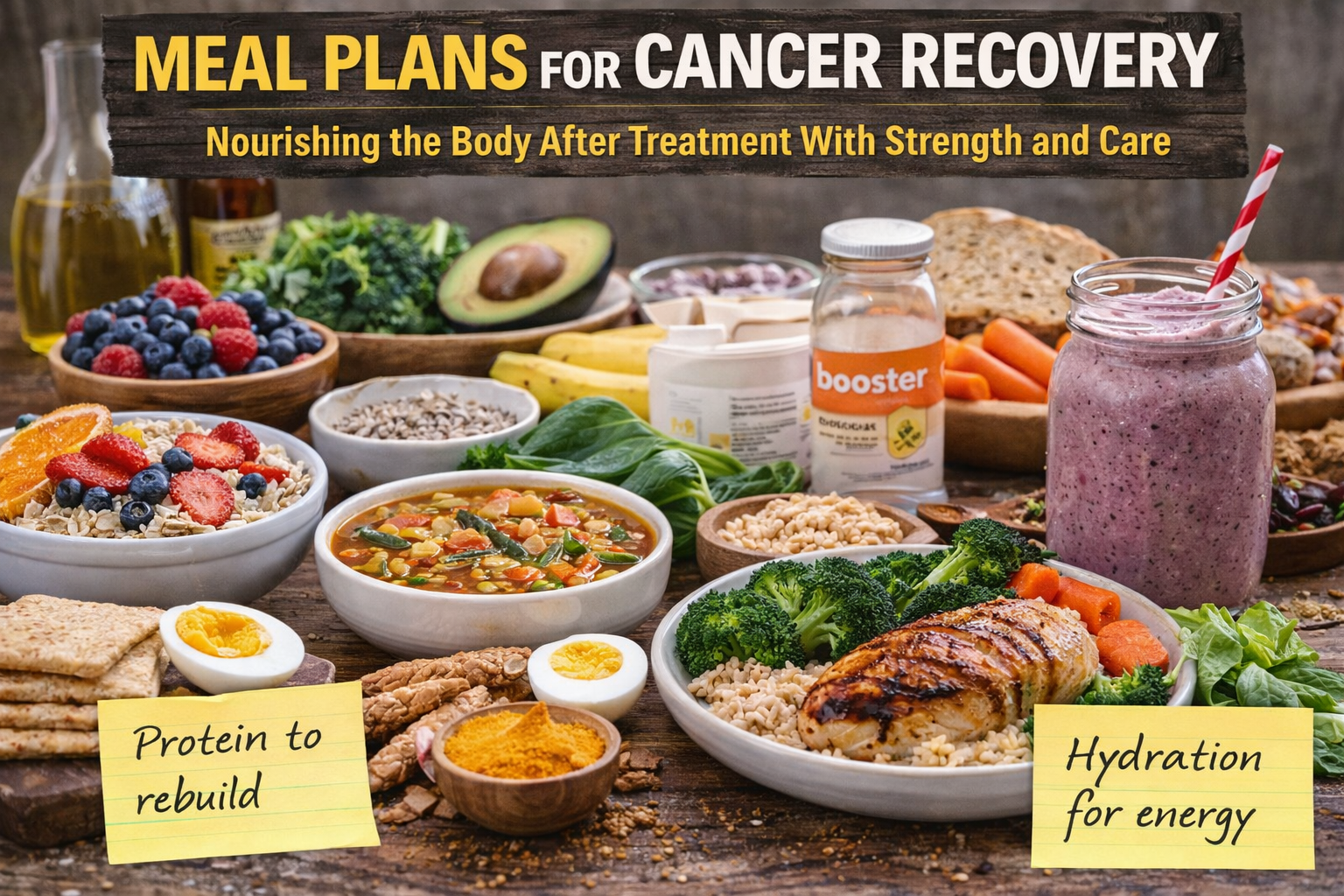
Nourishing the Body After Treatment With Strength, Care, and Realism
Cancer recovery is not a single moment. It is a process that unfolds slowly, often unevenly, as the body repairs tissue, rebuilds immunity, restores digestion, and regains strength after treatment. Food plays an important role in this phase, not as a cure, but as daily support for healing, energy, and resilience.
A recovery-focused meal plan is gentle, flexible, and responsive to how the body feels on any given day. Appetite, taste, digestion, and energy may change week to week. The goal is not perfection. The goal is steady nourishment without added stress.
What the Body Needs Most During Recovery
After cancer treatment, the body prioritizes repair. This means increased needs for protein, adequate calories, vitamins, minerals, and hydration. Many people also experience fatigue, digestive sensitivity, or altered taste, which makes eating harder even when nutrition is needed most.
A recovery meal plan should focus on:
– rebuilding muscle and tissue
– supporting immune function
– calming inflammation
– restoring gut health
– maintaining body weight and strength
Protein Is the Foundation of Recovery
Protein supports tissue repair, immune cells, and muscle mass, which is often lost during treatment. Every meal should include a protein source when possible.
Good recovery-friendly options include eggs, fish, poultry, yogurt, kefir, tofu, beans, lentils, nut butters, and protein-rich soups. For people with low appetite, smoothies, soft foods, and soups often work better than large solid meals.
Small amounts of protein, eaten often, are more effective than large portions.
Carbohydrates for Energy and Stability
Carbohydrates provide the energy the body needs to heal. During recovery, overly restrictive diets can slow progress.
Choose gentle, easy-to-digest options such as oats, rice, potatoes, quinoa, whole-grain toast, and pasta. These foods help stabilize blood sugar and support daily activity without overloading digestion.
Energy supports healing. Skipping carbohydrates often increases fatigue.
Healthy Fats for Healing and Weight Maintenance
Healthy fats provide concentrated calories and support nutrient absorption. They are especially helpful when appetite is low.
Include olive oil, avocado, nuts, seeds, nut butters, and fatty fish when tolerated. These fats also support inflammation balance and cardiovascular health.
Vegetables and Fruits: Focus on Tolerance, Not Volume
Fruits and vegetables provide antioxidants, fiber, and micronutrients, but during recovery, tolerance matters more than quantity.
Cooked vegetables are often easier to digest than raw ones. Soft fruits, soups, stews, and blended options can reduce digestive strain. Variety matters, but forcing large portions can backfire.
Gentle nutrition beats aggressive nutrition during recovery.
Hydration Is Part of Every Meal Plan
Dehydration worsens fatigue, constipation, headaches, and weakness. Water, herbal teas, broths, and electrolyte drinks support circulation and nutrient delivery.
Sip fluids throughout the day, especially if appetite is low.
Sample Gentle Day of Recovery Meals
Breakfast might include oatmeal made with milk or a dairy alternative, topped with nut butter and soft fruit. A smoothie with yogurt, banana, and protein powder is another option.
Lunch could be a vegetable and lentil soup with bread, or rice with soft cooked vegetables and fish or tofu.
Dinner may include baked chicken or fish, mashed potatoes or rice, and cooked vegetables drizzled with olive oil.
Snacks can include yogurt, nut butter with crackers, boiled eggs, fruit, or meal replacement drinks when needed.
This pattern can be adjusted daily based on appetite and energy.
Managing Common Recovery Challenges With Food
Loss of appetite may improve with small, frequent meals and calorie-dense foods. Taste changes may require experimenting with seasonings, temperature, and textures. Digestive discomfort often improves with cooked foods, lower fiber temporarily, and avoiding greasy or highly processed items.
There is no failure in relying on simple foods. Recovery is not the time to push extremes.
Foods and Practices to Be Cautious With
Avoid extreme diets, juice cleanses, fasting, or supplement megadoses unless medically supervised. Some supplements interfere with medications or recovery. Alcohol should be limited or avoided during recovery, as it stresses the liver and immune system.
Recovery thrives on consistency, not intensity.
Emotional Recovery and Food
Food is emotional during cancer recovery. Appetite can be tied to fear, exhaustion, or grief. Familiar foods, warm meals, and shared eating routines help rebuild a sense of normalcy.
Eating is not just physical recovery. It is psychological grounding.
Final Thought
Meal plans for cancer recovery are not rigid schedules. They are support systems. They adapt as strength returns, taste changes, and confidence grows.
Food does not erase what the body has endured.
But it helps the body rebuild day by day.