

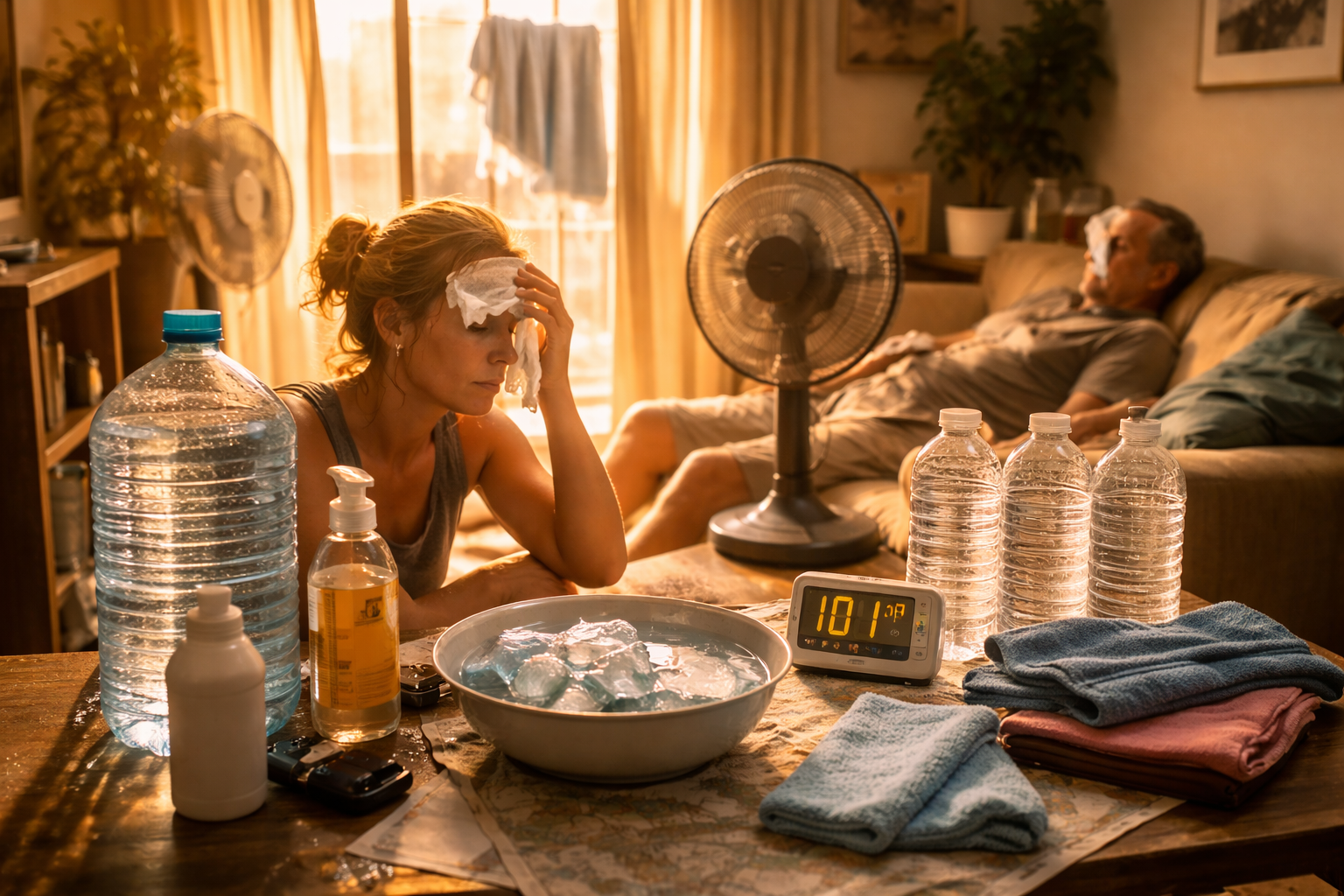
When air conditioning fails and heat becomes a silent killer.
Extreme heat is one of the deadliest natural hazards, yet it rarely feels dramatic. There is no shaking ground, no rushing water, no visible flames. Heat kills quietly, through dehydration, organ stress, and heat stroke, often inside homes people believe are safe.
When air conditioning fails during a heat wave, survival depends on understanding how the body loses heat, recognizing danger early, and acting before symptoms become irreversible.
Heat kills faster than most people realize
The human body relies on sweating and blood circulation to cool itself. When temperatures rise too high or humidity prevents sweat from evaporating, the body begins to store heat instead of releasing it. Core temperature can climb rapidly, leading to heat exhaustion, heat stroke, and organ failure.
Many heat-related deaths occur indoors, at night, and among people who believed they were resting safely. Heat does not need sunlight to be lethal.
Recognize early warning signs immediately
Heat illness often begins subtly. Symptoms include dizziness, headache, nausea, weakness, confusion, rapid heartbeat, and excessive or stopped sweating. Confusion is especially dangerous, because it prevents people from realizing they are in trouble.
If someone becomes disoriented, stops sweating, has hot dry skin, or loses consciousness, this is a medical emergency. Cool them immediately and seek help if possible.
Reduce heat exposure inside your home
When cooling systems fail, the goal is to slow heat gain and help the body release heat. Close blinds and curtains during the day to block sunlight. Open windows only if outside temperatures are cooler than indoors. Create cross-ventilation when possible.
Move to the lowest level of the building. Heat rises, and upper floors can become dangerously hot. Avoid using ovens, stoves, and appliances that generate heat.
If power is available intermittently, prioritize fans combined with evaporation. A fan alone moves hot air, but a fan plus damp skin or wet cloths increases cooling.
Hydration is survival, not comfort
Dehydration accelerates heat injury. Drink water consistently, even if you do not feel thirsty. Avoid alcohol, caffeine, and sugary drinks, which increase fluid loss.
Eat light meals with high water content. Fruits, vegetables, soups, and broths help maintain hydration and electrolyte balance. Salt intake matters during heavy sweating, but avoid excess without adequate water.
Monitor urine color. Dark urine or reduced urination signals dangerous dehydration.
Use water strategically to cool the body
Cold showers, sponge baths, or wet towels placed on the neck, wrists, armpits, and groin help cool blood circulating near the skin. Even room-temperature water can significantly reduce body heat.
If possible, soak feet or hands in cool water. Cooling extremities lowers core temperature more efficiently than many people realize.
Know who is most at risk
Elderly individuals, children, pregnant people, outdoor workers, and those with heart, lung, kidney, or neurological conditions face higher risk. Certain medications impair sweating or fluid balance.
Check on neighbors, especially those living alone. Extreme heat becomes deadly when isolation prevents early intervention.
Pets are also vulnerable. Never leave animals in parked vehicles. Provide shade, water, and cool surfaces.
Avoid dangerous mistakes
Do not rely on fans in sealed, overheated rooms without hydration or evaporation. Do not push through physical activity. Do not ignore symptoms because “others feel fine.”
Never assume night will bring relief. In many heat waves, overnight temperatures remain dangerously high, preventing the body from recovering.
When to seek safer shelter
If indoor temperatures remain dangerously high, seek cooling centers, shaded public buildings, or locations with backup power if available. Even a few hours of cooling can prevent heat injury.
If evacuation is possible due to prolonged outages, leave early. Heat emergencies worsen over time, not instantly.
Mental clarity saves lives
Heat impairs judgment. Fatigue, irritability, and confusion increase risky behavior. Establish routines for drinking water, checking temperatures, and resting.
Children and elderly individuals may not recognize symptoms or communicate discomfort clearly. Proactive care matters more than waiting for complaints.
The deeper truth
Extreme heat does not announce itself with drama. It erodes the body quietly, steadily, and often invisibly. Survival depends on respecting heat early, cooling the body consistently, and recognizing that discomfort is often the first warning, not the last.
When cooling fails and temperatures climb, the most dangerous assumption is believing you have time.
NY Glamour Recommends
“A carefully selected collection of products inspired by today’s story.”