
Protecting Your Body, Your Treatment, and Your Recovery
Cancer treatment places the body under extraordinary stress. Chemotherapy, radiation, immunotherapy, and surgery are powerful tools, but they also affect healthy cells, digestion, immunity, and energy levels. During this time, what you avoid can be just as important as what you eat or do.
This article focuses on common mistakes, foods, habits, and assumptions that can interfere with treatment, worsen side effects, or slow recovery. It is not about restriction for its own sake. It is about protection.
Avoid Extreme Diets and “Miracle” Cures
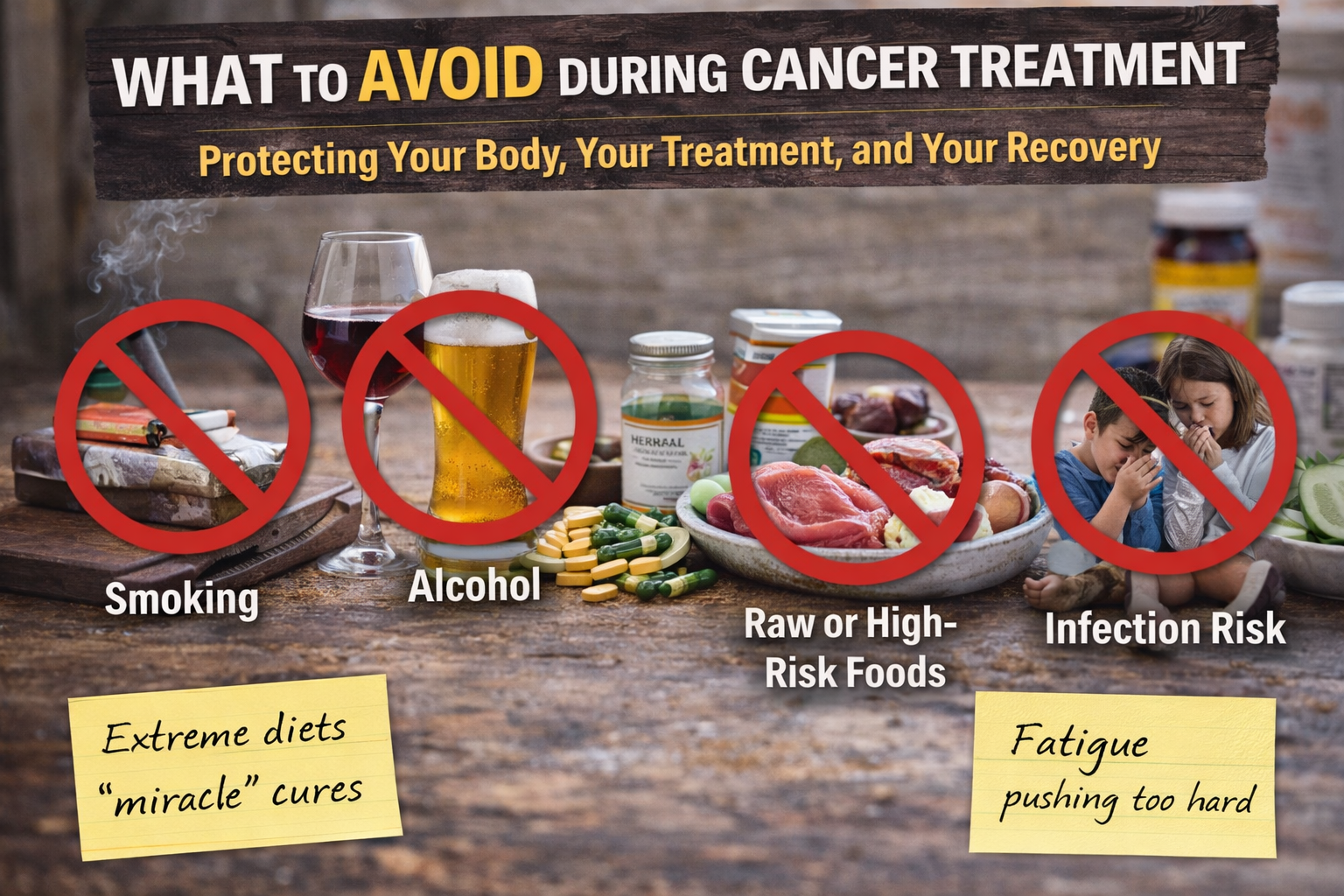
One of the most dangerous pitfalls during cancer treatment is abandoning medical guidance in favor of extreme diets, cleanses, or so-called natural cures. Juice fasts, water fasting, strict elimination diets, or claims that a single food can cure cancer often lead to weight loss, muscle wasting, and nutrient deficiencies.
Cancer treatment already strains the body. Starvation weakens it further.
Always discuss dietary changes with your oncology team. Nutrition during treatment should support strength, not create additional stress.
Avoid Unapproved Supplements and Herbal Products
Many supplements and herbs interfere with cancer treatments by altering how drugs are absorbed, metabolized, or cleared from the body. Some antioxidants may reduce the effectiveness of chemotherapy or radiation. Others can increase bleeding risk or strain the liver.
Common examples include high-dose antioxidants, St. John’s wort, turmeric supplements, green tea extract, and megadoses of vitamins.
“Natural” does not mean safe during treatment.
Never add supplements without medical approval.
Avoid Alcohol
Alcohol stresses the liver, suppresses immune function, worsens dehydration, and can increase side effects such as nausea, mouth sores, and fatigue. During treatment, the liver is already working hard to process medications.
Alcohol adds burden without benefit.
Many care teams recommend avoiding it entirely during active treatment.
Avoid Raw or High-Risk Foods
Cancer treatments often weaken the immune system, increasing the risk of foodborne illness.
Avoid raw or undercooked meat, fish, eggs, and shellfish. Avoid unpasteurized dairy products, soft cheeses made from raw milk, raw sprouts, and unwashed fruits or vegetables. Buffet-style or street foods carry higher contamination risk.
Infection during treatment can delay therapy and become life-threatening.
Food safety matters more than variety.
Avoid Smoking and Secondhand Smoke
Smoking reduces oxygen delivery, impairs healing, weakens immune response, and interferes with treatment effectiveness. Secondhand smoke also increases complications.
Stopping smoking during treatment improves outcomes, even if cessation is recent.
It is never “too late” to benefit from quitting.
Avoid Dehydration and Skipping Meals
Loss of appetite, nausea, and fatigue often lead people to eat and drink too little. This can worsen weakness, dizziness, constipation, kidney strain, and confusion.
Avoid long gaps without fluids or nutrition. Small, frequent meals and regular hydration are safer than trying to eat large portions infrequently.
Fuel and fluids are part of treatment, not optional extras.
Avoid Overexertion and Ignoring Fatigue
Pushing through exhaustion may feel productive, but it often delays recovery. Cancer-related fatigue is not the same as normal tiredness.
Avoid overexertion, lack of sleep, and pressure to “stay strong” at all costs. Rest is a medical need during treatment.
Healing happens during rest, not resistance.
Avoid Exposure to Infection
Crowded indoor spaces, sick visitors, and poor hand hygiene increase infection risk, especially when white blood cell counts are low.
Avoid unnecessary exposure. Wash hands frequently. Follow guidance on masks or isolation when recommended.
Protecting immunity protects treatment schedules.
Avoid Self-Blame and Comparison
Cancer treatment is emotionally demanding. Comparing progress to others, blaming yourself for side effects, or feeling guilty for needing rest creates unnecessary psychological strain.
Every body responds differently. Recovery is not linear.
Mental stress affects physical healing.
Avoid Ignoring New or Worsening Symptoms
Do not dismiss new pain, fever, vomiting, diarrhea, confusion, bleeding, or unusual symptoms as “normal.” Early reporting allows safer adjustments and prevents complications.
Silence does not equal strength. Communication does.
Final Thought
During cancer treatment, avoidance is not about fear or deprivation. It is about removing obstacles so treatment can do its work and the body can recover.
Avoid what weakens, interferes, or distracts.
Protect what supports strength, healing, and stability.