

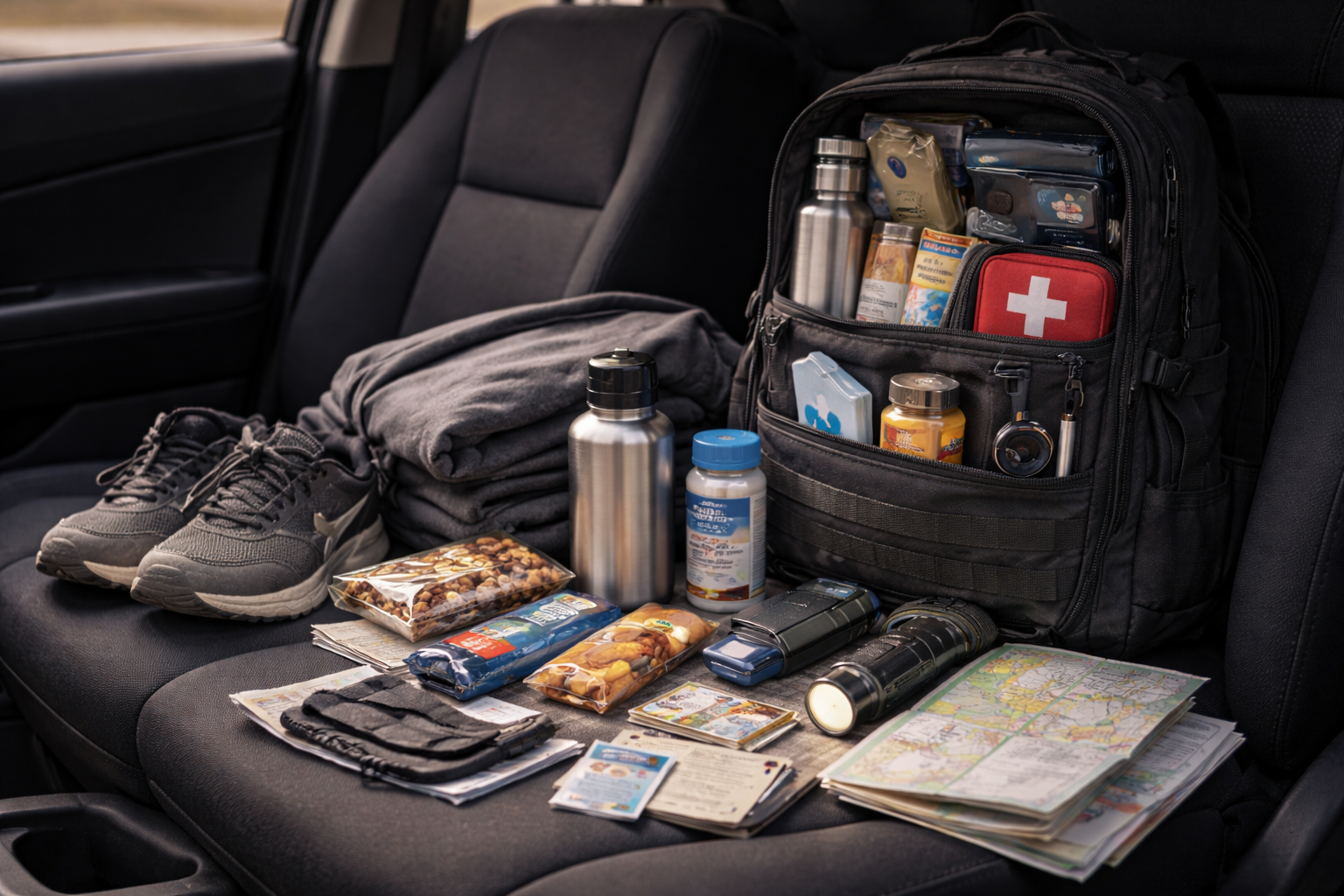
Most emergencies do not begin with evacuation orders or dramatic collapse. They begin quietly. A stalled car. A power outage. Public transport shut down. A sudden storm. A locked-down city. You are not fleeing home. You are trying to get back to it. That is exactly what a Go Home Bag is for.
A Go Home Bag is often confused with a bug out bag, but its purpose is very different. A bug out bag assumes you are leaving home. A go home bag assumes home is still your safest place, and you need to reach it when normal systems fail.
This makes it one of the most practical and overlooked preparedness tools.
What a Go Home Bag Is (and Is Not)
A Go Home Bag is designed to support you for 12 to 48 hours while traveling back to your home on foot, by bike, or through disrupted transportation. It is not meant for wilderness survival, long-term outages, or evacuation camps.
Its job is simple: keep you mobile, alert, hydrated, and safe until you get home.
Because of that, it should be lighter, smaller, and more focused than a bug out bag.
Where a Go Home Bag Lives
A Go Home Bag usually lives where you are not sleeping.
Common locations include:
– Your car
– Your workplace
– Your daily commute bag
– A locker or office drawer
Emergencies often happen when you are away from home.
Water and Hydration Come First
Movement without hydration leads to exhaustion and poor decisions.
Your bag should include:
– At least one durable water bottle
– Oral rehydration salts or electrolyte packets
– Water purification tablets if distance is long
Dehydration turns inconvenience into danger faster than hunger.
Food That Fuels Walking, Not Sitting
You are not resting. You are moving.
Pack:
– Energy or protein bars
– Nuts or trail mix
– Jerky or compact shelf-stable snacks
Avoid foods that require cooking, heating, or utensils.
The goal is steady energy, not fullness.
Comfortable Movement Is Survival
Most people underestimate how hard walking long distances can be when unplanned.
Include:
– Comfortable walking shoes if you normally wear dress shoes
– Extra socks
– Lightweight weather-appropriate layers
– Hat or rain poncho
Blisters and exposure stop people faster than lack of food.
Medical and Health Essentials
This section is small but critical.
Pack:
– Personal prescription medications (at least 24–48 hours)
– Pain and fever reducers
– Anti-diarrheal medication
– Antihistamines
– Small first aid kit
If you have asthma, diabetes, or another condition, your supplies take priority over tools.
Navigation and Situational Awareness
When systems fail, familiar routes may not work.
Include:
– Printed local maps
– Alternate route notes
– Small flashlight or headlamp
– Phone charger or power bank
Getting lost wastes energy and increases risk.
Hygiene and Practical Comfort
Stress compounds when basic needs are ignored.
Add:
– Hand wipes or sanitizer
– Tissues or toilet paper
– Lip balm
– Gloves
These items seem small until you need them.
Security and Communication
A Go Home Bag is about avoiding trouble, not confronting it.
Include:
– Whistle
– Emergency contact list on paper
– Small amount of cash
Visibility, signaling, and documentation reduce risk.
What Should Never Be in a Go Home Bag
Avoid:
– Heavy gear
– Survival tools you don’t know how to use
– Weapons unless legally trained and necessary
– Bulky food
– “Just in case” items without a clear purpose
Weight slows you down. Confusion drains focus.
How to Build It the Right Way
Pack your bag, then test it.
Walk for 20–30 minutes carrying it. Adjust straps. Remove anything unnecessary. If something feels annoying during the test, it will feel unbearable under stress.
If you wouldn’t carry it home tired, it doesn’t belong.
Customize for Your Life
Your go home bag depends on:
– Distance from work to home
– Climate
– Urban or rural environment
– Footwear you normally wear
– Physical ability
There is no universal version. There is only the version that fits your commute and your body.
Final Thought
A Go Home Bag is not dramatic. That is its strength. It prepares you for the most likely emergency, not the most extreme one. It assumes society hiccups instead of collapses. It helps you avoid panic, crowds, and bad decisions.
You don’t need to survive the world.
You need to make it home.