
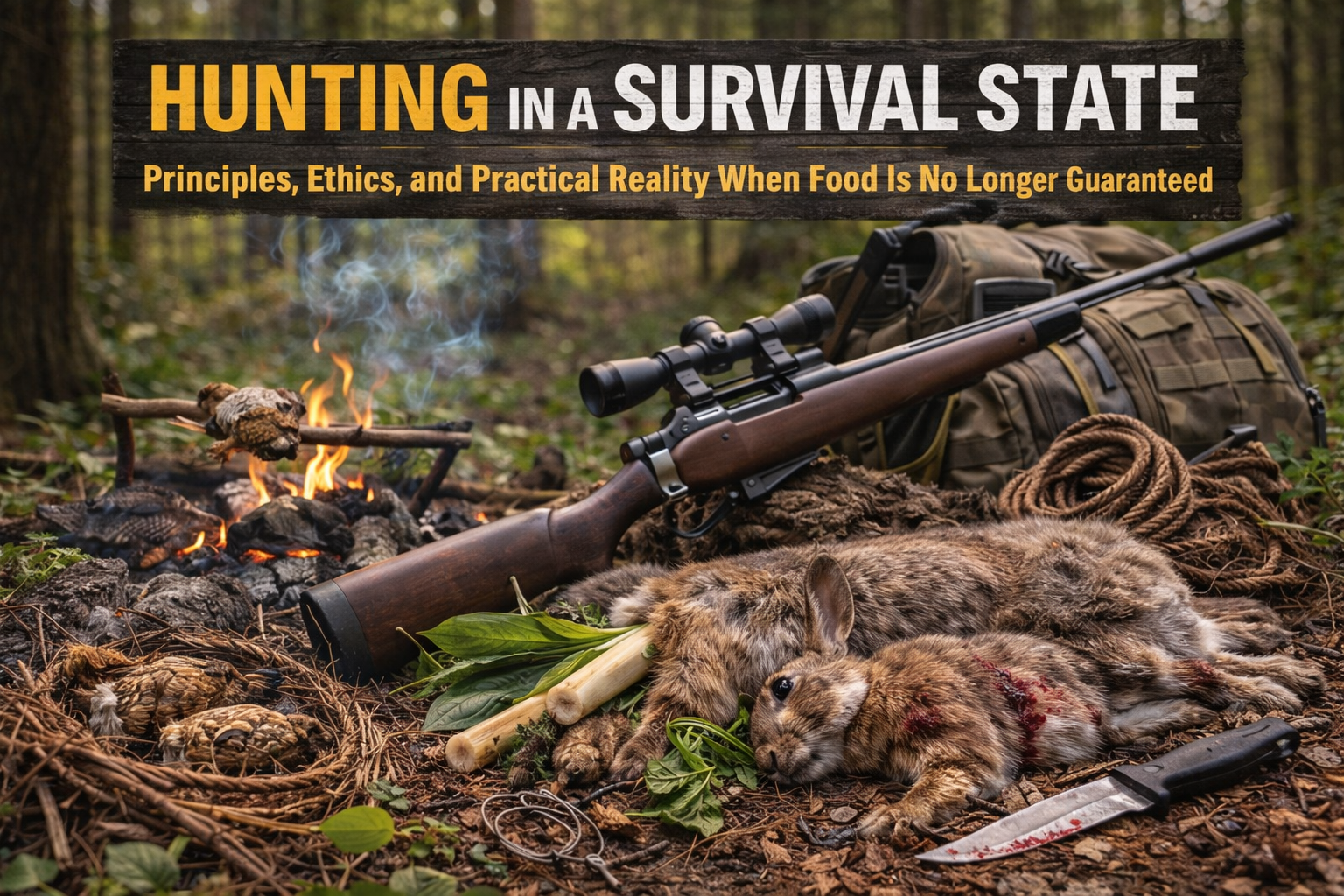
Hunting in a survival situation is very different from recreational or sport hunting. It is not about trophies, skill display, or tradition. It is about nutrition, energy balance, risk management, and responsibility. In survival, hunting is a last-resort food strategy that must be approached with realism, restraint, and respect for both the environment and your own physical limits.
This article focuses on survival-minded hunting principles, not sport techniques, and emphasizes when hunting helps, when it hurts, and how to think clearly under pressure.
Survival Hunting Is About Calories, Not Pride
In a survival state, every action must earn more energy than it costs. Hunting can be calorie-expensive. Walking long distances, stalking prey, building traps, or missing shots can burn more calories than the meat provides.
This is why survival hunting prioritizes:
small animals over large ones,
opportunistic success over pursuit,
and efficiency over challenge.
If hunting costs more energy than it gives back, it is not survival.
Understand the Realistic Role of Hunting
Hunting is not a guaranteed food source. Many survival situations last days, not months. Foraging, stored food, and rationing often matter more early on. Hunting becomes useful when:
food stores are depleted,
foraging options are limited,
and time allows careful effort.
In most survival scenarios, hunting supplements food. It rarely replaces it entirely.
Small Game Matters More Than Large Game
Large animals provide more meat but require more energy, skill, time, and risk. Injury during a survival hunt can be fatal without medical care.
Small game such as rabbits, birds, rodents, or fish offer:
lower energy investment,
less danger,
and faster returns.
In survival, small, reliable protein beats big, uncertain reward.
Tools Are Less Important Than Knowledge
Many people focus on weapons. In survival, knowledge matters more.
Understanding animal behavior, movement patterns, feeding times, and habitats dramatically increases success while reducing wasted effort. Knowing where animals travel, drink, and shelter is more valuable than having advanced equipment.
Observation saves calories.
Trapping Versus Active Hunting
Traps and passive methods often outperform active hunting in survival contexts because they work while you rest or focus on other tasks.
However, traps require:
proper placement,
knowledge of local species,
and time to check responsibly.
Poorly placed traps waste energy and harm animals unnecessarily.
Passive methods conserve strength. Strength preserves life.
Ethics Still Matter in Survival
Survival does not erase responsibility.
Only take what you can use. Do not wound animals unnecessarily. Use as much of the animal as possible. Respect local ecosystems, even in crisis. Waste increases future scarcity.
Ethical behavior in survival is not morality theater. It is long-term thinking.
Food Safety Is Critical
In survival states, illness can be more dangerous than hunger.
Meat must be properly cooked to reduce parasites and bacteria. Avoid animals that appear sick, behave strangely, or are found dead. Fatty meat provides energy, but spoiled fat can cause severe illness.
Never trade hunger for infection.
Weather, Season, and Environment Change Everything
Hunting success varies drastically with season, climate, and terrain. Cold weather preserves meat but increases energy needs. Hot weather spoils meat quickly and increases dehydration risk.
Adapt your strategy to conditions, not habit.
Nature does not care about plans. It responds to conditions.
When Not to Hunt
Do not hunt if:
you are injured or exhausted,
water is critically low,
weather is extreme,
or your chances of success are poor.
Rest, hydrate, and reassess. Survival is about staying alive, not proving toughness.
Mental Discipline in Survival Hunting
Hunger clouds judgment. Fear encourages rash decisions. Survival hunting requires patience, restraint, and acceptance of failure. Missing a hunt is not failure. Getting injured is.
Clear thinking is more valuable than protein.
Preparation Before You Ever Need It
The best survival hunters are not the bravest. They are the most prepared.
Learn local wildlife laws and ecosystems now. Practice ethical hunting and processing skills in normal conditions. Study animal behavior. Build respect for the environment.
Survival favors those who prepare quietly.
Final Thought
Hunting in a survival state is not heroic or cinematic. It is slow, uncertain, and physically demanding. When done wisely, it provides critical nutrition and confidence. When done recklessly, it drains strength and shortens survival.
In survival, humility feeds you longer than force.
Hunt with patience, knowledge, and restraint.
NY Glamour Recommends
“A carefully selected collection of products inspired by today’s story.”