

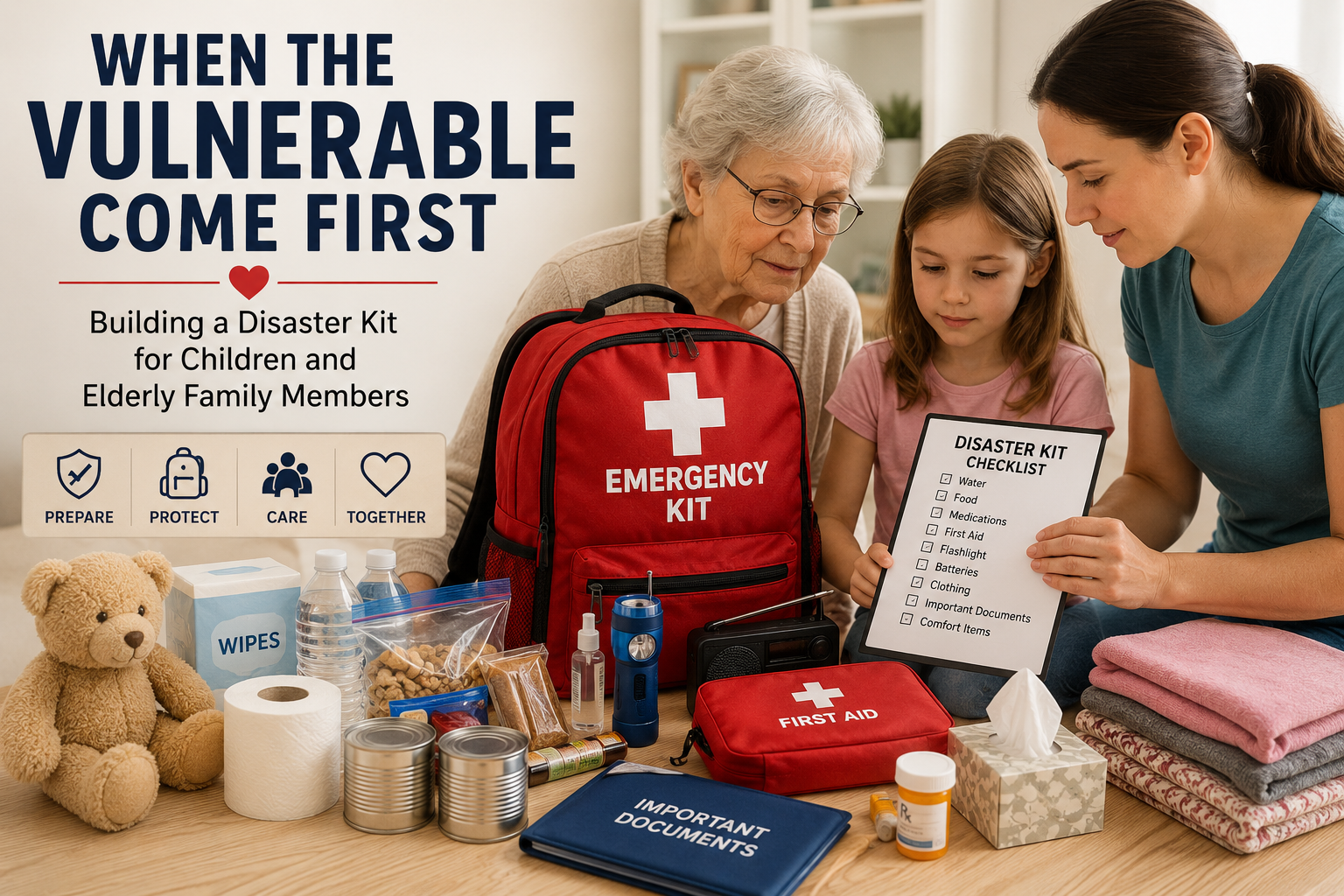
Disasters do not affect everyone equally. Children and elderly family members experience emergencies faster, harder, and with fewer reserves. Their bodies respond differently to stress, dehydration, temperature changes, and medication interruption. A disaster kit designed for them is not a smaller version of an adult kit. It is a different strategy entirely, built around stability, reassurance, and continuity.
A well-prepared kit does more than store supplies. It prevents panic, reduces medical risk, and protects dignity when normal systems fail.
Why Children and Seniors Need Specialized Kits
Children dehydrate quickly, spike fevers rapidly, and cannot always explain discomfort. Elderly adults are vulnerable to missed medications, blood pressure changes, blood sugar instability, confusion, and falls. In disasters, pharmacies close, electricity fails, and emergency response may be delayed for days.
For these groups, small disruptions become serious emergencies very fast.
Medications Come First, Always
For both children and elderly family members, prescription medications are the most critical items.
Include at least a 7–14 day supply of all required medications, stored in original containers with labels intact. Add a printed medication list with names, dosages, schedules, prescribing doctors, pharmacies, allergies, and medical conditions. Never rely on memory in a crisis.
For children, include weight-based medications in liquid form whenever possible, with clearly labeled dosing syringes. For elderly family members, prioritize heart, blood pressure, diabetes, thyroid, neurological, and breathing medications.
Medication continuity saves more lives than any gadget or tool.
Hydration and Electrolyte Protection
Dehydration is one of the fastest killers in disasters.
Include oral rehydration salts (ORS) for both children and seniors. These are essential for vomiting, diarrhea, fever, or heat exposure. Keep written instructions for proper preparation. Never guess measurements.
Add water purification tablets if clean water access may be compromised.
In the first 72 hours, hydration matters more than food.
Temperature and Comfort Regulation
Children and elderly adults struggle more with temperature extremes.
Pack weather-appropriate clothing layers, thermal blankets, cooling cloths, and hats. Include fever reducers appropriate for age and health conditions. Add sunscreen and lip balm for sun exposure, and hand warmers for cold environments.
Comfort is not luxury. It prevents shock, confusion, and physical decline.
First Aid and Daily Care Supplies
Include antiseptic wipes, antibiotic ointment, bandages, burn gel, gloves, and a digital thermometer. For children, add diapering supplies, rash cream, wipes, and comfort items such as a small toy or blanket. For seniors, include mobility aids, compression socks if used, and skin care products to prevent irritation or breakdown.
Familiar items reduce stress when everything else feels unfamiliar.
Special Medical and Sensory Needs
Children with asthma need inhalers and spacers. Seniors may need hearing aid batteries, spare glasses, glucose monitors, test strips, and fast-acting sugar sources for hypoglycemia.
If cognitive impairment is present, include ID cards, written care instructions, and calming aids.
Never assume emergency responders will know your family member’s needs.
What Should Never Be in the Kit
Do not include homemade pills, herbal substitutes for medications, expired drugs, or unlabeled containers. Do not rely on buying supplies after a disaster begins.
Emergencies are not the time to experiment or improvise.
Storage and Accessibility
Store kits in waterproof, clearly labeled containers. Keep them accessible, not buried. Review contents every six months and update as needs change.
If evacuation is possible, prepare a grab-and-go version alongside a home kit.
Final Thought
A disaster kit for children or elderly family members is an act of protection, not fear. It acknowledges reality without panic. It says, “If something goes wrong, you will not be alone, untreated, or forgotten.”
Preparedness is not about controlling disaster. It is about protecting the people who need you most when control disappears.
NY Glamour Recommends
“A carefully selected collection of products inspired by today’s story.”