
At first, it’s just a smell.
A thin line of smoke on the horizon.
A distant glow that could be sunset—or something else.
Then the wind shifts.
The sky turns the color of bruised orange.
Ash begins to fall like black snow.
That’s when you realize: the forest isn’t just burning.
It’s breathing fire.
What is a wildfire, really?
A wildfire is a large, uncontrolled fire that burns in natural areas like forests, grasslands, or shrublands. It can creep low along the ground or roar through treetops. It can move slowly, smoldering and coughing out smoke—or it can travel faster than a person can run, leaping across roads and rivers.
Wildfires can start in many ways:
– Natural causes:
• Lightning strikes
• Lava flows from volcanic eruptions
– Human causes:
• Unattended campfires
• Cigarettes thrown from car windows
• Power lines sparking
• Intentional arson
• Machinery or vehicles in dry grass
But sparks—natural or human—are only part of the story. Whether a small flame becomes a monster depends on three key ingredients: fuel, dryness, and wind.
The fire triangle: how a spark becomes a disaster
Fire needs three things to live:
-
Fuel
Trees, dry leaves, grass, shrubs—anything that can burn.
In some forests, fallen branches and dead plants can build up for years, creating a massive store of fuel waiting for the right moment. -
Heat
High temperatures dry out vegetation, turning it into perfect kindling. A heatwave can turn a forest into a tinderbox. -
Oxygen
The air itself feeds the flames. Wind supplies more oxygen and pushes the fire into new fuel.
When the weather is hot, the air is dry, and the landscape is cluttered with fuel, a wildfire doesn’t just spread—it races.
Fire with a mind of its own
Once a wildfire grows, it behaves in ways that can seem almost intelligent:
– It climbs uphill faster than downhill, because heat rises and preheats the slope above.
– It can create its own weather—strong updrafts, swirling fire whirls, and even fire-generated thunderstorms in extreme cases.
– It throws burning embers ahead of itself, starting “spot fires” kilometers away, jumping roads, rivers, and firebreaks.
To firefighters, a large blaze is like a living creature: changing direction, growing stronger with certain winds, weakening in cooler, wetter conditions. Predictable in some ways, terrifyingly unpredictable in others.
More than trees: what wildfires actually burn
We often imagine wildfires as something that happen “out there” in distant forests. But as humans build deeper into wild landscapes, the fires are no longer purely natural events—they become urban disasters too.
Wildfires can:
– Burn homes, cars, schools, and businesses
– Melt power lines and damage communication infrastructure
– Send smoke and ash into towns and cities far away
– Destroy crops and pasture land for livestock
And even after the flames pass, the damage continues:
– Burned hillsides are more prone to landslides and mudflows during heavy rain.
– Rivers and reservoirs can be contaminated with ash and debris.
– Wildlife loses habitat, food, and shelter.
The sky you can’t breathe
You don’t have to be near the flames to feel a wildfire’s impact. Smoke can travel hundreds or even thousands of kilometers.
Wildfire smoke contains tiny particles and gases that can:
– Irritate eyes, throat, and lungs
– Trigger or worsen asthma and other respiratory conditions
– Affect heart health, especially in vulnerable people (children, the elderly, those with health issues)
In some places, wildfire seasons now come with weeks of eerie, smoky daylight. The sun turns red. The horizon disappears. People keep windows shut and air purifiers running, waiting for the wind to change.
Fire as a natural force—and a human problem
Wildfire is not new. Many ecosystems evolved with fire as a natural part of their life cycle:
– Some trees need heat to open their cones and release seeds.
– Fire can clear out dead material and return nutrients to the soil.
– Certain plants sprout more easily after a burn.
In that sense, fire is part of the Earth’s rhythm.
But what has changed is:
– The scale and intensity of some modern wildfires
– The number of people and structures in fire-prone areas
– The way human activity and climate change are altering conditions
In many regions, hotter temperatures and longer dry seasons are making landscapes more flammable. Years of fire suppression (putting out every fire as fast as possible) have also allowed fuel to build up, turning forests into powder kegs.
The result: when fires do start, they can be larger, hotter, and harder to control.
The people who run toward the flames
While most people flee a wildfire, others move toward it—firefighters, pilots, emergency crews, volunteers. Their work is dangerous, exhausting, and often heroic.
They fight fire with:
– Firebreaks:
• Clearing vegetation and creating open strips of land to stop or slow the spread.
– Backburning:
• Intentionally setting smaller, controlled fires ahead of the main blaze to remove fuel.
– Water and retardant drops:
• Planes and helicopters dropping water or fire retardant to slow the fire’s advance.
– Ground crews:
• Digging, cutting, and working directly at the fire’s edge, often in intense heat and smoke.
Despite all this effort, not every fire can be fully controlled until weather conditions improve.
Losing and finding again
For those who lose homes, farms, or loved ones to wildfire, the grief is deep.
Often, the landscape looks unrecognizable—trees blackened, structures reduced to foundations and chimneys, memories buried in ash.
Yet there is another side to the story.
– New green shoots often appear weeks or months after the fire.
– Animals slowly return to recolonize the burned areas.
– Communities rebuild, sometimes with better fire-resistant designs and clearer evacuation plans.
Fire destroys quickly, but the process of healing—both for ecosystems and humans—can be surprisingly resilient.
Can we live with fire instead of just fearing it?
We cannot eliminate wildfires entirely, especially in fire-adapted ecosystems. But we can reduce their worst impacts.
Key strategies include:
– Controlled or prescribed burns
• Carefully planned, low-intensity fires that remove excess fuel under safe conditions, reducing the risk of catastrophic wildfires later.
– Better land management
• Thinning overly dense forests in some regions
• Maintaining defensible space (clear areas) around homes
• Avoiding building dense neighborhoods in the highest-risk zones without strong protections
– Stronger building and planning rules
• Using fire-resistant materials for roofs and walls
• Designing neighborhoods with evacuation routes and clear access for firefighters
• Not planting highly flammable vegetation right next to structures
– Responsible behavior
• Fully extinguishing campfires
• Not using fireworks or open flames in high-risk conditions
• Reporting smoke or small fires early before they grow
– Climate action
• Addressing the bigger picture: reducing greenhouse-gas emissions, protecting forests wisely, and adapting to the new realities of a warming world.
The fire in the mirror
Wildfires remind us that nature’s power is not separate from us—we live inside it. Our choices about energy, land, and lifestyle help shape the conditions in which these fires happen.
When a hillside glows at midnight and ash falls like snow on a distant city, it is tempting to see wildfire as a monster outside of us. But it is also a mirror:
– It reflects how we build and where we build.
– It shows how we manage forests and fields.
– It exposes how prepared—or unprepared—we are for a hotter, drier, more flammable world.
In the end, wildfire is both a natural force and a human challenge.
We cannot extinguish every flame forever.
But we can decide whether the next fire finds us surprised and vulnerable—or aware, prepared, and determined to live more wisely in a world where even the forest, one day, might decide to breathe fire.
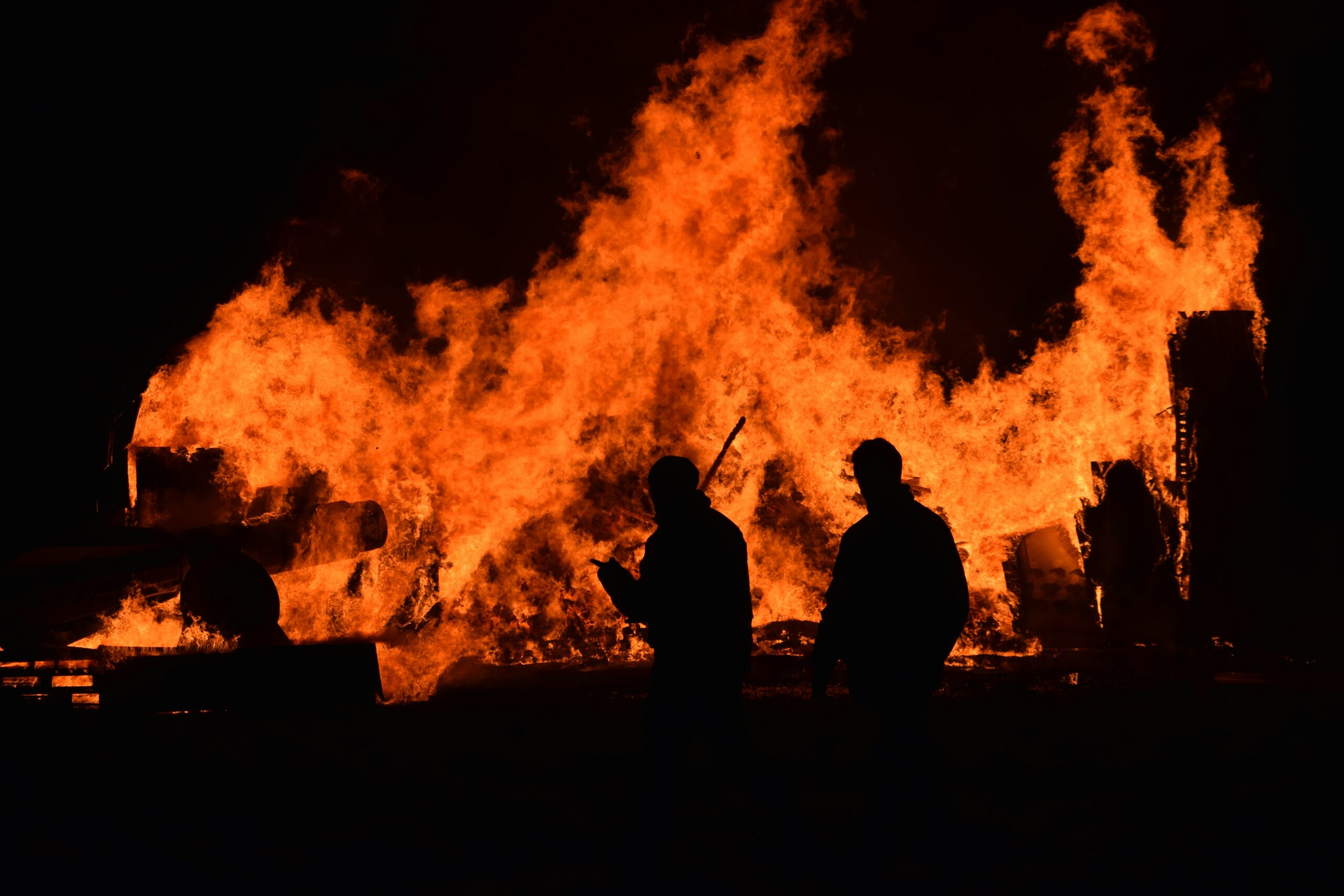
Photo by Issy Bailey on Unsplash