
Most tsunamis are already terrifying—walls of water racing toward the shore after an earthquake shakes the sea floor.
Now imagine something even bigger.
Not just a wave… but the ocean itself seeming to stand up and move.
That’s the idea behind a megatsunami: a wave so large and so powerful that it doesn’t just flood a coastline—it rewrites it.
What is a megatsunami?
A normal tsunami is usually caused by an undersea earthquake. The sea floor shifts, the water above it is displaced, and waves spread out, sometimes across entire oceans. These waves can be deadly, but they are often only a few meters high in deep water, growing taller when they reach the shore.
A megatsunami is different. It’s not just “a bigger tsunami.”
A megatsunami is:
– A massive wave, sometimes hundreds of meters high near the source
– Triggered not by the gentle lifting of the sea floor, but by something violently slamming into the water
Two main triggers are thought to create megatsunamis:
-
Huge landslides crashing into the ocean or into large lakes
-
Large asteroid impacts in the sea
In both cases, enormous amounts of rock or ice suddenly drop into water, displacing it like a giant fist hitting a bathtub.
When mountains fall into the sea
One of the most realistic causes of a megatsunami is a gigantic landslide.
Picture this:
– A large chunk of a mountain or volcanic island becomes unstable
– It collapses all at once, falling into the ocean
– Millions or billions of tons of rock push the water out of the way in a single, brutal movement
The result can be a wave hundreds of meters high very close to the landslide, and still dangerously large even many kilometers away.
We have evidence this has happened before in Earth’s history. In some remote bays and islands, scientists have found signs that waves once swept far higher than any normal storm tide could reach—carrying rocks, sand, and marine material high onto cliffs.
One famous example:
In 1958, a massive landslide crashed into Lituya Bay in Alaska, creating a wave that stripped trees from hillsides up to more than 500 meters above the water level near the impact point. This was not an ocean-wide disaster, but it was a real-world demonstration of what sudden rockfall into water can do.
Asteroids and the ultimate wave
Now take the idea of a landslide… and replace it with a space rock traveling at tens of thousands of kilometers per hour.
If a large asteroid were to slam into the ocean, it could create an enormous wave. In the most extreme scenarios, scientists think such an impact could generate megatsunami-scale waves and floods across entire coasts.
The combination is brutal:
– The impact vaporizes water and rock.
– A huge crater forms in the sea.
– Water rushes back in, rising up and racing outward.
Because Earth is mostly covered by water, an ocean impact is more likely than a land impact. The good news: very large asteroid impacts are extremely rare. The bad news: if one did happen, coastal areas on multiple continents could be at risk.
How a megatsunami would differ from a “normal” tsunami
To someone standing on the shore, a megatsunami wouldn’t just be a slightly taller version of what we already fear. The differences could be shocking:
– Height: Near the source, waves could reach hundreds of meters. Even after losing energy over distance, they might still be tall enough to reach far inland.
– Speed: Like tsunamis, these waves can travel at jet-like speeds in deep water, giving little time to escape if you are close to the origin.
– Reach: The water could travel far inland, especially in low-lying, flat regions, swallowing areas that think of themselves as “safe” from ordinary storm surges.
In cities, a wave like this could overwhelm buildings, roads, ports, and entire neighborhoods. In natural landscapes, it could carve away coastlines, change river paths, and destroy ecosystems in one blow.
How likely is a megatsunami?
Here is where science gives us a bit of comfort: megatsunamis are in the “could happen” category—not the “expect this soon” category.
– Huge landslides capable of generating megatsunamis are rare and often require very specific conditions.
– Many of the places where they might occur (like remote volcanic islands or steep fjords) are not heavily populated.
– Large asteroid impacts are among the rarest disasters of all, happening on timescales of many thousands to millions of years.
Most coastlines will never experience a megatsunami in all of human history. More immediate threats—ordinary tsunamis, hurricanes, sea-level rise—are far more likely to affect us.
Why scientists still take megatsunamis seriously
Even if they’re rare, megatsunamis matter for several reasons:
-
High-consequence risk
Low probability doesn’t mean low danger. If it happened in a populated area, the damage could be extreme. -
Coastal planning
Understanding where massive landslides are possible helps planners avoid putting critical infrastructure in the most vulnerable spots. -
Planetary defense
Studying asteroid impacts and possible megatsunami effects is part of the broader effort to protect Earth from dangerous space objects. -
Unlocking Earth’s past
Evidence of ancient megawaves helps scientists reconstruct past climates, sea levels, and geological events—and understand just how restless our planet has been over millions of years.
Watching the cliffs, watching the sky
To reduce the risk, scientists and agencies around the world are:
– Monitoring unstable slopes and volcanoes that could collapse into oceans or lakes
– Modeling how waves would move if certain cliffs or islands failed
– Tracking near-Earth asteroids with telescopes and radar
– Designing potential ways to nudge dangerous space rocks off a collision course, long before they get here
As with many “big” disasters, the real story behind megatsunamis is not just fear—it’s awareness.
We learn where the risks are.
We choose where to build and how to prepare.
We watch the mountains and we watch the sky.
Living with a restless planet
A megatsunami is one of Earth’s most dramatic possibilities: a violent meeting between rock and water, gravity and motion. It reminds us that even the calmest bay can hold a record of ancient chaos, and that our blue planet is powerful beyond measure.
But it also reminds us of something else:
We are the first species on Earth that can understand these threats, measure them, and plan for them—before the water ever rises.
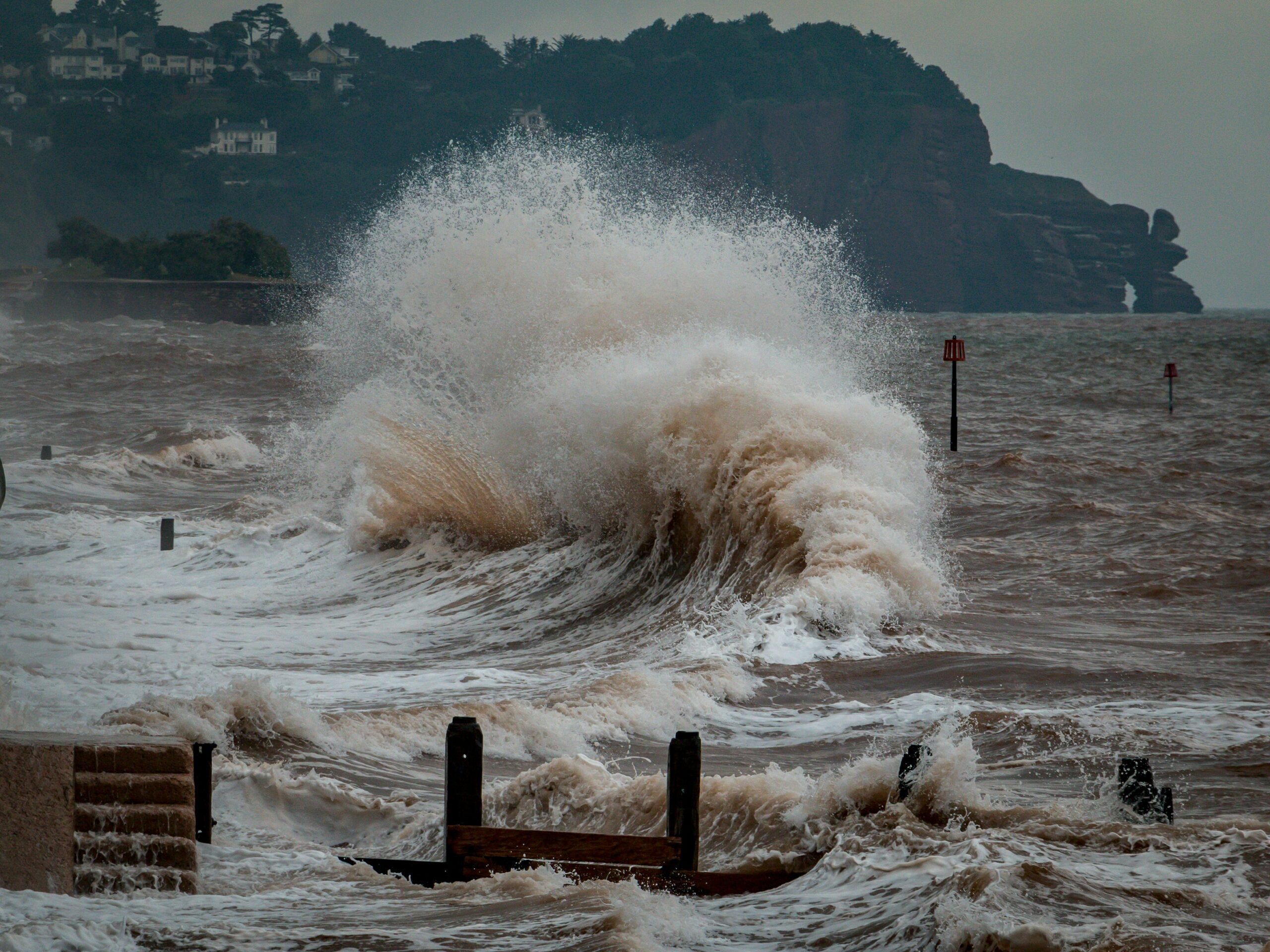
Photo by Ray Harrington on Unsplash