
Lost Artifact, Symbolic Legend, or Misunderstood Religious Object?
Few objects in human history sit at the crossroads of faith, power, and mystery like the Ark of the Covenant. Described as a gold-covered chest containing the stone tablets of divine law, the Ark was said to unleash miracles, bring victory in battle, and strike down those who touched it improperly.
And then it vanished.
Not broken.
Not destroyed.
Simply… gone.
For centuries, scholars, believers, and adventurers have asked the same question: what really happened to the Ark of the Covenant?
What the Ark Was Supposed to Be
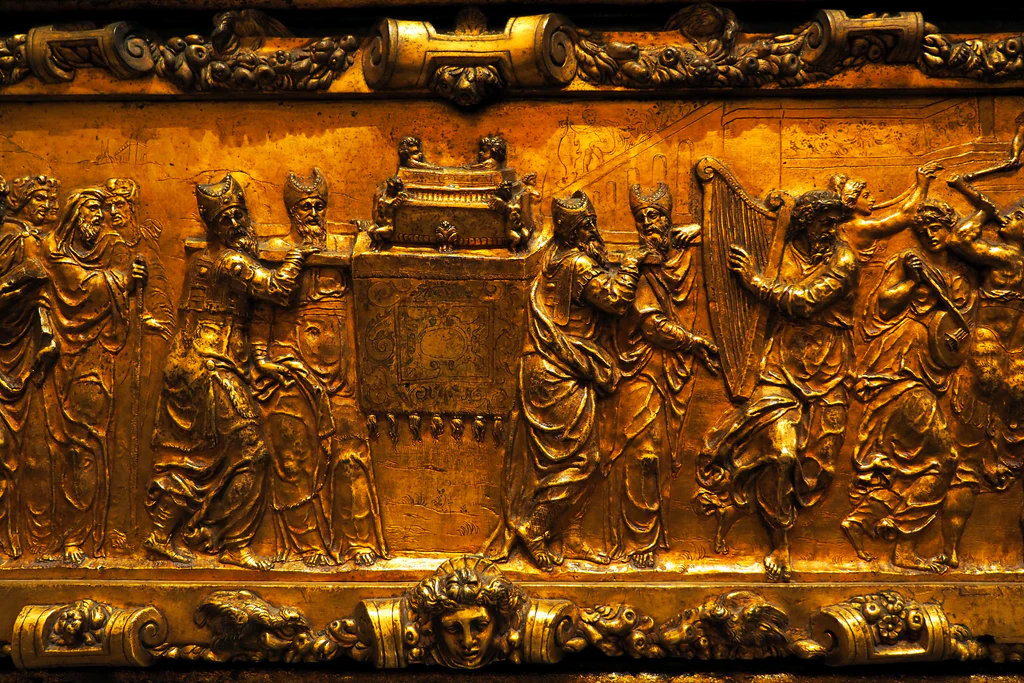
According to ancient Hebrew texts, the Ark was constructed during the Israelites’ journey through the wilderness. It symbolized a physical dwelling place of divine presence, carried ahead of the people during migrations and battles.
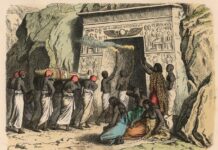
The Ark was never meant to be seen casually. It was hidden behind veils, transported by poles, and approached only by designated priests. Its power was not metaphorical. It was treated as volatile, dangerous, and sacred.
When the Israelites settled, the Ark was eventually placed inside the First Temple in Jerusalem, built under King Solomon. There, it disappeared from public history.
The Moment Everything Goes Silent
The last clear biblical references to the Ark appear shortly before the Babylonian conquest of Jerusalem in 586 BCE. When Babylonian forces destroyed the First Temple, they cataloged spoils in detail.
The Ark is not mentioned.
This absence is the foundation of the mystery. If the Babylonians destroyed it, why record everything else? If they captured it, where did it go?
From that moment on, the Ark slips from history into speculation.
Theory One: It Was Hidden
One of the oldest explanations is that priests concealed the Ark before Jerusalem fell. Some traditions claim it was hidden beneath the Temple Mount in secret chambers designed for this exact purpose.
This idea persists partly because the Temple Mount has never been fully excavated due to religious and political sensitivity. What lies beneath remains unknown.
If the Ark was hidden intentionally, it may still be buried, waiting, forgotten, or sealed away forever.
Theory Two: It Was Taken to Ethiopia
Ethiopian tradition claims the Ark was brought to the ancient city of Axum, where it remains today in the Church of Our Lady of Zion. According to this narrative, the Ark arrived centuries earlier, carried by a royal descendant of Solomon.
The Ark is said to be guarded by a single monk who may never leave the chapel or allow anyone to see it.
Skeptics note that no verification has ever been allowed. Believers counter that secrecy is consistent with how the Ark was always treated.
The object exists, or it does not. Faith decides.
Theory Three: It Was Destroyed
Some scholars argue the Ark was dismantled, melted down, or destroyed during the chaos of conquest. Gold was valuable. Wood decayed. Sacred objects do not always survive war.
But this explanation feels unsatisfying to many because it contradicts the silence of historical records. Destruction usually leaves traces. The Ark left none.
Theory Four: It Was Never Meant to Be Found
A growing interpretation suggests the Ark was not just a physical object, but a symbolic one. Its power represented covenant, law, and collective identity. When the First Temple fell, the focus of faith shifted away from objects and toward texts, rituals, and community.
In this view, the Ark did not disappear accidentally. It became unnecessary.
Its purpose ended when belief evolved.
Why the Ark Still Matters
The Ark of the Covenant continues to fascinate because it challenges modern assumptions. Was it technology mistaken for divinity? A ritual object infused with meaning? A literal artifact with misunderstood properties? Or a theological concept embodied in gold and wood?
Each answer reveals more about us than about the Ark itself.
We want it to be real.
We want it to be lost.
We want it to be powerful.
Because objects that blur the line between myth and history force us to confront how belief shapes reality.
The Most Likely Truth
The Ark of the Covenant was real as an object, powerful as a symbol, and transformative as an idea. Whether it survives physically matters less than what it represented.
It was never just a box.
It was authority made visible.
Faith made tangible.
Law given weight.
And when societies changed, the Ark no longer needed to exist in the same way.
Perhaps the Ark was not lost.
Perhaps it completed its purpose, and history moved on without it.
That may be the most unsettling answer of all.