

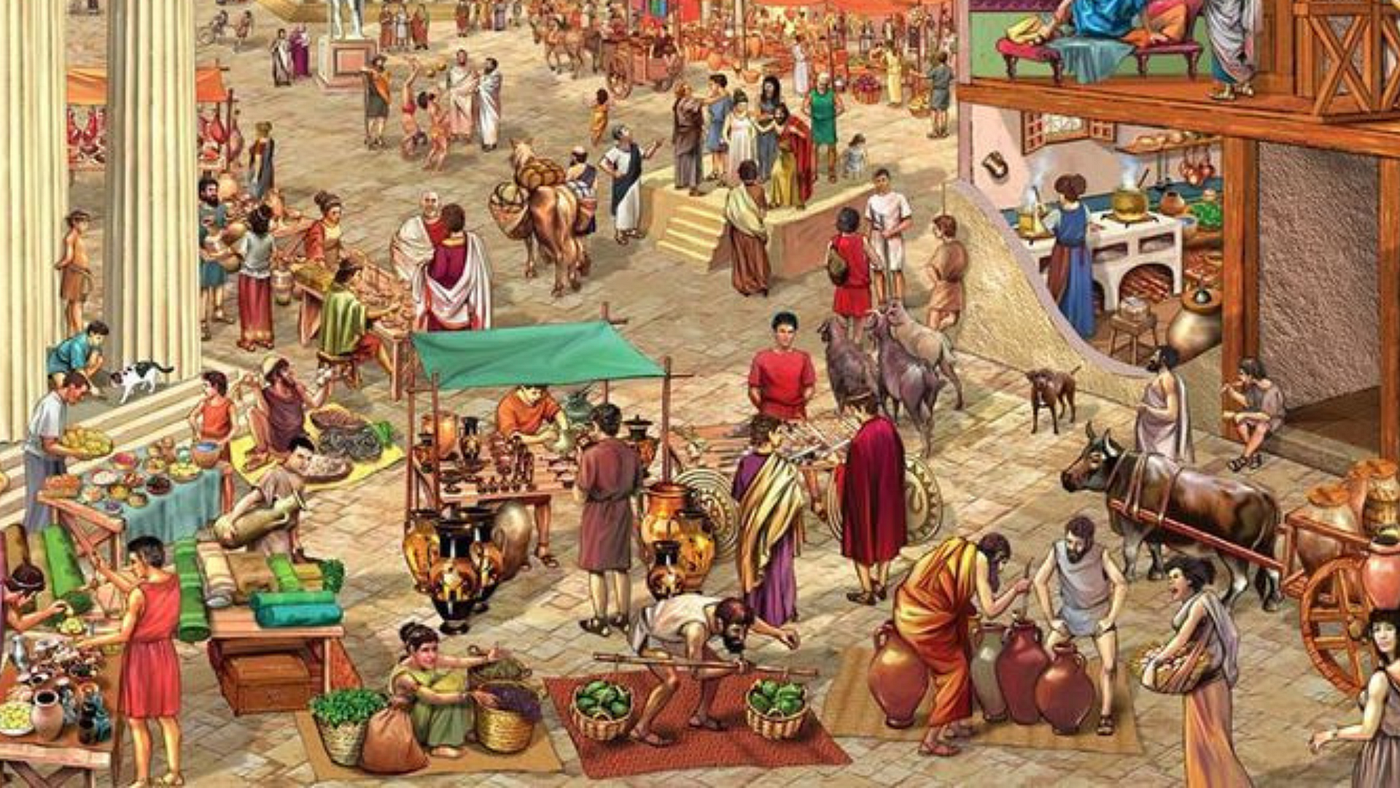
When we imagine ancient cities, we picture marble columns, grand forums, and heroic statues frozen in perfection. But real ancient cities were loud, messy, intimate places. They smelled of bread and sweat, echoed with gossip and music, and pulsed with ordinary human desires. Behind the monuments, life unfolded much as it does today.
In cities like Rome, mornings began early. Bakers fired ovens before sunrise, filling narrow streets with warmth and the scent of grain. Most people lived in crowded apartment blocks, not villas. Water had to be carried. Streets were shared with animals, vendors, and waste. Privacy was rare. Community was unavoidable.
Markets were the heart of urban life. People did not just shop. They argued, flirted, cheated, and exchanged news. Prices were debated loudly. Scams were common. Stolen goods changed hands quickly. Ancient cities had pickpockets, counterfeiters, and con artists, all thriving long before modern crime stories existed.
Love in ancient cities was public and complicated. In Pompeii, walls were covered in graffiti declaring love, lust, jealousy, and heartbreak. Romantic messages, insults, and jokes still survive today, preserved in ash. Marriage was often practical, but desire followed its own rules. Affairs were common. Brothels operated openly. Love was lived, not idealized.
Fashion mattered deeply. Clothing signaled status, profession, and morality. In Athens, colors, fabrics, and accessories spoke volumes. Perfumes were popular. Jewelry was worn by both men and women. Hairstyles shifted with trends. Looking respectable was a social necessity, not vanity.
Food was communal and constant. Street vendors sold hot meals to people who had no kitchens at home. Wine was diluted and shared. Taverns buzzed with laughter, arguments, and gambling. Dice games ruined friendships. Songs spread quickly. Music and storytelling filled the evenings, especially for those who could not afford formal entertainment.
Entertainment was everywhere. Theater performances drew massive crowds, blending comedy, politics, and scandal. In Rome, chariot races inspired devotion that rivaled modern sports fandom. Fans wore colors, bet fortunes, and sometimes rioted. Urban life was emotional and theatrical by nature.
Crime was woven into the city fabric. Night brought thieves, smugglers, and secret meetings. Watchmen patrolled, but justice was inconsistent. Some crimes were ignored. Others were punished brutally. Fear and familiarity coexisted. Everyone knew which streets to avoid after dark.
Religion, too, was deeply personal. Shrines stood in homes, shops, and street corners. People prayed for love, luck, fertility, revenge, and profit. Faith was not abstract. It was transactional, emotional, woven into daily routines rather than reserved for sacred days.
Ancient cities were not museums. They were alive. People complained about noise, corruption, and overcrowding. They laughed at dirty jokes. They worried about money. They fell in love too fast and stayed too long. They lived full lives beneath the shadows of monuments we now admire in silence.
Seeing ancient cities as lived spaces rather than glorified ruins brings the past closer. It reminds us that history was not created only by emperors and philosophers, but by bakers, lovers, thieves, performers, and dreamers walking crowded streets, trying to make life work.
The past was not distant. It was human.