
Live music is not simply recorded music played louder. It is a fundamentally different emotional experience, one that reaches the body and the senses before it reaches the mind. People often struggle to explain why a song they have heard hundreds of times suddenly feels overwhelming when performed live. The reason is simple and profound: live music is presence. It happens only once, in one place, with real people sharing the same moment.
One of the most powerful elements of live music is physicality. Sound in a live setting moves through air, vibrates through floors, and settles in the chest. You do not just hear bass, you feel it. Your heartbeat subtly syncs with rhythm. Your breathing adjusts to tempo. This bodily involvement creates emotional intensity that headphones or speakers cannot replicate. The music becomes something you inhabit rather than consume.
There is also the human factor. In a live performance, you witness effort, vulnerability, and risk in real time. Voices crack. Fingers slip. Musicians adjust, recover, and push forward. These imperfections are not flaws. They are proof of life. Knowing that what you are hearing is unfolding right now, unrepeatable and exposed, heightens emotional engagement. You are not listening to a polished product. You are witnessing a moment.
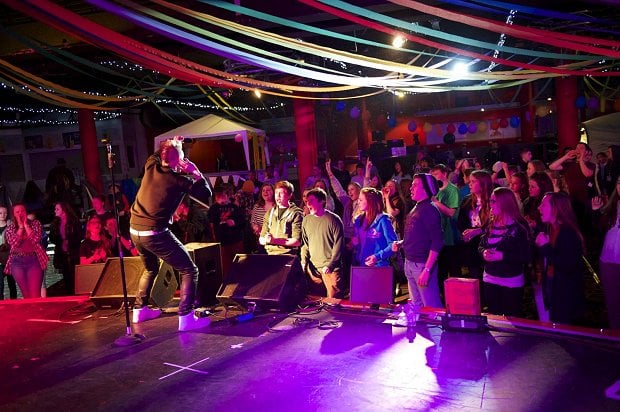
Connection between artist and audience plays a crucial role. Eye contact, shared silence, spontaneous reactions, and unplanned moments create a feedback loop. The performer responds to the crowd. The crowd responds to the performer. Emotion circulates. This exchange gives the music weight. Lyrics land differently when you see the person who lived them. A pause before a chorus can feel as powerful as the chorus itself.
Live music also carries collective emotion. When hundreds or thousands of people feel something together, the experience amplifies. Singing along, standing in silence, or erupting into applause creates a sense of belonging. Even strangers feel connected. The emotion becomes communal rather than private. This shared energy is why live performances are often remembered not just as concerts, but as life moments.
Time behaves differently during live music. Without the ability to pause, rewind, or skip, you surrender control. Attention sharpens. You become present. This focus allows emotion to rise fully without interruption. When a song ends, it is gone. That impermanence makes it precious. The awareness that you cannot relive it exactly the same way again deepens its impact.
Environment matters too. Lighting, acoustics, proximity, and atmosphere all shape emotional response. A small venue can feel intimate and confessional. A stadium can feel epic and transcendent. The same song can feel fragile in one setting and triumphant in another. Live music adapts to space, and emotion adapts with it.
Perhaps most importantly, live music removes distance. Between artist and listener. Between sound and feeling. Between people and the present moment. In a world dominated by screens and repetition, live music reminds us what it feels like to be fully there.
That is why live music stays with us. Not because it is louder or better produced, but because it is alive. It breathes. It risks failure. It gathers people into a shared emotional space and then disappears, leaving memory behind.
You do not just remember a live performance. You remember who you were standing next to. How your body felt. What shifted inside you. Live music does not simply play. It happens to you.