
The Final Hours Before the Eruption and What Modern Archaeology Revealed About Survival, Not Just Destruction
For centuries, Pompeii was remembered as a city frozen in death. A sudden eruption. A rain of ash. A population caught with no warning. It became the ultimate symbol of instant annihilation.
But modern archaeology tells a different, more human story.
What really happened to Pompeii was not a single moment of destruction. It was a drawn-out catastrophe, filled with decisions, escape attempts, and surprising evidence that many people fought to survive.
A city that didn’t expect disaster
Pompeii sat in the shadow of Mount Vesuvius, but residents did not think of it as a volcano in the modern sense. It had been quiet for centuries. Earthquakes were common, but they were treated as inconveniences, not warnings.
On the morning of August 24, 79 CE, life continued as usual. Shops opened. Streets filled. No one expected history to end that day.
The eruption begins slowly
The eruption did not start with fire. It began with ash.
A towering column rose from Vesuvius, darkening the sky. Fine volcanic debris began to fall, coating rooftops and streets. At first, this was survivable. People stayed indoors, protected their faces, and waited.
Some fled early.
Modern evidence suggests that a significant portion of the population escaped during these initial hours, carrying valuables and heading toward the coast or countryside.
Pompeii was not instantly doomed.
The danger everyone underestimated
As ash continued to accumulate, roofs began to collapse. Streets became impassable. Breathing grew difficult.
But the greatest threat was still coming.
In the early hours of the next day, pyroclastic surges, fast-moving clouds of superheated gas, ash, and rock, raced down the slopes of Vesuvius. These were not slow lava flows. They moved faster than a person could run.
The temperature alone was lethal.
People did not burn.
They suffocated and overheated within seconds.
Where survival was possible
One of the most important discoveries in recent decades is that location mattered.
Those caught outdoors during the surges had almost no chance. But some structures offered brief protection. Thick walls, enclosed spaces, and lower elevations delayed death, allowing some to survive longer than previously believed.
In nearby Herculaneum, evidence suggests many residents initially survived the first surges, only to be killed later by extreme heat as they sheltered near the shoreline.
Survival was possible, but only temporarily.
The plaster casts tell a deeper story
The famous plaster casts of Pompeii’s victims were long interpreted as proof of instant death. Modern analysis challenges this assumption.
Many casts show people shielding their faces, clutching loved ones, or attempting to escape. These were not frozen in surprise. They were responding.
Some victims were found with valuables and keys, suggesting they believed escape was still possible.
They didn’t give up.
They ran out of time.
A city emptied, not just destroyed
Archaeologists now believe that a large portion of Pompeii’s population escaped before the worst phase of the eruption. The city was not full when it died.
Those who remained were often the elderly, the sick, the enslaved, or those who delayed too long.
Pompeii’s tragedy was not universal death.
It was selective survival.
Why Pompeii feels frozen in time
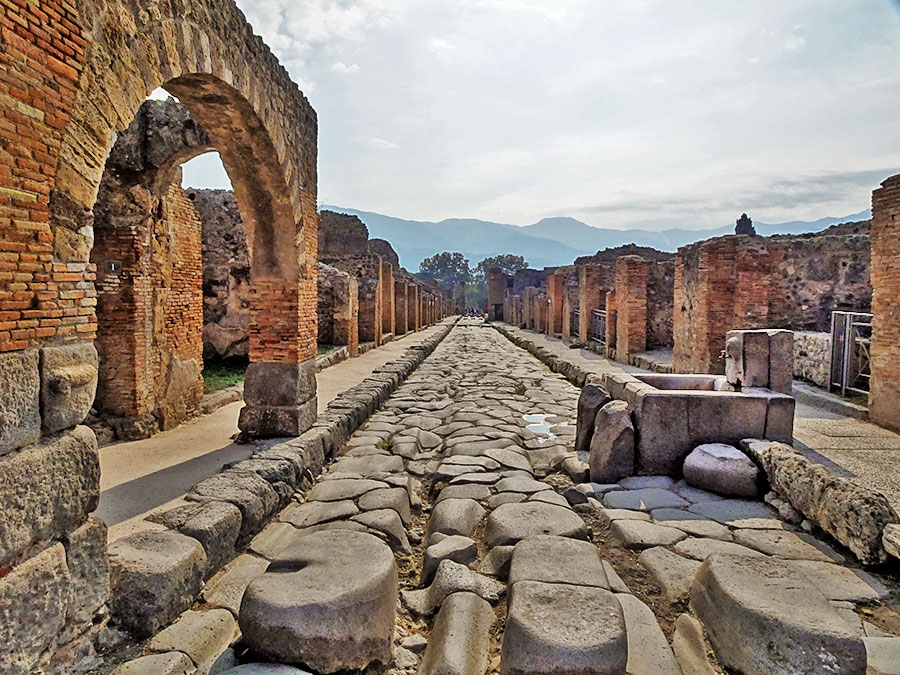
The ash that buried Pompeii preserved it with brutal efficiency. Buildings, objects, graffiti, and even food remained intact. This illusion of suddenness shaped the myth.
But preservation does not equal instant destruction.
It simply means time stopped recording after the final surge.
What really happened
Pompeii was not wiped out in seconds. It endured hours of chaos, choice, and fear. People assessed risks, fled, returned, and hesitated.
Some survived because they left early.
Some died because they waited.
Some escaped simply because they were in the right place at the right moment.
The eruption did not erase humanity.
It exposed it.
Why the story still matters
Pompeii teaches a timeless lesson.
Disasters rarely announce themselves clearly. They unfold. They give warnings that are easy to dismiss. Survival often depends not on strength, but on timing, awareness, and the willingness to act before certainty arrives.
What really happened to Pompeii was not just destruction.
It was a human struggle against nature, recorded not in words, but in ash.
And that struggle still speaks, nearly two thousand years later.