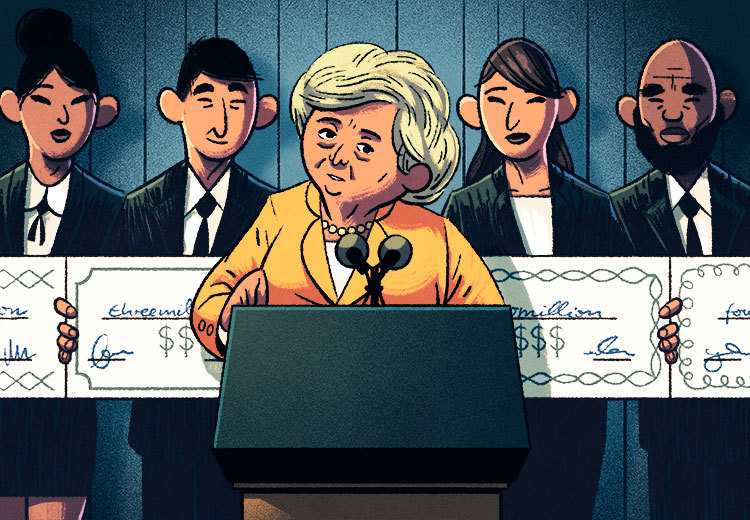

Corruption does not always wear a villain’s face. More often, it wears a suit, speaks in policy language, and hides behind legality. It does not announce itself as wrongdoing. It presents itself as normal procedure.
And that is precisely why it is so difficult to confront.
When people say “they don’t want you to know,” it is rarely about secret rooms or hidden documents. It is about systems designed to operate quietly, legally, and far from public attention.
Corruption without handcuffs
Modern corruption rarely looks like envelopes of cash exchanged in dark alleys. It looks like lobbying contracts, campaign donations, consulting fees, and revolving doors between public office and private power.
Much of it is legal. And that is the problem.
When influence can be purchased within the rules, accountability becomes optional. Power no longer needs to break the law to bend outcomes. It simply needs access.
The illusion of choice
Elections create the appearance of control, but policy outcomes often remain strikingly consistent regardless of who wins. Tax structures favor the same interests. Regulatory pressure fluctuates, but rarely threatens major power holders. Bailouts appear when corporations fail, while consequences rarely reach the top.
This disconnect fuels public frustration.
People vote expecting change. They receive continuity. Over time, trust erodes.
Corporate interests and political dependency
Modern governments depend heavily on corporate cooperation. Jobs, infrastructure, technology, and economic stability are tied to private entities. This dependency shifts power subtly but decisively.
When regulators rely on the industries they oversee for expertise, funding, or post-government employment, oversight weakens. When political campaigns depend on corporate donations, independence narrows.
The result is not overt control, but quiet alignment.
Policy begins to serve those who can afford proximity.
The revolving door problem
One of the least discussed forms of corruption is career circulation.
Officials leave government to work for corporations they once regulated. Corporate executives enter government positions overseeing industries they came from. Each move is justified as experience. Each move deepens conflict of interest.
This revolving door creates shared culture, shared language, and shared priorities between regulators and the regulated.
Oversight becomes negotiation. Enforcement becomes compromise.
Why transparency feels limited
Governments often claim transparency through reports, disclosures, and oversight committees. But information overload can be as effective as secrecy.
When critical data is buried in technical language, lengthy documents, or fragmented systems, accountability weakens. People are technically informed, but practically excluded.
Transparency without accessibility is theater.
Media, money, and silence
Corporate advertising dollars shape media coverage more than many realize. News organizations depend on revenue streams that discourage sustained investigation into powerful sponsors.
This does not require censorship. It requires restraint.
Stories soften. Coverage narrows. Structural critique becomes episodic rather than systemic. Attention shifts quickly.
What is not said matters as much as what is reported.
Why corruption is framed as inevitable
One of the most effective defenses of systemic corruption is normalization. Phrases like “that’s just how politics works” or “everyone does it” neutralize outrage.
When corruption is presented as unavoidable, resistance feels pointless.
But inevitability is a narrative, not a fact.
What they don’t want you to focus on
The greatest threat to corrupt systems is not exposure of a single scandal. It is sustained attention to patterns.
How laws consistently favor concentrated wealth. How accountability rarely climbs upward. How public costs are socialized while profits remain private.
Systems rely on distraction. They survive because people are kept reacting, not analyzing.
The cost of silence
Corruption is not victimless. It shapes healthcare access, environmental protection, labor rights, housing affordability, and education. Decisions made far from public view ripple into everyday life.
The cost is paid slowly, unevenly, and quietly.
And that makes it easier to ignore.
Awareness without despair
Understanding corruption does not require cynicism. It requires clarity.
Systems can change. Power can be redistributed. Accountability can be strengthened. But none of it happens without sustained public awareness and pressure.
They don’t want you to know not because the truth is explosive, but because it is inconvenient.
Inconvenient truths demand attention.
And attention is the one thing corrupt systems struggle to survive.