

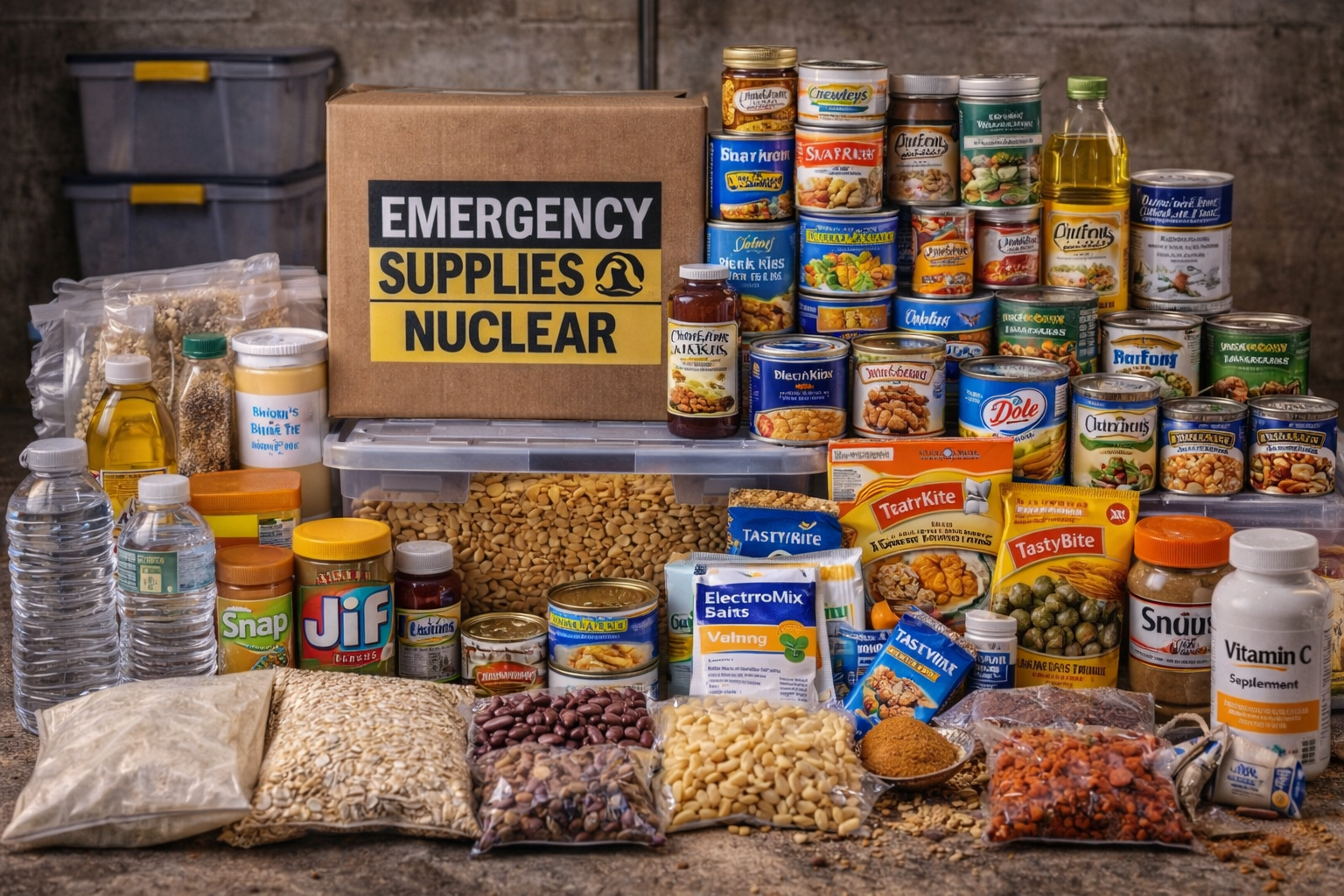
Choosing nutrition that protects safety, stability, and recovery
Food storage for a nuclear emergency is different from general emergency preparedness. The primary concern is not just calories or shelf life, but protection from contamination, ease of use while sheltering, and support for physical recovery after radiation exposure. In these situations, the wrong food can expose you to radioactive fallout, while the right food can sustain you safely through the most dangerous period.
This article focuses on what foods to store specifically for nuclear scenarios and why they matter.
The First Rule: Sealed Food Is Non-Negotiable
After a nuclear detonation, radioactive fallout settles as dust on surfaces, soil, water, and exposed food. Anything unsealed can become dangerous even if it looks clean.
Foods stored for nuclear emergencies must be:
– Commercially sealed
– Shelf-stable
– Stored indoors, preferably deep inside buildings
If food was exposed to open air after fallout, it is not safe to eat.
Top Priority Foods for Nuclear Emergencies
Canned Foods
Canned foods are among the safest options because the metal container provides excellent protection from contamination.
Stock a variety of:
– Canned meats (tuna, salmon, chicken, beef)
– Canned beans and lentils
– Canned vegetables
– Canned soups and stews
They require no preparation, preserve nutrients, and provide protein essential for tissue and immune recovery.
Dry Foods in Original Sealed Packaging
Dry foods are safe only if stored in unopened factory packaging or secondary airtight containers.
Best options include:
– White rice
– Pasta
– Rolled oats
– Crackers and survival biscuits
– Dry cereal (sealed)
Avoid foods that require long cooking times or large amounts of water.
Protein-Dense Shelf-Stable Foods
Protein is critical after radiation stress because the body needs it to repair cells and support immunity.
Ideal protein foods:
– Canned fish and meat
– Peanut butter and nut butters (sealed jars)
– Protein bars with long shelf life
– Powdered eggs
– Shelf-stable tofu
Protein supports recovery. Calories alone are not enough.
Foods That Support Antioxidant Defense
Radiation increases oxidative stress. While food cannot remove radiation, it can support cellular repair.
Store:
– Canned fruits (peaches, pears, pineapple)
– Vitamin C-rich fruit juices (sealed)
– Dried fruits in factory packaging
– Tomato products (paste, sauce)
These foods provide antioxidants that support immune and tissue recovery.
Hydration and Electrolyte Essentials
Dehydration worsens radiation stress and slows recovery.
Critical items:
– Bottled water
– Oral rehydration salts
– Electrolyte powders
Water safety is as important as food safety. Never drink exposed water.
Fats for Energy and Healing
Fat provides long-lasting energy and supports nutrient absorption.
Store:
– Vegetable oil
– Olive oil
– Ghee
– Peanut butter
Choose oils with longer shelf life and store them away from heat and light.
Foods That Are Especially Important for Thyroid and Blood Health
While iodine tablets should only be taken if advised by authorities, nutrition still supports thyroid and blood function.
Include:
– Beans and lentils
– Fortified grains
– Canned fish
– Dairy alternatives with added iodine or calcium
Do not self-dose iodine through supplements without guidance.
Foods That Should Be Avoided in Nuclear Emergencies
Avoid:
– Fresh produce exposed to fallout
– Fresh milk or dairy from animals
– Open grains or bulk foods
– Home-grown foods until authorities declare them safe
– Foods requiring extensive washing or preparation
When in doubt, do not eat it. Hunger is safer than contamination.
Eating Strategy While Sheltering
Eat small, frequent meals to conserve energy and support digestion. Prioritize hydration and protein first. Avoid overeating, which strains digestion under stress. Maintain routine meals to support mental stability.
Storage Location Matters
Store nuclear-specific food supplies:
– In basements or interior rooms
– In sealed bins
– Away from windows and vents
Label them clearly so they are not confused with everyday supplies.
Final Thought
Food stored for nuclear emergencies is not about comfort or variety. It is about safety, sealing, simplicity, and recovery. The best nuclear emergency food is food that requires no exposure, no preparation, and no guesswork.
You cannot control fallout.
You can control what you eat.
Safe food protects survival long after the blast.