

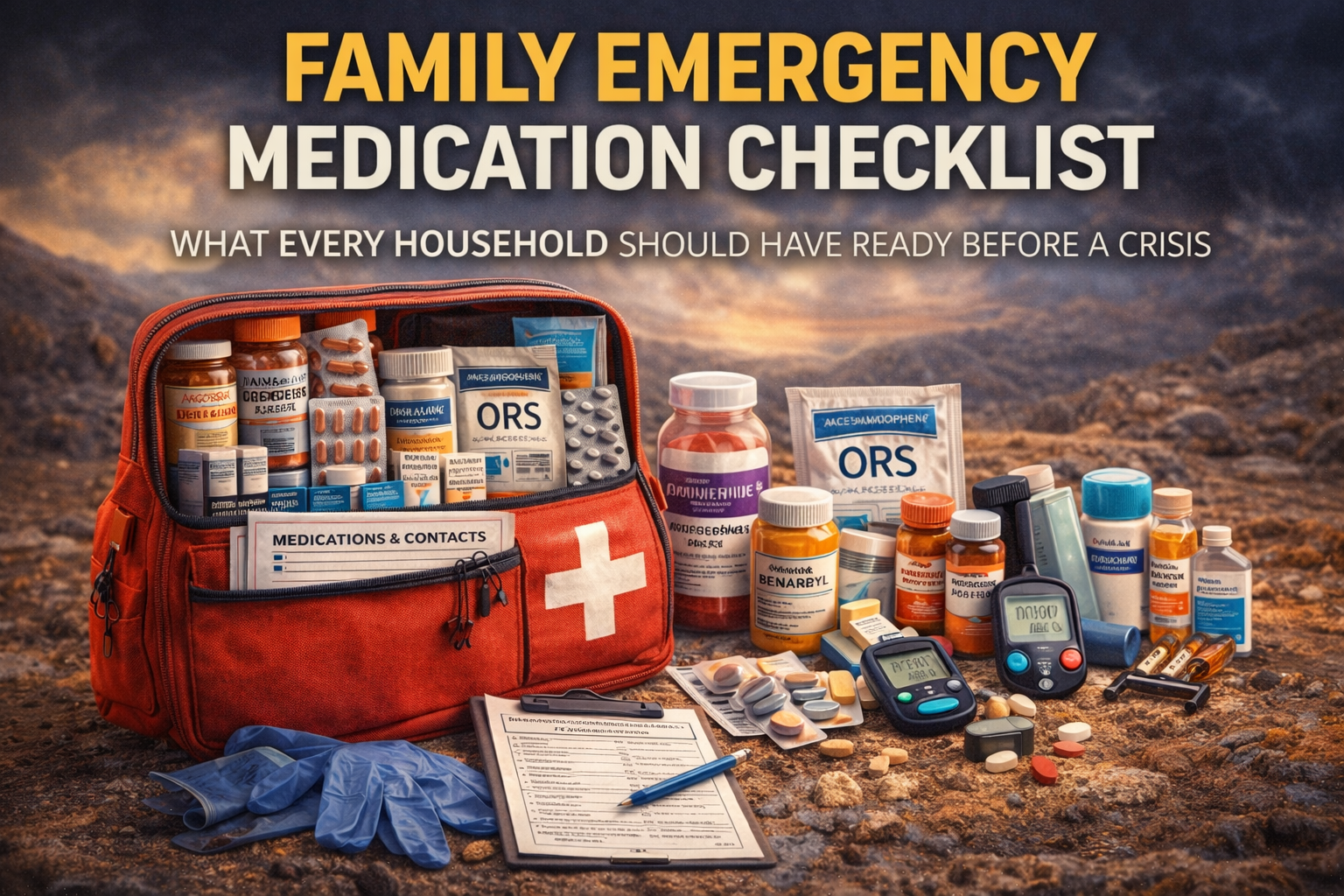
What every household should have ready before a crisis
Emergencies rarely announce themselves. Power outages, natural disasters, sudden evacuations, or medical disruptions can turn ordinary days into high-stress situations where access to pharmacies and doctors disappears overnight. A family emergency medication checklist is not about fear. It is about continuity, safety, and calm when systems fail.
This checklist focuses on practical, proven essentials that support health in short- and medium-term emergencies and helps families avoid dangerous improvisation.
Start With Personal Prescription Medications
The most important items in any emergency kit are the medications your family already depends on. If anyone in your household takes daily prescription medication, this is your top priority.
Include a minimum 7–14 day emergency supply for each person, when medically and legally allowed. Store medications in original containers with labels intact. Keep a printed list that includes the medication name, dosage, prescribing doctor, pharmacy contact, and known allergies. If refrigeration is required, note backup plans such as insulated containers or cold packs.
Prescription continuity saves lives more than any over-the-counter product.
Core Over-the-Counter Medications Every Family Should Have
Certain non-prescription medications become critical when medical care is delayed.
Pain and fever reducers such as acetaminophen or ibuprofen help manage fever, inflammation, injury, and illness. Include age-appropriate versions for children and clear dosing instructions. Anti-diarrheal medication is essential because dehydration can become dangerous within hours, especially for children and elderly family members. Antihistamines help with allergic reactions, insect bites, and unexpected environmental exposure. Motion sickness or anti-nausea medication can be vital during evacuations or illness.
Hydration and Electrolyte Support
Dehydration is one of the most common and dangerous emergency risks.
Stock oral rehydration salts (ORS) packets approved by health authorities. These restore fluids and electrolytes lost from diarrhea, vomiting, fever, or heat exposure. Keep written instructions for homemade oral rehydration solution as backup: clean water, sugar, and salt in precise ratios. Never guess measurements.
If water safety is uncertain, include water purification tablets with clear instructions.
Emergency hydration saves more lives than food in the first days of crisis.
Special Considerations for Children, Elderly, and Chronic Conditions
Children require weight-based dosing and liquid formulations when possible. Elderly family members may need medications for heart conditions, blood pressure, diabetes, or breathing support. Chronic conditions such as asthma require inhalers or spacers. Diabetes management requires glucose monitoring supplies and fast-acting sugar sources.
Always store condition-specific supplies alongside medications so nothing is separated during an emergency.
Basic First Aid Medications and Supplies
Include antiseptic wipes or solution, antibiotic ointment for minor wounds, burn treatment gel, and topical creams for rashes or insect bites. Add thermometers, dosing syringes for liquid medicine, and gloves. These items reduce infection risk and prevent minor injuries from becoming serious.
What You Should Never Include or Attempt
Do not include homemade pills, unverified supplements, or herbal capsules meant to replace medication. Do not store expired medications or drugs without labels. Do not attempt to create antibiotics, sedatives, or painkillers at home. Emergencies are not the time to experiment.
Improvisation with medicine is one of the leading causes of preventable harm during crises.
Storage and Rotation Plan
Store medications in a cool, dry, dark place, ideally in a clearly labeled waterproof container. Check expiration dates every six months. Rotate supplies so nothing expires unused. Keep one kit at home and a smaller version for travel or evacuation.
Documentation Matters
Include a printed medication list, emergency contacts, insurance information, and copies of prescriptions. In stressful situations, memory fails. Paper does not.
Final Thought
A family emergency medication checklist is not about preparing for disaster. It is about protecting stability when life becomes unpredictable. The goal is not to treat everything, but to prevent small problems from becoming emergencies.
If you prepare only one thing, prepare this:
Continuity of medication, clean water, and hydration support save lives before anything else.