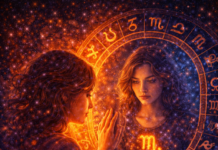


From ancient temples to TikTok charts, the cycle repeats
Astrology has a strange talent for survival. Empires fall, religions rise, sciences advance, and yet the stars keep being consulted. Every generation seems to believe it has “rediscovered” astrology, as if it were a forgotten relic pulled back into relevance. In reality, astrology never leaves. It simply changes its clothes.
From carved symbols in ancient temples to swipeable birth charts on TikTok, the medium evolves, but the impulse remains the same. Humans keep returning to astrology because it answers questions that technology, progress, and rational explanations never fully silence.
In the ancient world, astrology was not fringe belief. It was woven into governance, medicine, agriculture, and spirituality. Kings consulted astrologers before wars. Farmers looked to the skies before planting. The stars were not entertainment. They were guidance. In a universe that felt dangerous and unpredictable, astrology offered pattern and reassurance.
As societies became more structured and science began to separate itself from mysticism, astrology was pushed toward the margins. But it was never erased. It lived quietly in almanacs, folk traditions, and personal rituals, waiting for moments of uncertainty to pull it back into focus.
Those moments arrive with every generation.
Each era faces its own version of chaos. War, economic collapse, pandemics, climate anxiety, cultural shifts, technological overload. When the future feels unstable, people instinctively search for meaning beyond statistics and forecasts. Astrology thrives precisely where certainty collapses.
What changes is not the need, but the language.
For earlier generations, astrology came through elders, books, or sacred spaces. For millennials and Gen Z, it arrives through memes, apps, and social platforms. TikTok did not invent astrology. It translated it into a format that matches modern attention spans and emotional realities. Short videos, relatable archetypes, and personalized charts offer something rare in digital culture: the feeling of being seen.
Astrology also resurfaces because every generation wrestles with identity. Young people, especially, ask the same timeless questions. Who am I? Why am I like this? Where do I belong? Astrology offers a symbolic framework to explore personality without demanding fixed answers. You are not broken. You are a Scorpio. You are not lost. You are in a Saturn return. These narratives soften self-judgment and create shared language around personal struggle.
Critics often miss this point. They argue accuracy while astrology users are often engaging in reflection, not prediction. For many, astrology functions less as belief and more as mirror. It gives shape to emotions that feel too complex or contradictory to explain otherwise.
Another reason astrology keeps returning is cultural memory. Even when dismissed publicly, it is rarely erased privately. Grandparents pass down superstitions. Cultures retain lunar calendars. Rituals tied to seasons, cycles, and celestial events persist under new names. When a generation feels disconnected from tradition, astrology becomes a way to reclaim something ancient without fully rejecting modern life.
There is also rebellion woven into astrology’s revival. Every generation pushes back against the dominant worldview it inherits. In hyper-rational, productivity-driven societies, astrology becomes an act of resistance. It says humans are more than data points, algorithms, and output. It insists that intuition and mystery still matter.
Importantly, astrology adapts without demanding exclusivity. One can believe in science and still enjoy astrology. One can be skeptical and still find comfort in symbolic language. This flexibility allows astrology to survive where rigid belief systems fracture.
The cycle repeats because the stars offer something timeless: continuity. While everything else changes, the sky remains. Planets move. Seasons turn. In a world that accelerates faster with every generation, astrology reminds people that not everything is new, urgent, or disposable.
Astrology is not reborn with each generation. It is retranslated. Ancient temples become smartphone screens. Sacred charts become shareable graphics. But the human need underneath stays the same.
As long as people search for meaning, identity, and reassurance in uncertain times, they will keep looking up. And the stars, indifferent yet endlessly interpreted, will continue to receive their attention.