

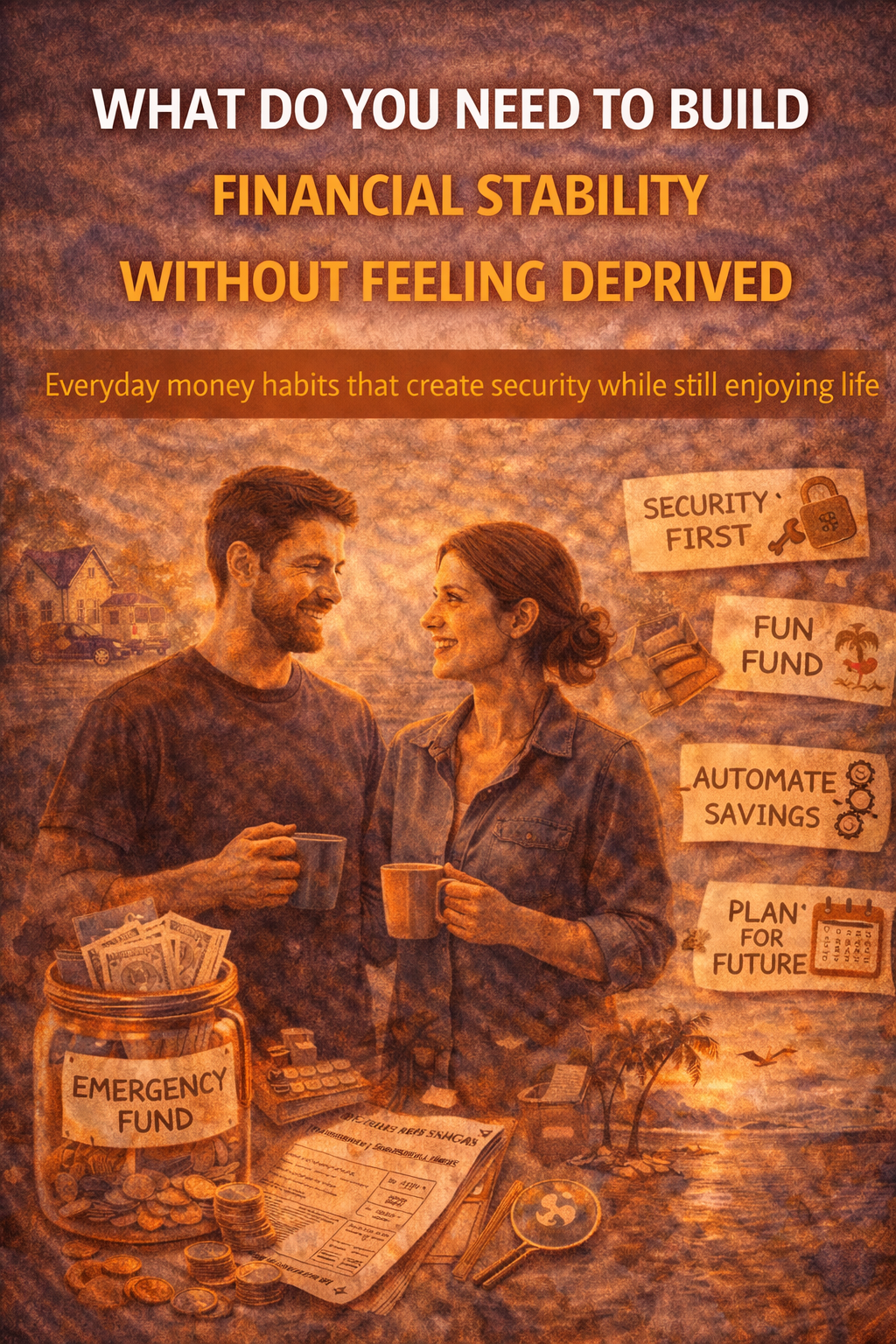
Everyday money habits that create security while still enjoying life
Financial stability is often framed as sacrifice. No fun. No spontaneity. Endless restraint. This mindset makes money management feel like punishment rather than protection. In reality, stability is not about denying yourself joy. It is about removing anxiety from your relationship with money.
True stability allows you to enjoy life more, not less.
Redefine Financial Stability as Predictability
Stability is not about how much you earn. It is about how well you can predict your financial life.
Knowing what comes in, what goes out, and what remains creates calm. Uncertainty creates stress even at high income levels.
Track your money simply. You do not need complex systems. Awareness is the foundation of control.
Predictability turns money into a tool instead of a source of fear.
Build Security First, Then Lifestyle
Many people reverse the order.
Prioritize essentials first. Housing, food, transportation, basic savings. Once these are covered, enjoyment becomes guilt-free rather than stressful.
Security removes the mental tax that ruins pleasure. When bills are handled, spending feels lighter.
Fun is better when it is not borrowed from future peace.
Automate the Boring Decisions
Willpower fades. Automation lasts.
Set up automatic transfers to savings and bills. Remove the need to decide every month. This prevents emotional spending driven by mood or stress.
What remains in your account is what you can enjoy without guilt.
Automation creates freedom by limiting choice.
Create a Guilt-Free Enjoyment Category
Deprivation leads to rebellion.
Set aside money specifically for enjoyment. Dining out. Travel. Hobbies. Experiences. This money has one rule. Spend it freely.
When pleasure is planned, it stops feeling irresponsible.
Enjoyment is sustainable when it is intentional.
Avoid Lifestyle Inflation Disguised as Success
More income does not require more spending.
Upgrade selectively. Choose improvements that genuinely increase quality of life rather than status. Many upgrades add maintenance rather than happiness.
Ask whether a purchase solves a problem or simply signals success.
Stability grows when growth is conscious.
Build an Emergency Buffer, Not a Fortress
Savings should feel reassuring, not restrictive.
Aim for a realistic emergency fund. Enough to handle disruptions without panic. Not so much that life feels paused indefinitely.
Security is knowing you can recover, not preparing for every possible disaster.
Buffers protect momentum.
Separate Identity From Spending
Money often carries emotional meaning.
Spending to feel worthy, successful, or secure creates instability. Stability improves when money supports values rather than identity.
Ask what truly matters to you. Align spending with that. Cut what does not add meaning.
Fulfillment reduces impulsive behavior.
Practice Long-Term Thinking Without Obsession
Think ahead without living in the future.
Plan for goals. Retirement. Education. Travel. But do not postpone life indefinitely. Stability includes the ability to enjoy now.
Balance is not a perfect formula. It is ongoing adjustment.
Financial stability without deprivation comes from clarity, structure, and permission.
When money is organized, enjoyment becomes natural. When enjoyment is allowed, stability becomes sustainable.
The goal is not restriction. The goal is peace.