

Metamorphoses by Ovid is one of the most influential works of classical literature, a sweeping tapestry of myth that reshaped how stories are told. Written in the early first century, it is composed not as a single linear narrative, but as a flowing sequence of tales bound together by one unifying principle: everything changes. Gods, humans, landscapes, bodies, and identities are all subject to transformation, and nothing remains fixed for long. In Metamorphoses, change is not an exception to life. It is its defining rule.
The poem opens with the creation of the world and immediately establishes instability as the natural order. Chaos becomes form, form dissolves into new shapes, and the universe itself is born through transformation. From this beginning, Ovid leads the reader through more than two hundred myths, each one linked by acts of becoming. Humans turn into trees, stars, stones, animals, rivers, and constellations. Love becomes loss. Desire becomes punishment. Grief becomes permanence. Identity is fluid, fragile, and constantly rewritten.
Transformation driven by desire and power
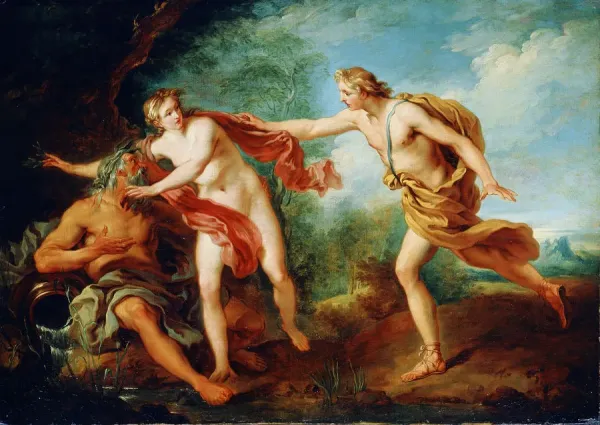
Many of Ovid’s transformations are born from overwhelming emotion, especially love and lust. The gods pursue mortals relentlessly, often abusing their power, and transformation becomes both escape and consequence. Daphne turns into a laurel tree to flee Apollo. Io becomes a cow to survive Jupiter’s desire. In these stories, transformation is not freedom in a modern sense, but survival. Bodies change when consent fails, and nature absorbs what humanity cannot endure. Ovid’s tone is often lyrical, but beneath the beauty lies sharp critique. Power reshapes lives, and the innocent pay the price.
Punishment, pride, and the cruelty of the gods
Other transformations are acts of punishment, inflicted upon those who challenge divine authority or fail to recognize their limits. Narcissus becomes a flower after falling in love with his own reflection, a symbol of self-obsession frozen forever. Arachne is turned into a spider for daring to rival a goddess in art. These stories reveal a universe where justice is not gentle and where the gods themselves are deeply flawed. Ovid does not portray divine order as moral perfection, but as a system ruled by ego, jealousy, and impulse.
Art, memory, and survival through change
Despite its often brutal transformations, Metamorphoses is also a celebration of continuity. Nothing truly disappears. It simply becomes something else. Humans turn into natural features that remain in the world, trees, rivers, stars, allowing memory to persist through form. Transformation becomes a way to survive time. Even loss leaves a mark. Even death reshapes the living world.
Ovid’s storytelling itself mirrors this idea. Myths transform as they pass from one tale to the next, characters echo earlier figures, and themes repeat in altered forms. The poem constantly reinvents itself, refusing closure. In doing so, it anticipates modern storytelling techniques and influences centuries of literature, art, and psychology.
A world where change is the only constant
What makes Metamorphoses timeless is its acceptance of instability. Ovid offers no promise of permanence, no fixed moral center that guarantees safety. Instead, he presents existence as motion. Identity is shaped by experience. Love transforms us. Suffering alters us. Time remakes everything. This vision feels remarkably modern, resonating with a world that understands the self not as static, but as evolving.
In the final lines of the poem, Ovid claims that through his work, he too has transformed, achieving a kind of immortality through art. His body will fade, but his voice will continue to change shape in the minds of readers. In this quiet assertion, Metamorphoses completes its own philosophy. Transformation does not erase meaning. It creates it.