

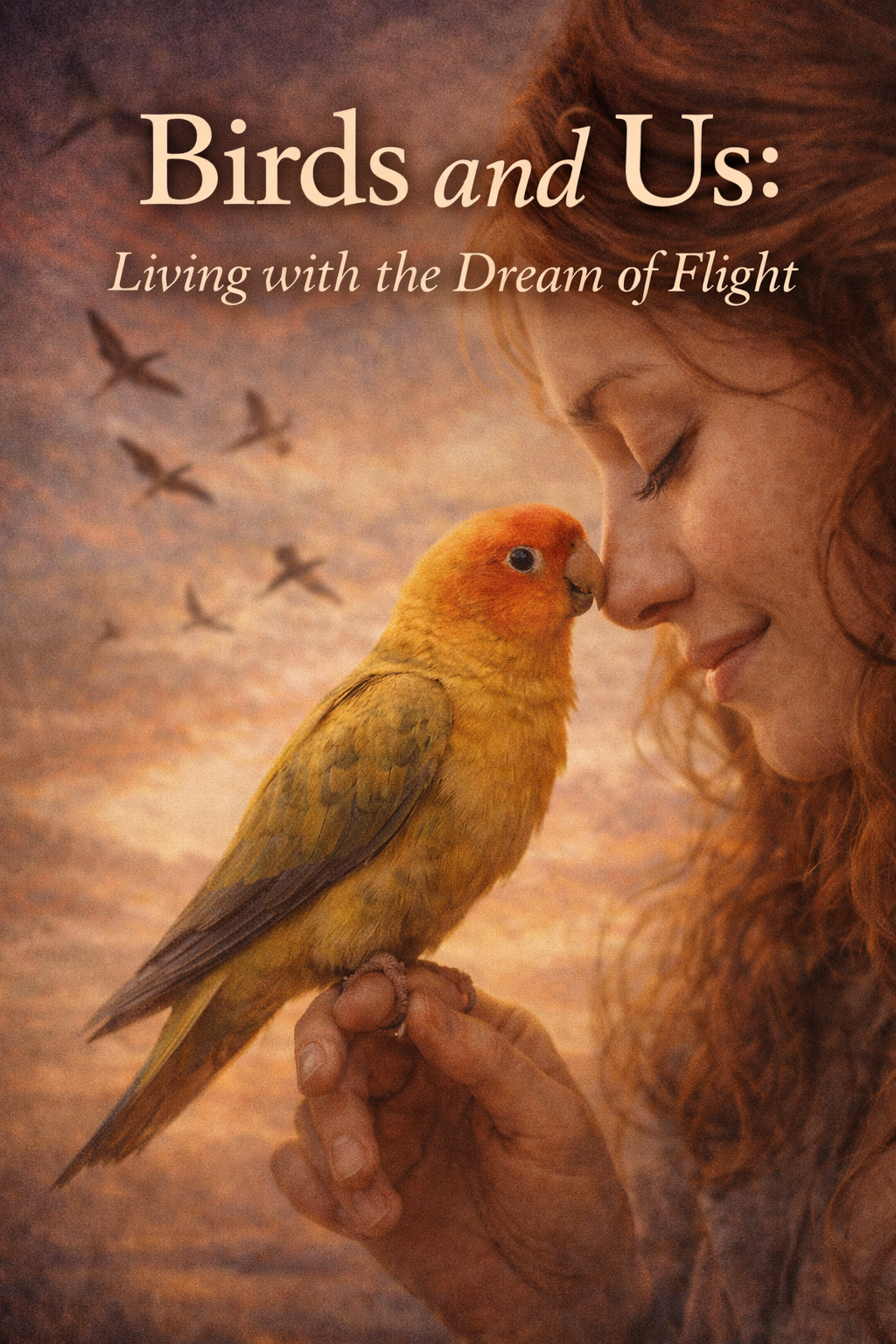
Birds have always occupied a special place in the human imagination. Long before they became companions in cages or visitors at feeders, they were symbols. Freedom. Spirit. Transcendence. Humans didn’t just live alongside birds, they watched them and wondered what it might feel like to leave the ground behind.
The relationship between birds and humans is not rooted in control or dependence. It is rooted in fascination.
From Messengers to Companions
Historically, birds were never domesticated in the way dogs or cats were. They were admired, trained, observed, and respected. Pigeons carried messages across continents. Falcons hunted beside royalty. Songbirds filled homes and temples with music.
Humans learned early that birds could not be owned in the traditional sense. Even when kept close, birds retained their wild essence. That distance made the bond more symbolic than practical, and perhaps more meaningful.
Birds were not helpers.
They were witnesses.
Why Humans Are Drawn to Birds
Birds represent something humans crave deeply: lightness. They move freely through spaces we cannot access. They navigate the sky with ease, unburdened by gravity or borders.
Their songs are another source of connection. Birds sing not to impress humans, but to communicate, mark territory, and express presence. Yet humans respond instinctively. Birdsong lowers stress, signals safety, and connects us to natural rhythms we have largely lost.
In urban environments especially, birds remind humans that nature still exists nearby. A bird on a windowsill or tree branch becomes a moment of pause, a quiet interruption of modern speed.
The Emotional Bond
Birds form strong attachments when trust is earned. Parrots, canaries, cockatiels, and other companion birds recognize voices, faces, and routines. They respond to tone, emotion, and consistency.
The bond with a bird is built slowly. It requires patience, observation, and respect for boundaries. In return, birds offer companionship that feels earned rather than automatic.
For many people, birds provide connection without dependency. They share space without overwhelming it. Their presence is gentle, rhythmic, and emotionally grounding.
Birds as Symbols in Human Culture
Across cultures, birds appear as messengers between worlds. Doves symbolize peace. Ravens symbolize mystery and intelligence. Eagles represent power and vision. Owls are associated with wisdom and introspection.
Humans project meaning onto birds because birds seem to exist between realms: earth and sky, sound and silence, closeness and distance.
Living with birds allows humans to feel closer to something ancient and instinctive.
Modern Life and the Bird-Human Relationship
In today’s world, birds are often encountered through rituals rather than ownership. Feeding stations, balconies, birdhouses, early morning songs. These interactions are brief but meaningful.
Even those who never keep birds as pets often form attachments to the birds that return year after year. A pair of swallows. A familiar crow. A morning cardinal.
Birds remind humans that connection does not require possession. Presence is enough.
What Birds Teach Us
Birds teach attentiveness.
They teach patience.
They teach respect for boundaries.
They show us that beauty does not need explanation and that freedom does not mean absence of connection. Birds come and go, but the feeling they leave behind stays.
The relationship between birds and humans is not one of control or convenience. It is one of observation, admiration, and shared space.
We don’t keep birds because they need us.
We keep them close because they remind us who we are when we stop trying to hold everything down.



Yo! 368betlive, huh? Seen it around. Anyone hitting it big on there? Thinking about giving it a shot. What’s the lowdown? More info here: 368betlive
Keep up the excellent piece of work, I read few content on this web site and I conceive that your website is real interesting and contains lots of superb info .
Nice weblog right here! Also your web site lots up fast! What host are you the use of? Can I get your associate link in your host? I desire my web site loaded up as quickly as yours lol
fantastic post, very informative. I wonder why the other specialists of this sector do not notice this. You must continue your writing. I’m sure, you’ve a great readers’ base already!