
When people talk about “survival pills,” they often imagine compact solutions that can keep someone alive when help is far away. In reality, emergency preparedness is less about miracle pills and more about having the right, proven basics and understanding what should never be improvised. In a crisis, the wrong pill can be as dangerous as no pill at all.
This article focuses on safe, realistic options for emergencies and clearly separates what you should store, what you can prepare safely, and what you should never try to make yourself.
What “Survival Pills” Really Mean
In emergency situations, pills are usually meant to support hydration, infection control, pain management, or chronic conditions, not to replace food or medical care. The most critical threats in disasters are dehydration, infection, fever, and untreated existing illnesses.
Survival pills are about buying time, not curing everything.
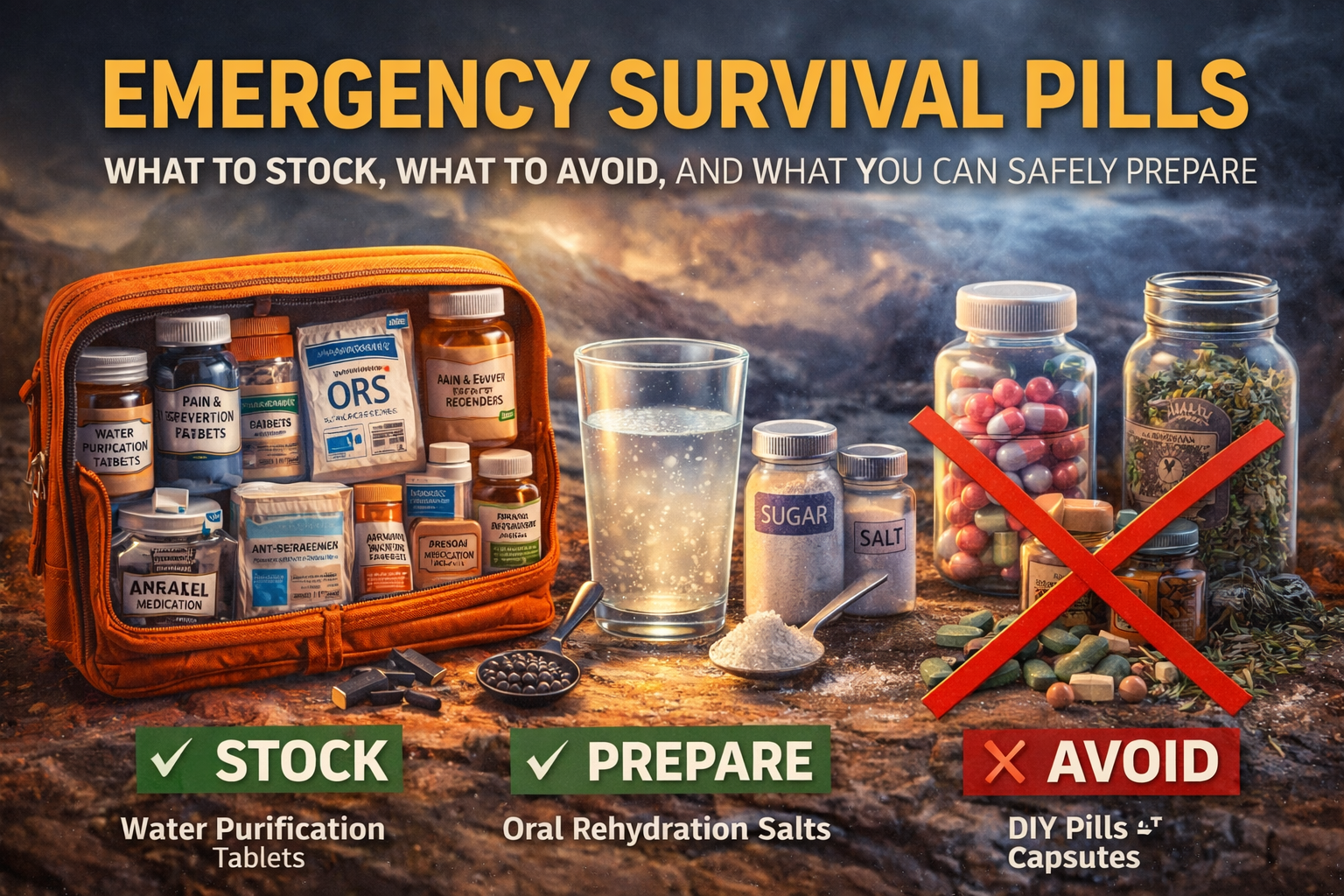
Pills You Should Stock (Not Make)
These are commercially manufactured, regulated, and stable when stored properly. They should always be bought, not improvised.
1. Water Purification Tablets
Used to disinfect unsafe water when boiling is not possible. These tablets kill bacteria, viruses, and some parasites.
Why they matter:
Dehydration and contaminated water kill more people in emergencies than hunger.
Key note:
Follow instructions exactly. More is not better.
2. Oral Rehydration Salts (ORS)
These packets restore fluids and electrolytes lost from diarrhea, vomiting, heat exhaustion, or illness.
Why they matter:
Electrolyte imbalance can become fatal quickly, especially for children and older adults.
Best option:
Store WHO-approved ORS packets. They last years and are lightweight.
3. Pain and Fever Reducers
Examples include acetaminophen or ibuprofen.
Why they matter:
Fever, inflammation, and pain weaken the body and increase dehydration.
Important caution:
Use correct dosing. Never mix without guidance.
4. Anti-diarrheal Medication
Useful in short-term emergencies to prevent dangerous fluid loss.
Why they matter:
Uncontrolled diarrhea can cause severe dehydration within hours.
5. Activated Charcoal (Commercial Only)
Sometimes used in poison emergencies.
Critical warning:
This should only be used if advised by poison control or medical professionals. It is not a universal antidote.
6. Personal Prescription Medications
If you or a family member relies on daily medication, this is your most important “survival pill.”
Best practice:
Maintain an emergency reserve when legally and medically allowed.
What You Can Safely Prepare Yourself
There are very few emergency remedies that are safe to make at home. One stands out as globally accepted and life-saving.
Homemade Oral Rehydration Solution (ORS)
This is not a pill, but it is one of the most important survival remedies in the world.
Safe recipe (WHO-based):
1 liter of clean water
6 level teaspoons of sugar
½ level teaspoon of salt
Mix until fully dissolved.
Why this works:
It restores sodium and glucose in the exact ratio needed for absorption.
Important warnings:
Do not guess measurements
Too much salt can be dangerous
Use only clean water
This solution has saved millions of lives worldwide during disasters.
What You Should NEVER Try to Make Yourself
This is critical.
DIY Pills or Capsules
Never attempt to create homemade “antibiotics,” compress powders into pills, mix herbs into capsule form for emergency treatment, or create sedatives, painkillers, or “calming pills.”
Why this is dangerous:
Dosage cannot be controlled
Contamination risk is high
Some plants become toxic when concentrated
Drug interactions can be lethal
There is no safe way to DIY medication pills at home.
Herbal Substitutes for Emergencies
While herbs have traditional uses, emergencies are not the time to experiment.
Examples of risks include “calming” herbs that dangerously lower blood pressure, others that affect heart rhythm, and many that interfere with real medications.
Herbs may support wellness, but they are not emergency medicine.
The Real Survival Strategy
True emergency preparedness focuses on clean water access, electrolyte balance, infection prevention, temperature and pain control, and continuity of existing medical care. Pills are only one small part of survival.
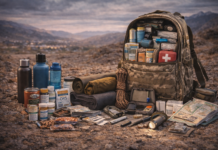
A well-prepared emergency kit includes water purification tablets, ORS packets or sugar and salt as backup, basic pain and fever medication, first aid supplies, and clear instructions and dosing guides.
Final Thought
In emergencies, simple, proven solutions save lives. The most dangerous belief is that survival depends on clever improvisation. In reality, survival depends on preparation, restraint, and knowing your limits.
If you remember one thing, let it be this:
Stock what is proven. Prepare only what is safe. Never invent medicine.