

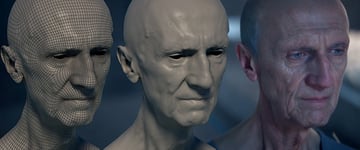
Artificial intelligence is no longer working behind the scenes in cinema. It has stepped into the frame. From de-aging faces to recreating voices, from digital doubles to fully synthetic characters, AI is transforming what it means to act, to perform, and to be present on screen. The change is not sudden, but it is profound.
At its most visible level, AI has expanded the technical boundaries of acting. Performers can now appear younger, older, or physically altered without hours of prosthetics or makeup. Facial scanning, motion capture, and machine learning allow subtle expressions to be enhanced, corrected, or even reconstructed. A raised eyebrow, a micro-smile, a moment of hesitation can be preserved, refined, or replayed with uncanny precision.
This technology has allowed actors to extend their careers in new ways. Aging no longer limits casting in the same way. Performances can exist across timelines, allowing one actor to portray decades of a character’s life with emotional continuity. In this sense, AI acts like an invisible collaborator, preserving human presence while bending physical reality.
Yet the deeper impact of AI lies beyond visual effects. Voice replication and digital likenesses have introduced ethical and artistic questions that the industry is still struggling to answer. An actor’s voice can now be generated without their physical participation. A performance can be simulated using archived data. This raises fundamental questions: Who owns a performance? Where does acting end and technology begin?
For actors, presence has always been central. Acting is not just about how someone looks, but how they listen, react, breathe, and respond in real time. AI can replicate the surface of emotion, but it does not experience vulnerability, fear, or intention. The concern many performers share is not replacement, but dilution. When performance becomes editable, adjustable, and endlessly malleable, the rawness of human imperfection risks being smoothed away.
At the same time, AI opens new creative possibilities. Actors can perform roles that were once physically impossible. Independent filmmakers gain access to tools previously reserved for major studios. Language barriers dissolve as performances can be translated and lip-synced seamlessly, allowing actors to reach global audiences without losing emotional nuance.
The relationship between AI and acting is not a battle. It is a negotiation. The most compelling performances still begin with a human being making a choice in front of a camera. AI can enhance, extend, and preserve that choice, but it cannot originate it. Emotion still requires a source.
Audiences, too, play a role in shaping this future. Viewers are increasingly sensitive to authenticity. They can sense when something feels hollow, even if it looks perfect. This suggests that the value of acting may actually increase in an AI-driven industry. The more technology evolves, the more meaningful genuine human presence becomes.
AI is changing cinema, but it is not redefining the soul of acting. Instead, it is forcing the industry to clarify what truly matters. Acting has never been about perfection. It has been about truth. In the age of artificial intelligence, that truth may become the most irreplaceable element of all.