
Gravitational waves are not flashes of light or objects you can point to in the sky. They are movements. Subtle ripples traveling through space and time itself, carrying news of distant, violent events across the universe. If light is what we see, gravitational waves are what we feel, even if only with the most sensitive instruments ever built.
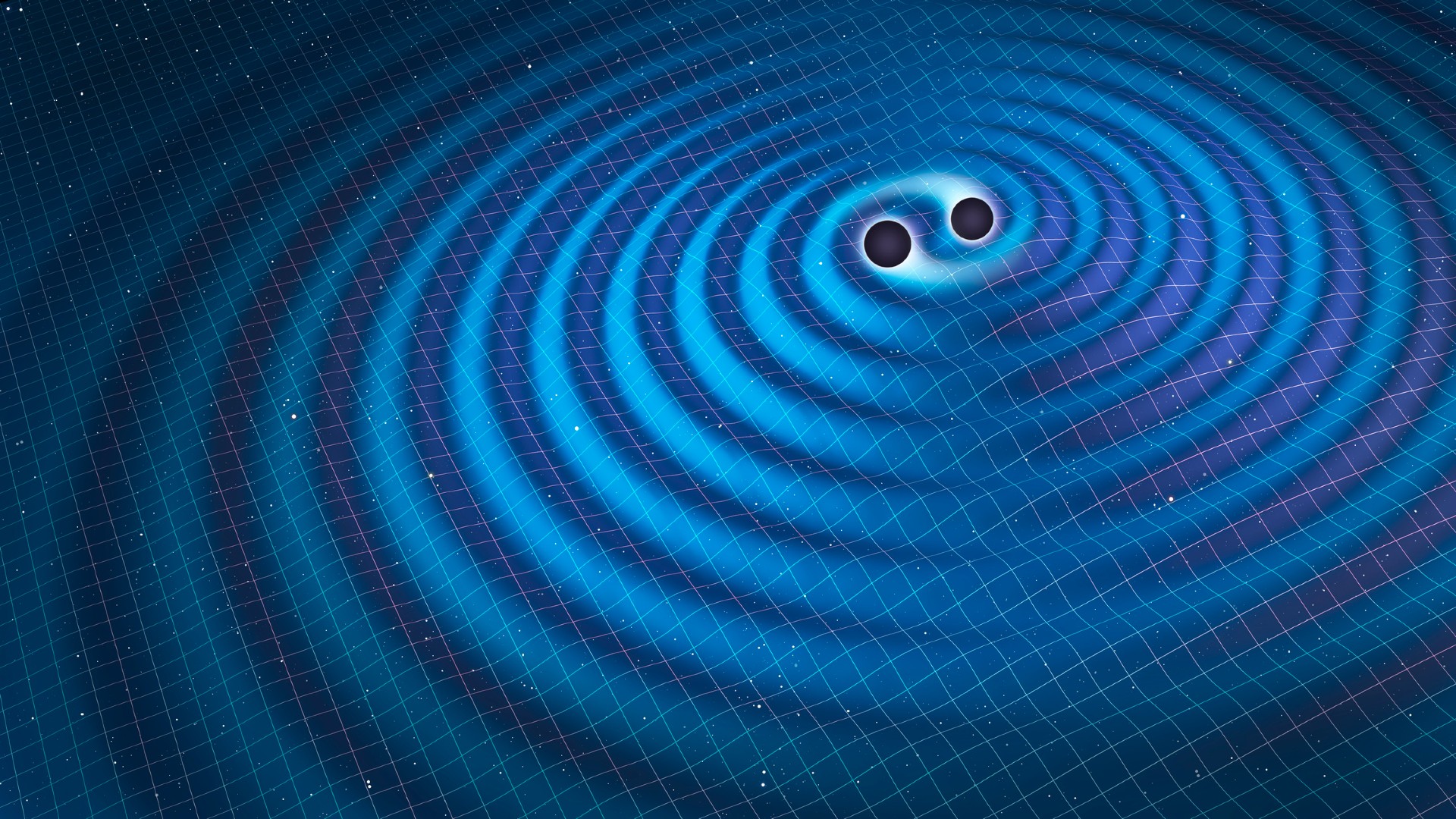
First predicted by Albert Einstein more than a century ago, gravitational waves were once considered almost poetic, mathematically elegant but practically unreachable. They arise when massive objects accelerate or collide, black holes spiraling into one another, neutron stars merging, stars collapsing in asymmetric ways. These events disturb spacetime, sending waves outward in all directions, stretching and compressing the universe as they pass.
Unlike light, gravitational waves travel unimpeded. They are not scattered by dust, dimmed by distance, or blocked by matter. They move straight through galaxies, stars, and planets, carrying pristine information about their origins. By the time they reach Earth, they are unimaginably faint, altering distances by less than the width of an atom. Detecting them required a level of precision that once sounded impossible.
When gravitational waves were directly observed for the first time, they confirmed not only Einstein’s theory, but a new way of understanding the cosmos. Scientists were no longer limited to seeing the universe. They could listen to it. Each detection is a signal, a brief tremor that tells a story of colossal forces at work billions of years ago.
What makes gravitational waves especially compelling is their honesty. Light can lie through reflection, distortion, and delay. Gravitational waves cannot. They are pure motion, recording events exactly as they happened. Through them, astronomers can measure masses, distances, spins, and energies with extraordinary accuracy, revealing details that would otherwise remain hidden.
There is also something quietly intimate about gravitational waves. The events that create them are among the most extreme in existence, yet their arrival on Earth is gentle, almost shy. No spectacle in the sky. No visible sign. Just a faint shiver passing through spacetime, unnoticed by everyone except carefully tuned instruments.
Gravitational waves remind us that the universe is not static. It flexes, stretches, and responds. Space and time are not rigid stages, but living fabrics shaped by motion and mass. The cosmos is not silent. It hums with history.
In a world overwhelmed by noise and imagery, gravitational waves offer a different kind of beauty. Invisible, precise, and profound, they prove that some of the most important stories in the universe are not meant to be seen, but felt.