

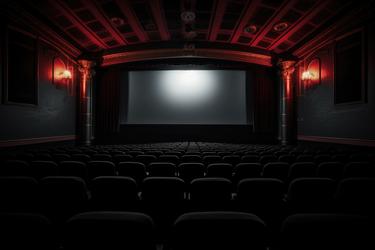
From surveillance to AI, how filmmakers imagined tomorrow before engineers built it
Long before technology entered everyday life, cinema was already there. Watching. Warning. Wondering. Filmmakers have often imagined futures not as technical manuals, but as emotional landscapes. And in doing so, they predicted not just inventions, but the consequences of those inventions with uncanny accuracy.
Cinema didn’t predict the future by guessing correctly. It predicted it by understanding people.
Surveillance Before It Was Normal
Decades before cameras followed us everywhere, films were already asking what constant observation would do to society. Movies imagined worlds where privacy eroded quietly, not through force, but through convenience and fear.
What cinema understood early was that surveillance would not arrive as oppression. It would arrive as safety, efficiency, and protection.
Today’s world of facial recognition, data tracking, and digital monitoring looks less like science fiction and more like old scripts finally catching up with reality.
Artificial Intelligence as a Moral Question
Filmmakers explored artificial intelligence long before it became functional. They weren’t interested in how machines would work, but in what would happen when intelligence was no longer exclusively human.
Cinema asked:
-
Would AI reflect our values or amplify our flaws?
-
Would it serve us or mirror us?
-
Would control remain human, or slowly drift away?
These questions now dominate real-world debates, proving that imagination often outruns implementation.
Technology Without Wisdom
Many films portrayed advanced technology existing alongside moral confusion. Machines worked perfectly, but societies did not. Systems functioned, but meaning collapsed.
This distinction matters.
Technology tends to evolve faster than ethics. Cinema understood this imbalance early and treated it as the real threat.
The Human Cost of Progress
While engineers focused on innovation, filmmakers focused on impact. Stories explored loneliness in hyperconnected worlds, identity loss in digitized societies, and emotional emptiness in technologically efficient lives.
Cinema predicted that progress would not simply improve life. It would complicate it.
This emotional foresight is where film excels.
Why Cinema Sees First
Cinema operates without constraints of feasibility. It does not need a working prototype. It needs a question.
By removing technical limitations, filmmakers could explore psychological and societal outcomes freely. This allowed cinema to reach truths that technical development was not yet ready to confront.
Film imagines outcomes. Technology builds tools.
Warnings Disguised as Entertainment
Many films that now feel prophetic were initially dismissed as exaggerated or unrealistic. Audiences focused on spectacle, not subtext.
Over time, reality caught up.
Cinema often hides warnings inside stories because direct warnings are easier to ignore.
Engineers Build What Stories Normalize
Cinema doesn’t just predict the future. It influences it. Stories shape expectations. They normalize ideas. They frame what feels possible or inevitable.
Engineers, consciously or not, grow up absorbing these narratives.
Sometimes technology follows imagination rather than leads it.
Why This Still Matters
As technology accelerates, cinema remains a crucial space for ethical imagination. It asks the questions development often postpones.
What happens after?
Who pays the cost?
What do we lose in the process?
Cinema keeps asking what technology rarely does: Should we?
The Real Prediction
The most accurate cinematic prediction was not a gadget or system. It was the realization that humans would adopt powerful technologies faster than they could understand them.
Cinema predicted our behavior, not our inventions.
And that is why it often saw the future more clearly than technology ever could.



e7045i
Great post, you have pointed out some excellent details , I likewise think this s a very wonderful website.
m5zwcs
Appreciating the persistence you put into your blog and detailed information you present. It’s nice to come across a blog every once in a while that isn’t the same old rehashed material. Excellent read! I’ve saved your site and I’m including your RSS feeds to my Google account.
Hmm is anyone else experiencing problems with the pictures on this blog loading? I’m trying to figure out if its a problem on my end or if it’s the blog. Any suggestions would be greatly appreciated.