

The ocean has two faces.
On most days, it is calm, playful, hypnotic—a place where waves roll gently and children play at the shore.
But deep beneath that shining surface, the sea remembers every earthquake, every landslide, every volcanic roar.
And sometimes, without warning, it rises as a wall and comes ashore to erase everything in its path.
That is a tsunami: not just a big wave, but the ocean itself, surging forward with the weight of a moving continent.
What is a tsunami, really?
The word “tsunami” comes from Japanese, meaning “harbor wave.” Sailors in deep water sometimes barely notice it passing—but in harbors and along coastlines, it becomes a monster.
A tsunami is a series of huge ocean waves usually caused by:
-
Underwater earthquakes
-
Submarine landslides
-
Volcanic eruptions (especially undersea or near the coast)
-
In very rare cases, large meteorite impacts in the ocean
These events suddenly displace a massive volume of water. The ocean responds by trying to restore balance—and that movement becomes a tsunami.
Why tsunamis are not “normal waves”
The waves we see at the beach are created mostly by wind. They have short wavelengths and move only the upper part of the water. A big storm wave may look scary, but compared to a tsunami, it is tiny.
A tsunami is different:
-
It has an enormous wavelength—sometimes hundreds of kilometers long.
-
It involves the movement of the entire water column, from the surface to the deep.
-
In the open ocean, it may be only a meter or less in height, but it travels at airplane speeds—up to 700–800 km/h (about 430–500 mph).
Out at sea, a ship may feel nothing more than a gentle swelling under its hull.
But as that wave approaches shallow coastal waters, its speed slows and its height grows, rising into a towering, unstoppable surge.
The moment the seabed moves
Most tsunamis start where we cannot see: on the ocean floor.
-
Underwater earthquakes
When tectonic plates shift along a fault beneath the ocean, part of the sea floor can suddenly rise or fall.
– If the seafloor lifts, it pushes the water above it upward.
– If it drops, water rushes in to fill the void.
Either way, the surface above is displaced. That energy radiates outward as tsunami waves in all directions. -
Landslides
A massive underwater landslide—or a chunk of coastal mountain collapsing into the sea—can shove water aside in an instant.
This can create extremely large waves near the source, even if they don’t travel as far as earthquake-generated tsunamis. -
Volcanic eruptions
Explosive eruptions, collapsing volcanic cones, or pyroclastic flows rushing into the sea can all trigger tsunamis.
Some volcanic islands bear geological scars that show waves once towered far higher than any storm tide.
What it looks like from the shore
Tsunamis don’t always behave like in the movies—a single giant wave crashing down out of nowhere. In reality, they can be stranger and more deceptive.
Possible signs include:
-
A sudden, powerful withdrawal of the sea: the water may race away from the shore, exposing the seafloor, fish, and rocks that are normally underwater.
-
Or, in other cases, the water may simply begin rising fast, like a tide on fast-forward.
-
The first wave may not be the largest. Tsunamis often arrive as a series of waves (sometimes called a “wave train”) over minutes or hours. The second, third, or later waves can be more dangerous than the first.
From the shore, it can look almost unreal:
A wide river of churning, debris-filled water rushing inland, smashing through houses, dragging cars, tearing trees from the ground, and transforming streets into violent, swirling channels.
The force of the moving water is what destroys towns, ports, and lives—not just the height of the wave.
Global tragedies written in water
In recent history, two tsunamis shocked the world and made the word “tsunami” part of global vocabulary:
-
The 2004 Indian Ocean tsunami, triggered by a massive underwater earthquake off the coast of Sumatra, Indonesia.
It sent waves across the Indian Ocean, killing hundreds of thousands of people in Indonesia, Sri Lanka, India, Thailand, and beyond. -
The 2011 Tōhoku tsunami in Japan, caused by a powerful offshore earthquake.
It flooded coastal regions, swept away entire towns, and led to the Fukushima nuclear disaster when water overwhelmed the plant’s defenses.
These events showed, in heartbreaking detail, how a few minutes of shaking beneath the ocean can turn into hours of chaos on land.
Can we predict tsunamis?
We cannot stop earthquakes, landslides, or volcanoes from happening.
But we can detect them, analyze them quickly, and warn people in the path of the waves.
Tsunami warning systems use:
-
Seismographs to detect undersea earthquakes
-
Buoys and pressure sensors in the deep ocean to detect passing waves
-
Tide gauges along the coast
-
Computer models that estimate where and when waves will arrive
When a major earthquake occurs under the sea, warning centers must decide quickly:
Is this the kind of quake that can generate a tsunami?
If so, they send alerts to countries and coastal regions, sometimes giving people minutes to hours to move to higher ground.
However, for tsunamis generated very close to the shore, the warning may be nature itself:
-
Strong shaking that makes it hard to stand
-
The sea suddenly pulling back or rising abnormally fast
-
A strange roaring sound from the ocean
In those moments, waiting for an official message can be fatal. The correct instinct is simple: if you feel a strong earthquake near the coast, or see the sea behave strangely—go uphill, go inland, and do not go back to the shore to “watch.”
The line between land and sea
Tsunamis test everything we build along the coast:
-
Homes and hotels on the beachfront
-
Ports and fishing villages
-
Nuclear plants, oil depots, and industrial zones
-
Roads and railways
-
Schools and hospitals
Coastal communities that have drilled and prepared fare much better. In some places, you will find clearly marked tsunami evacuation routes, signs pointing to higher ground, and raised shelters designed to withstand strong waves.
Education and preparation can transform a tsunami from a mass tragedy into a severe but survivable disaster.
The emotional tide
After the water recedes, the real weight of a tsunami becomes visible:
-
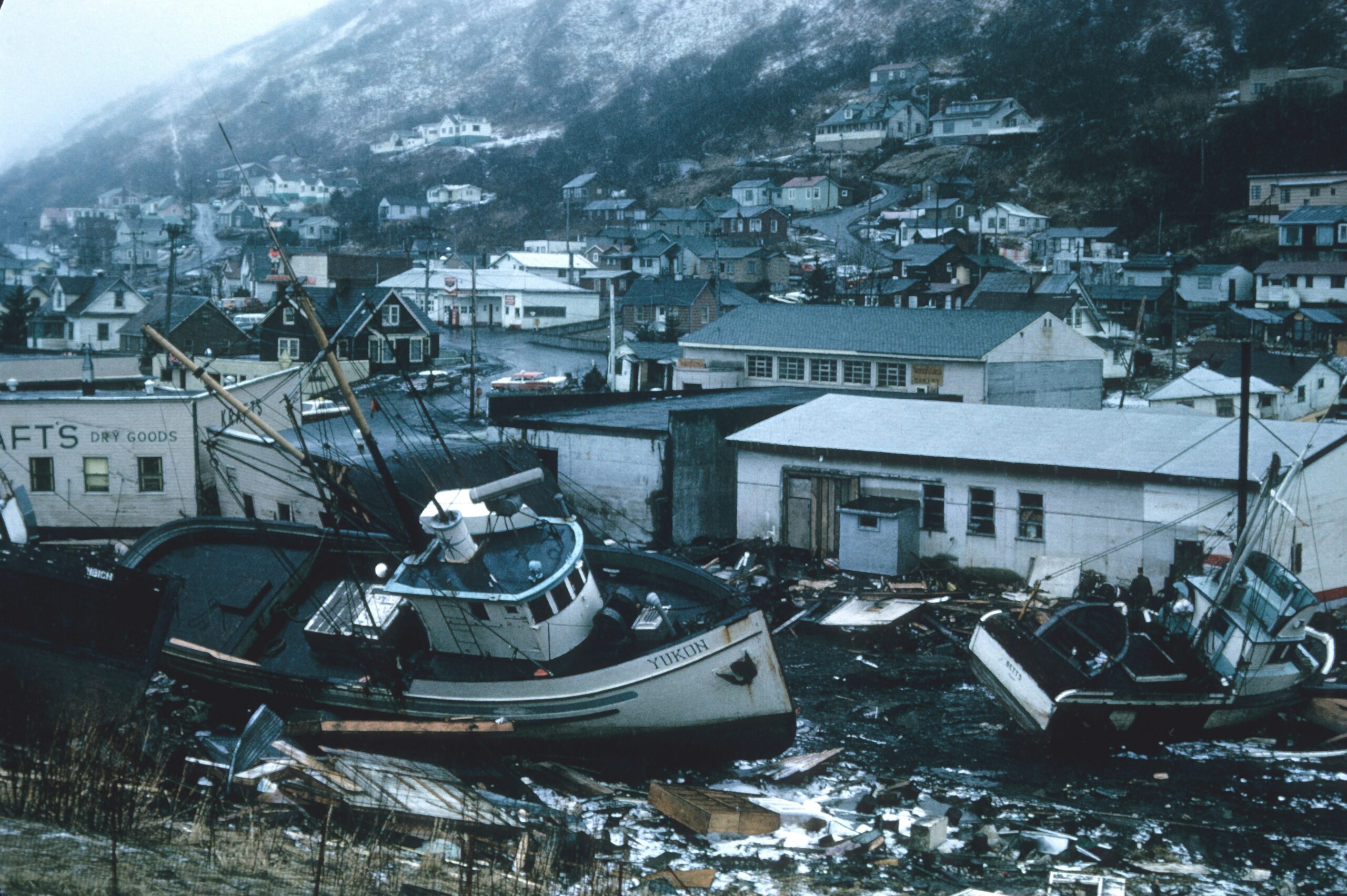
Houses turned into muddy piles of debris
-
Boats stranded in the middle of roads
-
Families searching for loved ones
-
Communities mourning, then slowly beginning to rebuild
There is a strange silence that follows—the ocean back to its calm, glittering self, as if nothing happened.
But for those who lived through it, the sound of rushing water, the sight of a receding sea, and the memory of that day never truly vanish.
Living with a restless ocean
Tsunamis are part of a planet where oceans and tectonic plates are constantly in motion.
We cannot remove this risk—but we can refuse to be ignorant of it.
We can:
-
Respect warning signs, natural and official
-
Learn evacuation routes and teach them to our children
-
Build smarter, away from the most vulnerable zones when possible
-
Support countries and organizations that invest in early-warning systems and coastal protection
The sea will always move. The Earth will always shift.
Some days, the ocean will refuse to stay within its old boundaries.
Our responsibility is to recognize that power, understand it, and live in a way that gives us the best chance to step back when the water suddenly begins to rise.