

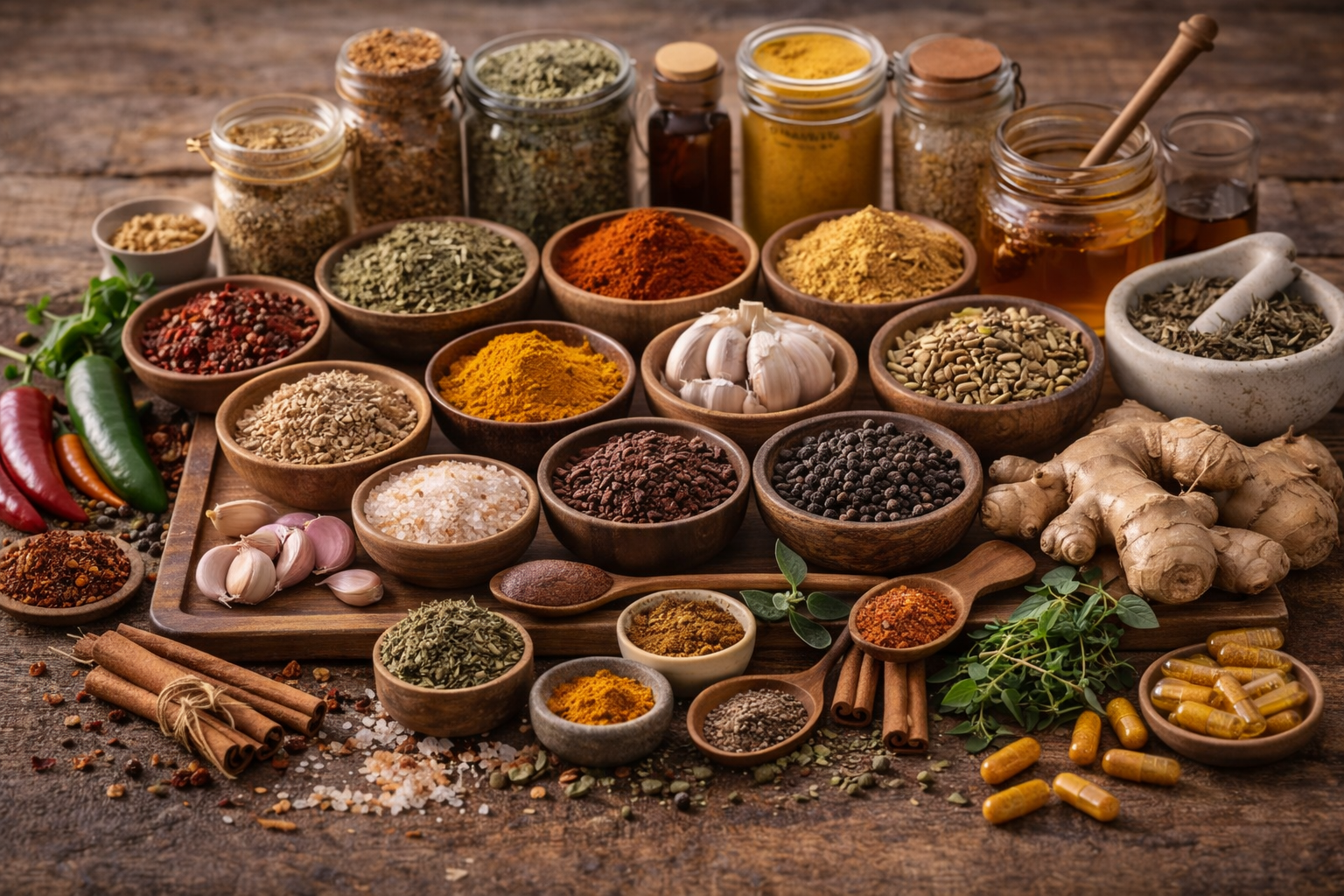
How everyday spices shape flavor, health, and healing
Seasonings are often treated as background players in cooking, sprinkled in small amounts and rarely given much thought. Yet for most of human history, seasonings were never “extra.” They were essential. Long before refrigeration, modern medicine, or global food systems, spices and herbs shaped how people preserved food, treated illness, and understood the body.
Seasonings sit at a rare intersection. They make food enjoyable, but they also influence digestion, immunity, inflammation, and overall balance. In many cultures, the line between kitchen and medicine was never clearly drawn. It still does not have to be.
Seasonings as the Soul of the Kitchen
In cooking, seasonings do more than add flavor. They create depth, balance, and identity. Salt enhances taste and controls moisture. Acids like vinegar sharpen flavors. Herbs bring freshness. Spices add warmth, bitterness, sweetness, or heat. Together, they turn basic ingredients into cuisine.
Seasonings also allow flexibility. With a few core spices, the same grains, vegetables, or proteins can become entirely different meals. This is why seasonings are crucial in long-term food storage and survival cooking. When food options are limited, flavor variety supports appetite, morale, and nutrition.
Beyond taste, many seasonings support digestion. Ginger reduces nausea. Black pepper stimulates digestive enzymes. Fennel and cumin ease bloating. Cinnamon helps balance blood sugar response after meals. These effects are not accidental. They are the reason many spices became culinary staples in the first place.
Seasonings as Traditional Medicine
Before pills and pharmacies, seasonings were among the most accessible forms of medicine. They were easy to store, easy to combine, and safe when used correctly.
Garlic has long been used for immune support and infection control. Turmeric became known for its anti-inflammatory properties. Cloves were used for tooth pain. Cinnamon supported circulation and metabolic balance. Thyme and oregano were used for respiratory and antimicrobial support. Even salt played a medicinal role, preserving food and preventing dangerous bacterial growth.
In traditional systems such as Ayurveda, Traditional Chinese Medicine, and Mediterranean folk medicine, seasonings were prescribed not only for illness but for balance. Food and medicine were inseparable. What you ate shaped how your body responded to stress, weather, and aging.
The Overlap: Food as Preventive Medicine
One of the most powerful aspects of seasonings is that they work gently and cumulatively. Unlike pharmaceutical medicine, which often acts quickly and directly, seasonings support the body over time. They help regulate inflammation, digestion, circulation, and immune response through daily use rather than emergency intervention.
For example, turmeric used regularly in cooking may support joint comfort over time. Garlic in meals may support cardiovascular health. Ginger tea can soothe digestion and support circulation. These effects are subtle, but they add up.
This does not mean seasonings replace medicine. It means they reduce the need for intervention by supporting the body’s baseline resilience.
Common Seasonings and Their Dual Roles
Salt preserves food, enhances flavor, and maintains electrolyte balance. Black pepper improves absorption of nutrients and stimulates digestion. Garlic supports immunity and adds depth to savory dishes. Ginger warms the body, aids digestion, and reduces nausea. Cinnamon adds sweetness without sugar and supports blood sugar balance. Turmeric provides color, warmth, and anti-inflammatory support. Oregano and thyme add aromatic flavor while offering antimicrobial properties. Chili and cayenne stimulate circulation and metabolism, though they must be used carefully.
Used thoughtfully, these seasonings serve both taste and wellness without requiring separation into “food” and “medicine.”
Caution and Balance
While seasonings are powerful, more is not always better. Concentrated supplements or excessive use can cause irritation, interact with medications, or create imbalance. Traditional use emphasizes moderation, combination, and context. A pinch in food is very different from a capsule taken daily without guidance.
Seasonings are safest and most effective when used as part of meals, not as isolated cures.
Seasonings in Modern Life
In modern kitchens, seasonings offer a way to reconnect with older wisdom without rejecting modern medicine. They support daily health quietly. They improve food quality without additives. They bring cultural continuity into everyday meals.
In times of stress, illness, or limited food options, seasonings become even more important. They encourage eating when appetite is low, support digestion under pressure, and provide small but meaningful comfort.
Final Thought
Seasonings are not just flavor enhancers. They are tools of survival, culture, and care. They remind us that nourishment is not only about calories, but about how food makes the body feel over time.
In the simplest pinch of spice, there is history, medicine, and meaning.
The kitchen has always been a place of healing.




I like this website very much so much fantastic info .
Regards for this post, I am a big big fan of this web site would like to continue updated.