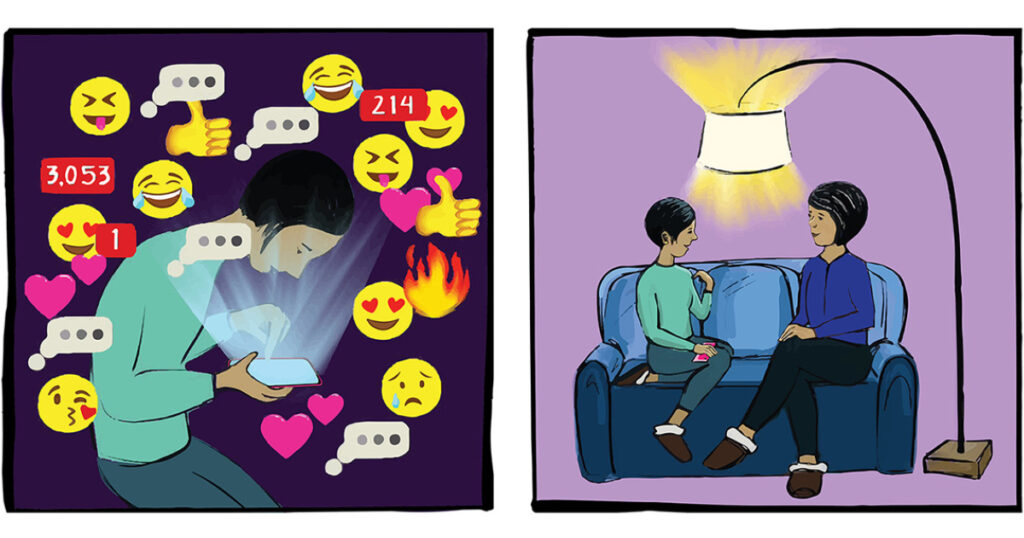

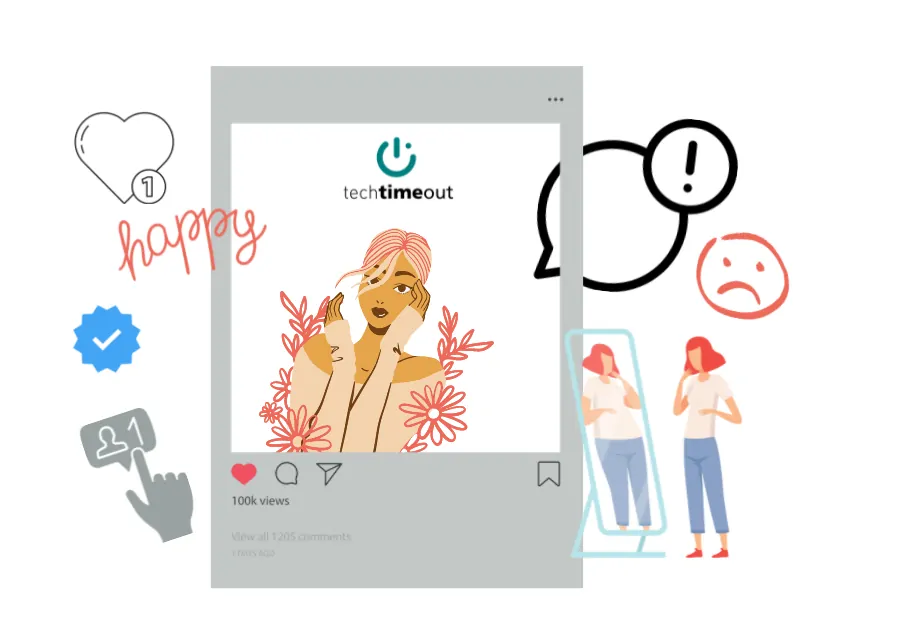
Social media was sold as connection. A way to stay in touch, share moments, and feel less alone. And in many ways, it delivers exactly that. But beneath the polished feeds and friendly notifications lies a quieter reality, one rarely addressed with the urgency it deserves.
The platforms that promise belonging are also reshaping how people think, feel, and measure their worth.
The damage doesn’t come from one dramatic moment. It accumulates slowly, invisibly, until it feels normal.
The economy of attention
Social media is not neutral. It is engineered.
Every scroll, like, pause, and comment feeds algorithms designed to maximize engagement. Engagement keeps people on platforms longer. Longer time means more data. More data means more profit.
Mental well-being is not the priority. Attention is.
This creates an environment where outrage spreads faster than nuance, comparison outperforms contentment, and emotional extremes are rewarded over balance.
Comparison as a daily habit
One of the most corrosive effects of social media is constant comparison.
People are exposed to curated versions of other lives dozens, sometimes hundreds, of times a day. Success without struggle. Beauty without context. Happiness without history.
Even when users know these images are edited and selective, the brain responds emotionally before logic can intervene.
Over time, self-worth becomes externalized. Value is measured in likes, views, and reactions rather than lived experience.
Anxiety doesn’t need to be taught. It grows naturally in this environment.
The dopamine trap
Social media platforms are built on intermittent reward. Notifications arrive unpredictably. Sometimes there’s validation. Sometimes there’s silence.
This pattern mirrors the mechanics of addiction.
Each refresh carries anticipation. Each notification offers a brief chemical reward. The absence of response creates discomfort. The cycle repeats.
Users don’t scroll because they are enjoying themselves. They scroll because stopping feels uncomfortable.
This constant stimulation exhausts the nervous system.
The illusion of connection
Social media creates proximity without intimacy.
People appear present in each other’s lives without truly being there. Conversations fragment into reactions. Depth gives way to performance. Vulnerability becomes content.
Loneliness doesn’t disappear. It changes shape.
Many users report feeling more isolated after extended social media use, not less. The platform provides constant noise, but little nourishment.
Mental health struggles become content
In recent years, conversations around mental health have increased online. On the surface, this seems positive. Awareness matters.
But there is a darker side.
Struggles are sometimes flattened into trends. Pain becomes aesthetic. Suffering becomes identity. Algorithms amplify distress because it holds attention.
This blurs the line between support and spectacle.
Healing is quiet and slow. Social media rewards what is visible and immediate.
Sleep, focus, and emotional regulation
Constant connectivity interferes with basic mental health foundations.
Late-night scrolling disrupts sleep cycles. Continuous notifications fragment focus. Rapid content shifts shorten attention spans. Emotional regulation weakens under constant stimulation.
The brain never rests.
Over time, this contributes to irritability, fatigue, anxiety, and difficulty concentrating. These effects are subtle enough to be dismissed, yet powerful enough to shape daily life.
Why this isn’t talked about enough
Social media companies publicly support mental health initiatives while quietly resisting structural changes that would reduce engagement.
Acknowledging the full scope of harm would require redesign. Redesign would reduce profit.
So the conversation stays partial.
Responsibility is framed as individual self-control rather than systemic design. Users are told to “take breaks” while platforms are engineered to make breaks difficult.
Awareness without accountability
The dark side of social media is not a secret conspiracy. It is an open system functioning as designed.
What people aren’t encouraged to understand is how deeply that design affects mood, self-perception, and emotional resilience.
Once awareness shifts, responsibility expands beyond the individual.
Reclaiming mental space
This is not an argument for abandoning social media entirely. It is an argument for honesty.
Healthy relationships with technology require boundaries, intention, and periods of absence. They require remembering that silence is not failure and presence is not performance.
Mental health improves when attention is reclaimed.
The truth they don’t emphasize
Social media is powerful. And power shapes behavior.
They don’t want you to know how deeply these platforms influence emotions, relationships, and self-worth because that knowledge changes how people engage.
And reduced engagement changes everything.
Understanding the dark side is not about fear.
It is about choice.
And choice begins with seeing the system clearly.