
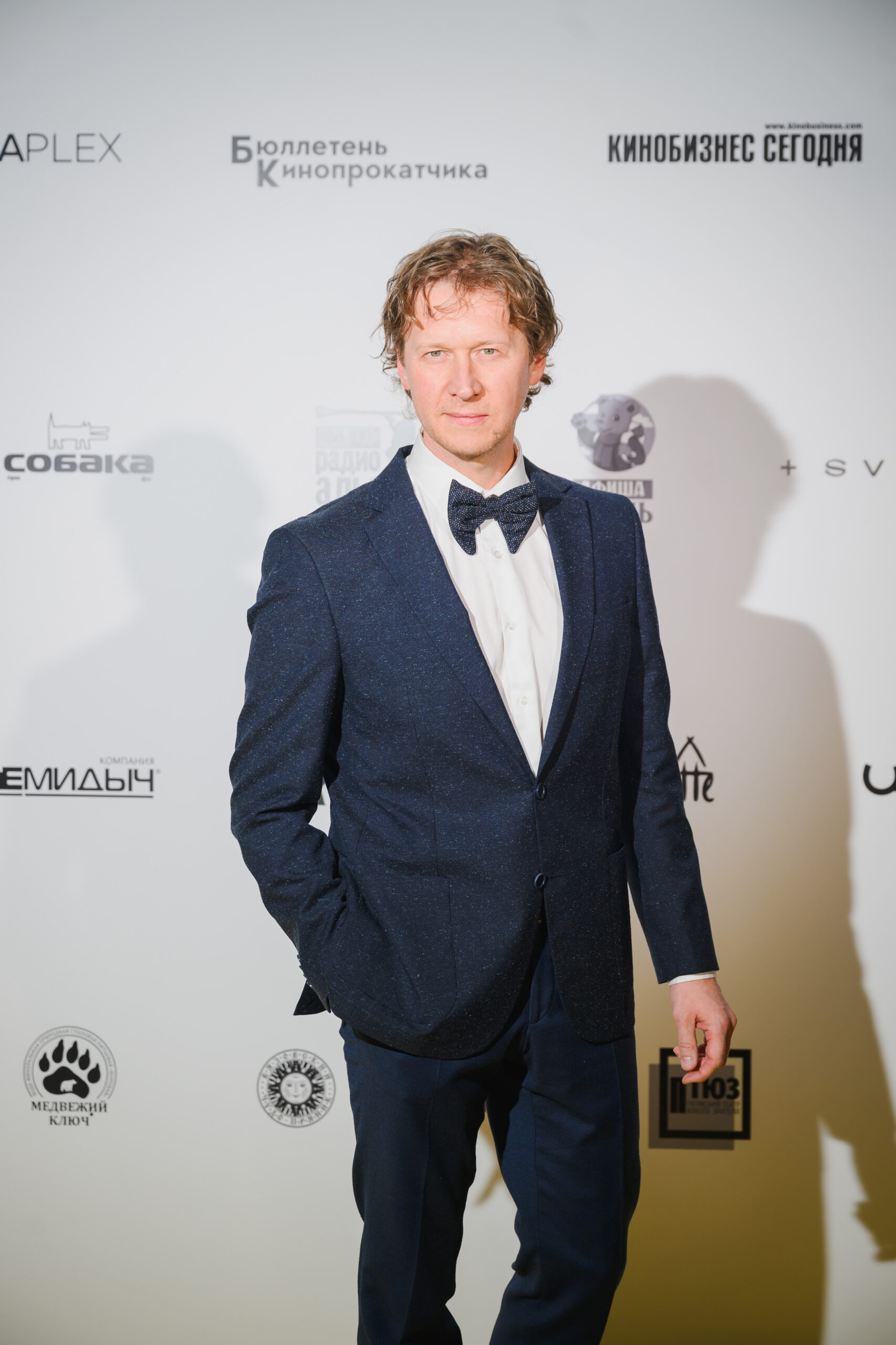
Exclusive Interview with Sergey Krechetov
The documentary Chekhov.Offstage, filmed in Russian Sign Language and telling the story of a deaf teenager’s adventures in the famous theater founded by Konstantin Stanislavski, was selected for the competition program of the International Filmmaker Festival of New York. We spoke with one of the film’s creators, producer Sergey Krechetov, about his journey into filmmaking, his passion for history, and his commitment to making culture accessible to everyone.
Sergey Krechetov is a Russian cultural entrepreneur, independent history researcher, and film producer whose work brings together history, cinema, and accessibility. His professional journey has taken him from the study of eighteenth-century Russian and British history to international business, from pioneering English-language education for people with disabilities to producing documentary films in Sign Language. At the heart of his work lies a simple but powerful conviction: culture should be accessible to everyone, and inclusive storytelling should bring people together rather than separate them.
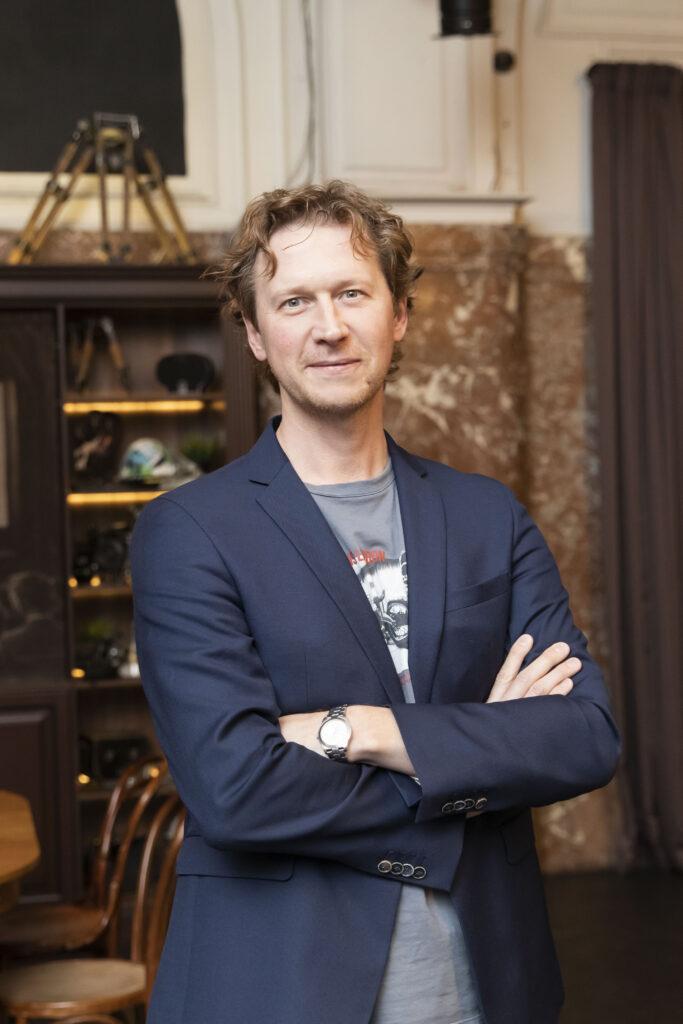
1. NY Glamour Magazine: Your career has taken you from studying history to entrepreneurship and eventually to filmmaking. Looking back, what inspired each of these transitions, and how have they shaped the person you are today?
Looking back, I can see that my career has been less of a straight line and more of a journey in which one experience gradually opened the door to another. Yet there has always been a common thread: my desire to explore the world, share knowledge, and create opportunities for people.
History was my first passion. As a teenager, I dreamed of becoming a school history teacher. Later, my professional life took me into international entrepreneurship, where I became interested in how people exchange ideas across cultures. Organizing business English training with British professionals for major companies taught me a great deal about collaboration and turning ideas into practical projects.
In 2012, I launched programs in Russia to prepare people with different disabilities for internationally recognized English-language examinations. My goal was to help them gain broader access to international education and professional opportunities. Later, I worked on training deaf and hard-of-hearing people to lead museum tours in Sign Language. These projects taught me that inclusion requires not only good intentions but also imagination, persistence, and a willingness to rethink established practices.
Filmmaking came into my life almost unexpectedly during the pandemic, when I bought a camera to create a museum video guide in Sign Language. That small decision eventually led to documentary films and international collaborations.
Today, I see these different chapters as parts of the same story. My professions have changed, but my underlying motivation has remained remarkably consistent: to bring people closer to knowledge, history, and one another.
2. NY Glamour Magazine: History has remained a constant passion throughout your life. What first sparked your fascination with the past, and how does historical research continue to influence your films today?
My fascination with history began at school. My family lived in a remote residential district of Moscow, and as a boy I would spend hours in the local library, absorbed in books that I could barely understand at the time but found irresistible.
I was particularly fascinated by ancient Egypt and Alexander the Great. I still remember a huge map of Alexander’s campaigns that our history teacher would hang on the classroom board when I was in fifth grade. It was so enormous that it covered almost an entire wall. Ancient Greece, Persia, India—the world seemed to open up before me. I felt as though I were living in that world myself.
I eventually studied history and the humanities at university and later continued my education in a joint master’s program involving Sciences Po in Paris. My research interests developed toward historical biographies and family histories, particularly those connecting Russia and Great Britain in the eighteenth and nineteenth centuries.
I also had the opportunity to engage with the international scholarly community through the Study Group on Eighteenth-Century Russia. Although that chapter of my life was relatively brief, I have very warm memories of meeting an extraordinary community of historians.
Professional responsibilities eventually took me away from academic research, but history never left me. In many ways, filmmaking has allowed me to return to my original dream of bringing the past to life.
When I work on a historical film, I am interested not only in dates, political events, or famous personalities, but also in the human beings behind the historical images. What motivated them? What doubts did they experience? How did they relate to the people around them? Why did they make one choice rather than another under the circumstances they faced?
I believe historical filmmaking should invite people to think and reflect rather than simply tell them what to think. My background as a researcher encourages me to take facts seriously, while cinema allows me to explore the emotional and human dimensions that make those facts meaningful.
3. NY Glamour Magazine: Your work is deeply rooted in accessibility and inclusion. What inspired you to dedicate so much of your career to creating opportunities for people with disabilities?
I think it began with a simple question: why should someone be excluded from an experience merely because the world has not been designed with their needs in mind?
For my entrepreneurial nature, this became a genuine challenge. I began exploring educational and professional opportunities that had previously been largely unavailable to people with disabilities in Russia.
In 2012, I organized English-language courses for people with different disabilities, including blind and deaf participants and people with mobility or speech-related difficulties. At the time, there was very little established experience in teaching foreign languages to people with disabilities in Russia. I personally taught students with different disabilities, developing and testing teaching methods through hands-on experience. Our work was subsequently recognized by Cambridge Assessment. I still keep a small commemorative statuette and a letter from them.
Later, I turned my attention to cultural accessibility. I wanted deaf and hard-of-hearing people not only to visit museums, but also to interpret and communicate cultural heritage themselves. This led to training programs for Sign Language museum guides in Saint Petersburg. Today, deaf graduates of our programs lead tours in museums across the city.
These experiences changed my understanding of inclusion. It should not be limited to adapting existing experiences for people who have been excluded. It can also create entirely new professional opportunities and forms of artistic expression.
When we make films in Sign Language, we are not necessarily making films about deaf people or exclusively for deaf audiences. We are using Sign Language as a language of cinema—and that opens the door to a shared artistic experience for everyone.
4. NY Glamour Magazine: During the pandemic, a museum video guide project unexpectedly led you into filmmaking. Did you ever imagine that a single camera would completely change the direction of your professional life?
Not at all! When I bought that camera, I certainly did not imagine that I was beginning a new career as a film producer.
During the pandemic, when many cultural institutions were closed to visitors, I approached a museum in Saint Petersburg with the idea of creating a video guide in Russian Sign Language. The concept was straightforward: if a deaf person could not visit an exhibition in person, we could bring the museum to them through a film featuring a deaf presenter.
What began as a practical solution gradually became something much larger. We started producing more museum video guides and found sponsors who enabled us to develop the work on a regular basis. Since then, our team has created more than thirty video guides in Sign Language.
The camera also changed how I thought about accessibility. A film can travel far beyond the physical walls of a museum. It can reach people in different cities and countries, and it can preserve a particular way of interpreting cultural heritage. It also allows us to combine Sign Language, cinematography, editing, music, narration, and subtitles into a single artistic experience.
Eventually, this work led to In the Footsteps of Alexander Nevsky, which we developed as Russia’s first full-length documentary in Sign Language. That was a significant step from producing educational video guides to creating a historical documentary film.
Sometimes a new direction begins with a grand plan. In my case, it began with a camera and a desire to solve one practical problem. I have learned that it is worth paying attention to unexpected opportunities, because they can lead you somewhere you never knew you wanted to go.
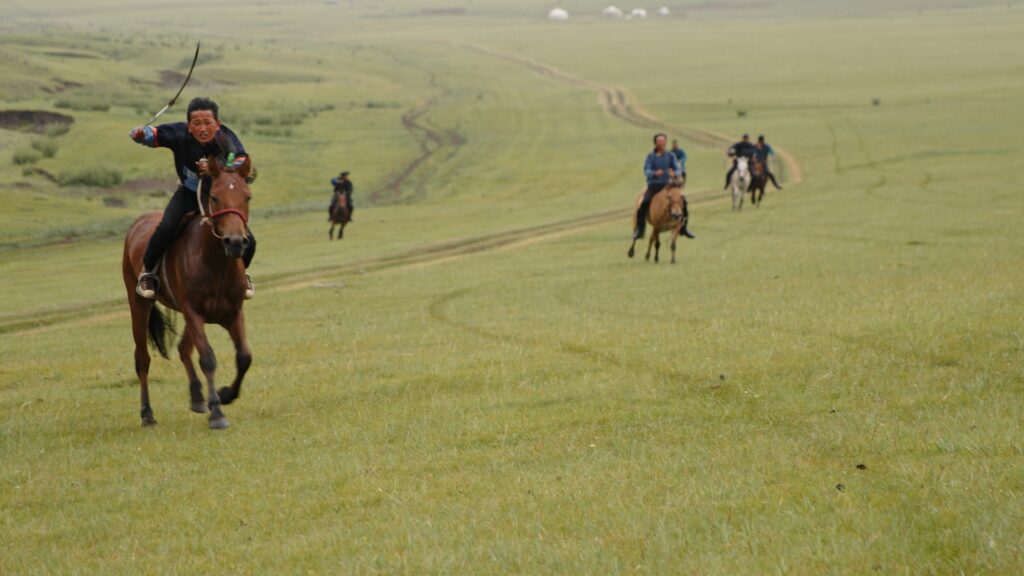
(Shot from the In the Footsteps of Alexander Nevsky)
5. NY Glamour Magazine: In the Footsteps of Alexander Nevsky has received international recognition and became Russia’s first full-length documentary in Sign Language. What was the greatest challenge and the most rewarding moment during its production?
First of all, this was completely uncharted territory for both me and the team. There had already been successful films involving deaf performers in Russia and elsewhere. Russia had released Country of the Deaf in 1998, and the American film CODA, directed by Sian Heder, came out in 2021. But before our project, no one in Russia had made a full-length documentary in the Sign Language of deaf people. We were entering new territory and writing our own story from scratch.
When I say “we” I mean, in particular, my collaboration with director Anna Turchaninova, which began in 2021 and continues to this day. Anna, a professional filmmaker, became not only my creative partner but also an important mentor. We co-wrote the screenplay for In the Footsteps of Alexander Nevsky, and I learned a great deal from her about professional filmmaking. She also brought together an exceptionally talented crew, including cinematographers, a sound director, and an editor.
The greatest challenge was that we were creating something for which we had no established model. We were not simply making a conventional historical documentary and adding Sign Language to it. Sign Language was central to the film’s storytelling, so we had to rethink how a documentary could work as cinema.
For example, what happens when the presenters move out of the frame? Deaf viewers need to be able to see both the presenter and the subtitles, and we cannot simply rely on a voice-over to carry the story. We had to think carefully about the visual structure of every scene.
Another challenge was helping our presenters memorize substantial amounts of scripted text. We initially considered using a teleprompter, but it restricted their movement and made their performances feel less dynamic. Eventually, the presenters decided to memorize the scripts themselves. And they did it! Even now, I cannot fully explain how they managed it. Perhaps the pressure of filming helped them concentrate. Whatever the reason, it was remarkable to watch.
We also wanted to make a historical documentary differently from the way many contemporary productions approach the genre. We did not use historical reenactors in armor, animated sequences, or artificial intelligence-generated imagery. Nor did we rely on scholars delivering solemn reflections in dimly lit rooms. Instead, we decided to make the film a genuine journey. Our crew does not hide behind the camera: viewers see us as we travel, investigate, and engage with the story.
The production took us to Russia, Mongolia, Italy and the Vatican. Each location brought its own logistical challenges and opportunities to explore the historical subject from a different perspective.
The work began in 2021, and we were unable to finish the film in 2022, so part of the production had to be postponed until the following year. Nevertheless, I never doubted that we would complete it.
Perhaps our historical protagonists helped us along the way—not only Alexander Nevsky, a saint in the Russian Orthodox tradition, but also Saint Francis of Assisi. Otherwise, it is difficult for me to explain what happened during our Italian filming in early 2023. We encountered support almost everywhere. We worked with extraordinary people, many of whom remain close friends today.
The most rewarding moment was seeing the film become a finished work that could reach audiences far beyond the community for which it was initially created.
We added voice-over performances by hard-of-hearing people and subtitles. Sign Language became the language of the film rather than simply a language used by deaf people. It opened up a new form of dialogue between deaf and hearing audiences. In this accessible format, the film can be enjoyed by people regardless of whether they can hear.
The film has received recognition at international historical film festivals. For me, this demonstrated that a film in Sign Language can be much more than an educational resource. It can be a historical documentary with its own artistic identity, capable of engaging people who may have had little previous experience with Sign Language cinema. That was an important milestone for our team.
6. NY Glamour Magazine: Your films combine history, culture, and accessibility in a way that is rarely seen in contemporary cinema. What do you hope audiences take away after watching your work?
Above all, I hope audiences come away with the feeling that the world is larger and more interesting than they may have imagined.
I want people to discover historical figures as human beings, become curious about unfamiliar cultures, and see that there are many ways to tell a story. History should not feel like a closed book, and accessibility should not feel like a separate category of culture reserved for particular audiences.
Our films are created for everyone. I hope they encourage audiences to look beyond assumptions about who can tell a story, who can understand it, and who belongs in a cultural space.
When people can share the same artistic experience, their differences do not disappear, but those differences can become a source of curiosity and connection rather than a barrier.
7. NY Glamour Magazine: You have worked with museums, educators, historians, filmmakers, and people from many different backgrounds. How important has collaboration been to your success?
Collaboration has been absolutely essential. I do not think any of the projects I am most proud of could have happened through my efforts alone.
My role often begins with an idea: a museum video guide in Sign Language, a documentary about a historical figure, or a training program that opens a new professional path for people with disabilities. But an idea only becomes real when people with different skills and perspectives come together to develop it.
My collaboration with Anna Turchaninova has been particularly important because it introduced me more deeply to the craft of filmmaking. Working with cinematographers, editors, and sound professionals has taught me how to translate an idea into a cinematic experience. Educators help us develop methods that work in practice, while deaf and hard-of-hearing participants bring perspectives and abilities that cannot simply be replaced by theoretical knowledge.
I have also learned that collaboration requires a willingness to listen and to accept that the original idea may change. The best results often emerge when people challenge one another constructively and discover possibilities that none of them could have developed alone.
For me, successful collaboration is about creating an environment in which different experiences and talents can contribute to something meaningful.
8. NY Glamour Magazine: One of your guiding principles is that culture should be accessible to everyone. In your opinion, what more can the international film industry do to make cinema truly inclusive?
The most important change would be to treat accessibility as an integral part of filmmaking from the very beginning, rather than something added after a film has been completed.
Accessibility can include subtitles, Sign Language interpretation, audio description for blind and low-vision audiences, accessible screenings, and digital platforms that work with assistive technologies. These measures should be considered during planning and budgeting, not introduced as an afterthought when resources are already limited.
I also believe the industry needs to create more opportunities for people with disabilities to participate in the production process itself. There are enormously talented people with disabilities around the world. They need opportunities to develop their skills and work as writers, actors, directors, consultants, editors, and other creative professionals.
People with disabilities are part of our own small production company, too. Accessibility is not only about helping people watch films; it is also about enabling them to make films.
In 2025, for example, we launched a course to prepare hard-of-hearing people with speech and hearing impairments for recording-studio work and film voice performances. The participants surprised us with their vocal quality, emotional range, and sincerity. Their work challenged some of our own assumptions about what might be possible.
Film festivals and distributors can also help by programming accessible films, supporting filmmakers who experiment with different forms of communication, and making accessibility part of their standard practice.
I find it difficult to judge how inclusive film screenings are organized around the world, but I have sometimes felt uncomfortable about the way Russian festivals handle films in Sign Language. A film may be selected for a festival, yet the organizers may be unable or unwilling to arrange Sign Language interpretation or provide subtitles for a video message from the filmmakers before the screening. Quite often, we end up arranging Sign Language interpreters ourselves when our films are shown at festivals.
Selecting an inclusive film is only the first step. The way a festival presents it should reflect the same commitment to accessibility.
I do not think inclusion requires every film to look or sound the same. On the contrary, it can make cinema more diverse and artistically adventurous. The goal should be to give more people the opportunity to create, participate, and experience the power of storytelling.
9. NY Glamour Magazine: Your projects have taken you to remarkable locations, including the Vatican, Mongolia, Italy, and historic sites connected to Alexander Nevsky. Is there one place or experience that left the deepest impression on you?
It is difficult to choose just one, because each place offered a different way of connecting with history. But filming in the Vatican was particularly memorable for me.
As someone who has been fascinated by history since childhood, I find it extraordinary when research takes you beyond books and into places where historical memory has been preserved. The Vatican occupies a unique place in human history, and being there as part of a film project made the past feel much more immediate.
We approached our filming in the Vatican Apostolic Archive with great care. Before the shoot, we were told that the setting required an appropriate dress code—smart casual at the very least. So we packed white shirts, ties, sweaters, formal trousers, and dresses. Imagine our surprise when we entered rooms decorated in the style of Raphael and were greeted by a member of the archive staff wearing jeans and a checked shirt!
Our film also developed a gentle sense of humor and self-irony, almost without our realizing it. At times, we found ourselves conducting something like a historical experiment.
For example, we explain in the film that Mongol khans issued yarliks—official decrees confirming the authority of rulers in conquered territories. But what might such a ceremony have looked like in the mid-thirteenth century?
We allowed ourselves a little creative freedom. Our presenter played a game of chess with Batu Khan, wagering the yarlik on the outcome. For the role of the khan, we cast our own driver.
We filmed the scene in Mongolia during Naadam, the country’s great traditional festival. During those celebrations, many Mongolians wear wonderfully beautiful ceremonial robes. Our driver, dressed in one of these magnificent garments, had just been checkmated.
Everyone on set was laughing. And then, suddenly, we noticed his eyes. The laughter stopped. Those were the eyes of Batu Khan himself! It was frightening—in the most extraordinary way. The moment sent chills down my spine.
I was also struck by the experience of working across such different cultural and historical landscapes. Mongolia, Italy, and the other locations connected with Alexander Nevsky’s story required us to think beyond a single national perspective. History rarely develops in isolation. It is shaped by encounters between peoples, political interests, religious traditions, and individual decisions.
Traveling for a historical film also changes the way you approach storytelling. A location is not simply a beautiful background for the camera. It can help you ask new questions, notice details you might otherwise overlook, and reconsider what you thought you knew.
Perhaps that is what I value most about these journeys: they remind me that historical research is never entirely finished. There is always another perspective to discover, another connection to explore, and another question worth asking.
10. NY Glamour Magazine: You continue to develop new initiatives, including projects involving deaf and hard-of-hearing performers and voice actors. What excites you most about the future of inclusive filmmaking?
What excites me most is the possibility of discovering new forms of artistic expression that emerge when people who have traditionally been excluded from certain professions are given the opportunity to participate.
Our Hard of Hearing Voice Actor project is a good example. We wanted to explore whether people with hearing and speech impairments could develop their own approaches to voice performance and recording-studio work. We worked with participants on short films based on poems by Alexander Pushkin, Russia’s most celebrated poet, combining performances in Russian Sign Language with recorded voice tracks.
The results were deeply encouraging. The participants brought emotional nuance, sincerity, and individuality to their performances. We created two short films based on Pushkin’s poems The Prophet and Desire for Fame. We also sought permission to use English translations, including Ted Hughes’s translation of The Prophet, which helped us consider how the project might reach audiences beyond Russia.
I am interested in taking this work further and exploring whether similar training approaches could be developed in other countries.
I would also like to continue making Sign Language video guides for museums internationally, bringing together cultural institutions, deaf presenters, and filmmakers.
There are hundreds of thousands of deaf people around the world, and they should not be silently excluded from cultural events of global significance. I recently visited the new Grand Egyptian Museum in Giza, and I was struck by the extraordinary scale of its collections. A museum of this importance deserves video guides in a wide range of Sign Languages, allowing deaf visitors from different countries to engage with its cultural treasures.
For me, inclusive filmmaking is not simply about adapting established practices. It is about asking what new things become possible when we work with people whose talents have not always been recognized by the industry.
I hope the future brings more projects in which accessibility is part of the creative process itself. That is where I believe we can discover genuinely new artistic possibilities.
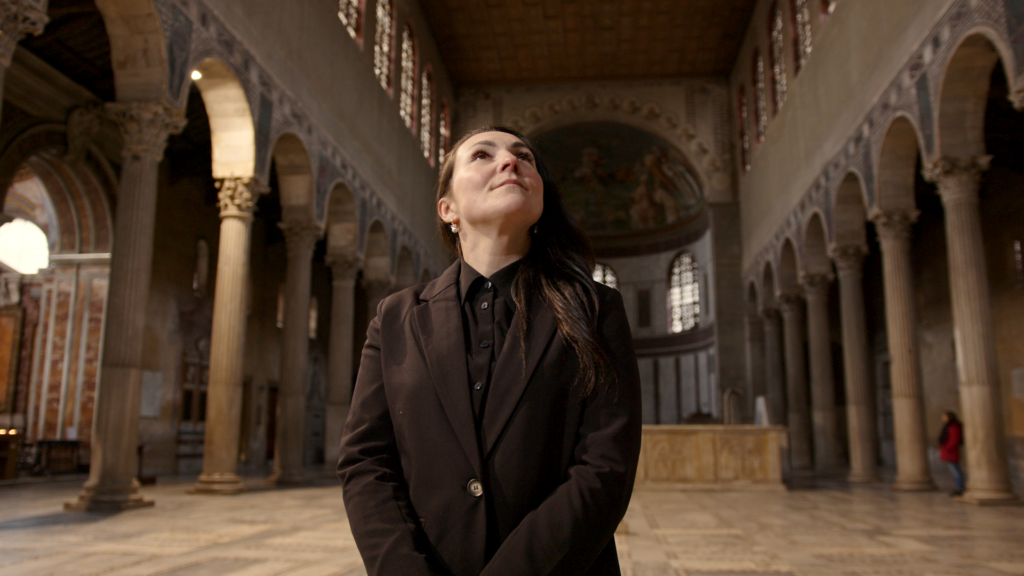
(Actress Tatiana Trofimova from the In the Footsteps of Alexander Nevsky)
11. NY Glamour Magazine: Your latest projects, including Dancing with the Tram and new historical productions, continue to explore the idea of bringing people together through storytelling. What can audiences expect from your upcoming films?
Our film Dancing with the Tram, completed by Anna Turchaninova in 2026, explores a question that is both simple and surprisingly profound: can deaf children and ballet dancers find a common language through movement and share the stage?
I am particularly interested in what happens when people who communicate and experience the world differently are brought together around a common creative goal. Dance can become a form of communication that goes beyond spoken words, but the film is not simply about overcoming differences. It is also about curiosity, experimentation, and the process of creating something together.
And you might ask: what does the tram have to do with it?
The answer is simple: the tram becomes one of the characters in our film. People dance on it, talk on it, and encounter it in the theater. You can even hear the tram in the theater. It is woven into the story in unexpected ways.
We hope to introduce the film to audiences through a world premiere and then continue its journey through festivals and other screenings.
At the same time, we are developing new historical projects. We have decided to explore historical fantasy and are currently working on the screenplay for our first feature film in this genre. The story is inspired by a medieval epic known across a broad region stretching from Egypt and Turkey toward the western borders of China. It follows the adventures of Edigu, an emir of the Golden Horde, whose path brings him into contact with Khan Tokhtamysh, the famous conqueror Timur, and supernatural forces, including giants and mythical fairies known as pari.
There are many other stories I would love to bring to the screen. One that particularly fascinates me is the life of Saint Francis of Assisi. Anna Turchaninova and I have developed an idea for a documentary-drama about this extraordinary man, and I hope we will have the opportunity to pursue it.
I cannot say exactly where every project will lead, but I hope they will continue our exploration of history, human relationships, and accessibility. I want to make films that invite audiences into unfamiliar worlds while helping them recognize something universal in the people they encounter there.
12. NY Glamour Magazine: Finally, if you could share one message with young filmmakers, historians, entrepreneurs, and social innovators who hope to make a meaningful impact through their work, what advice would you give them?
I would encourage them not to worry too much if their careers do not follow a straight line. My own path has included history, research, entrepreneurship, education, cultural projects, and filmmaking. If someone had told me years ago that I would eventually produce documentaries in Russian Sign Language, I probably would have found it difficult to imagine.
Each stage of my life gave me something that became useful later. Business taught me how to organize projects and work with people. Historical research taught me to ask questions and look beyond superficial explanations. Educational work taught me patience and the importance of adapting methods to the people I work with. Filmmaking brought these experiences together in a new way.
I would also say: do not wait until you feel completely ready. You can learn a great deal by beginning with a small, concrete project and allowing it to develop. My own journey into filmmaking started with a camera and a museum video guide, not with a long-term plan to become a producer.
Finally, choose work that matters to you, but remain open to the people who can help you develop it. Meaningful projects rarely emerge from individual determination alone. They grow through collaboration, persistence, and a willingness to reconsider your assumptions.
And do not underestimate the importance of making opportunities accessible to others. Sometimes the most significant thing you can do is not simply create something yourself, but help someone else discover what they are capable of creating.
For me, that is one of the most rewarding aspects of my work: seeing an idea develop into a film, a new professional opportunity, or a shared cultural experience that did not exist before.
A Childhood Dream Reimagined
Sergey Krechetov’s career has never followed a straight line. He has been a student of history, an independent researcher, an entrepreneur, a business trainer, an educational innovator, a cultural project organizer, and a film producer. Each stage has led him somewhere he could not necessarily have anticipated at the beginning.
Yet there is a clear thread connecting these different roles. Whether he is researching historical families, helping people with disabilities learn English, training deaf museum guides, or producing films in Sign Language, he is interested in creating opportunities for people to participate in worlds from which they might otherwise be excluded.
His journey into cinema began almost by accident, with a camera purchased during a pandemic. It has since opened the door to international collaborations, recognition at film festivals, and new ways of approaching cultural accessibility.
The schoolboy who once dreamed of teaching history could hardly have imagined this path. Today, however, Krechetov sees filmmaking as a continuation of that original ambition: a way to bring the past to life, share knowledge, and help people discover stories they might never otherwise encounter.
What began as a childhood fascination with history has become a multifaceted professional journey—and, for Krechetov, there are still many stories left to tell.