
Natural Forces, Human Error, and Why the Mystery Endured for Decades
In February 1959, nine experienced hikers died in the frozen wilderness of Russia’s Ural Mountains. Their tent was found torn open from the inside. Their bodies were scattered across the snow, some barefoot, some severely injured, some showing signs that made no immediate sense.
For decades, the Dyatlov Pass Incident became one of the most disturbing cold-case mysteries in modern history.
But the truth, while still unsettling, is far less supernatural than legend suggests.
The Expedition
The group was led by Igor Dyatlov, an experienced mountaineer and engineering student. All nine hikers were skilled, well-prepared, and familiar with extreme winter conditions. Their goal was a challenging but achievable winter trek.
They never returned.
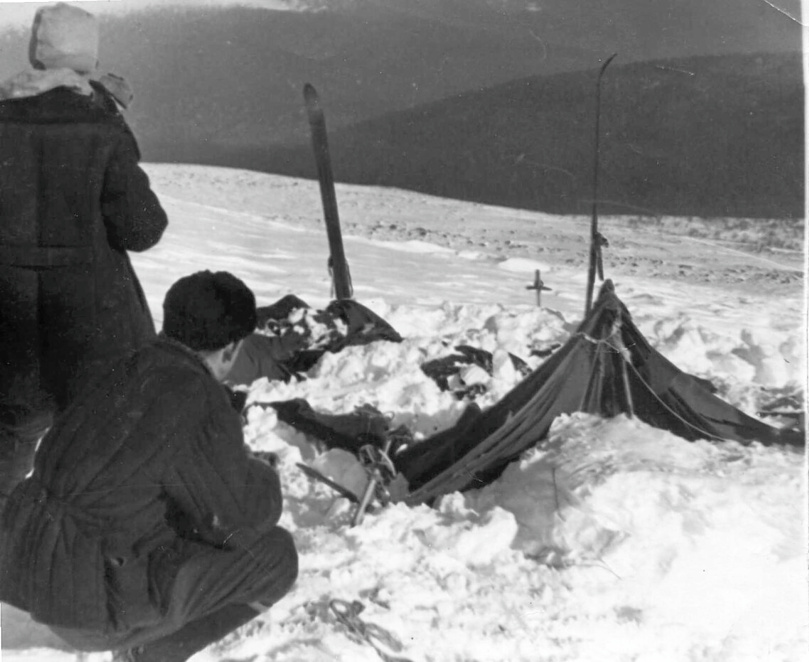
When rescuers arrived weeks later, what they found defied simple explanation. The tent lay partially collapsed, cut open from the inside. Footprints led away into the snow. Bodies were discovered at different distances, some near a forest, others closer to the campsite.
No signs of a struggle. No evidence of other people.
And yet, something had clearly gone terribly wrong.
Why the Scene Looked So Strange
At first glance, the evidence felt impossible to reconcile with rational behavior. Why would trained hikers flee their shelter at night in sub-zero temperatures? Why leave without boots or proper clothing? Why scatter instead of regroup?
These questions fueled decades of speculation.
The answer lies in understanding how humans behave under extreme stress, darkness, cold, and confusion.
The Slab Avalanche Theory
Modern investigations suggest the hikers were victims of a slab avalanche, a type of avalanche that does not roar downhill dramatically, but instead fractures suddenly, pushing a heavy mass of compacted snow onto a campsite.
This kind of avalanche can strike without warning, especially on a sloped surface weakened by weather conditions. It does not bury everything. It does not leave obvious trails. But it delivers immense force.
The hikers likely felt the ground shift or heard the cracking sound of impending collapse. In darkness, during a storm, their instinct was immediate escape.
They cut their way out of the tent rather than waste precious seconds searching for the entrance.
That decision probably saved them from instant death.
But it sealed their fate.
Cold, Darkness, and Human Limits
Once outside, the group moved downhill toward the treeline, seeking shelter from wind and snow. Some attempted to build a fire. Others tried to return to the tent.
In those temperatures, frostbite and hypothermia set in within minutes.
Hypothermia does not simply make people cold. It impairs judgment, coordination, and reasoning. Victims may paradoxically remove clothing, lose direction, or make illogical decisions.
What looks irrational in hindsight often makes perfect sense inside a freezing, oxygen-deprived brain.
The Severe Injuries
Some hikers suffered massive internal injuries, including broken ribs and skull fractures, without external wounds. This was long considered evidence of violence.
But snow, when compacted and moving as a slab, behaves like concrete. The pressure from an avalanche impact can crush bones without tearing skin.
No signs of attack were found. No defensive wounds. No footprints beyond the group’s own.
Nature was the force involved.
Why Radiation and Missing Details Confused Everything
Early reports mentioned trace radiation on clothing, fueling theories of secret weapons tests or government cover-ups. Later analysis revealed the radiation levels were minimal and likely explained by occupational exposure some members had before the trip.
The lack of complete documentation, poor early investigation methods, and Cold War secrecy allowed rumors to flourish.
Silence breeds mystery.
Why the Mystery Lasted So Long
The Dyatlov Pass Incident endured because it sat at the intersection of tragedy and the unknown. Incomplete evidence, emotionally charged details, and decades of speculation turned human error and natural forces into something far darker.
People wanted a monster, a conspiracy, or an otherworldly explanation.
What they found instead was something more uncomfortable.
Competent people can still make fatal decisions.
Nature does not need malice to kill.
And survival instincts can betray us when conditions exceed human limits.
The Real Tragedy
The hikers did not die because they were reckless or unskilled. They died because they faced a rare convergence of terrain, weather, timing, and human vulnerability.
There was no single dramatic moment. No villain.
Just a cascade of small decisions made under impossible pressure.
The Dyatlov Pass Incident reminds us that mysteries often persist not because the truth is unknowable, but because it is unsettlingly ordinary.
Sometimes, the most frightening explanation is that nothing supernatural happened at all.
Only cold.
Snow.
And the fragile limits of being human.