

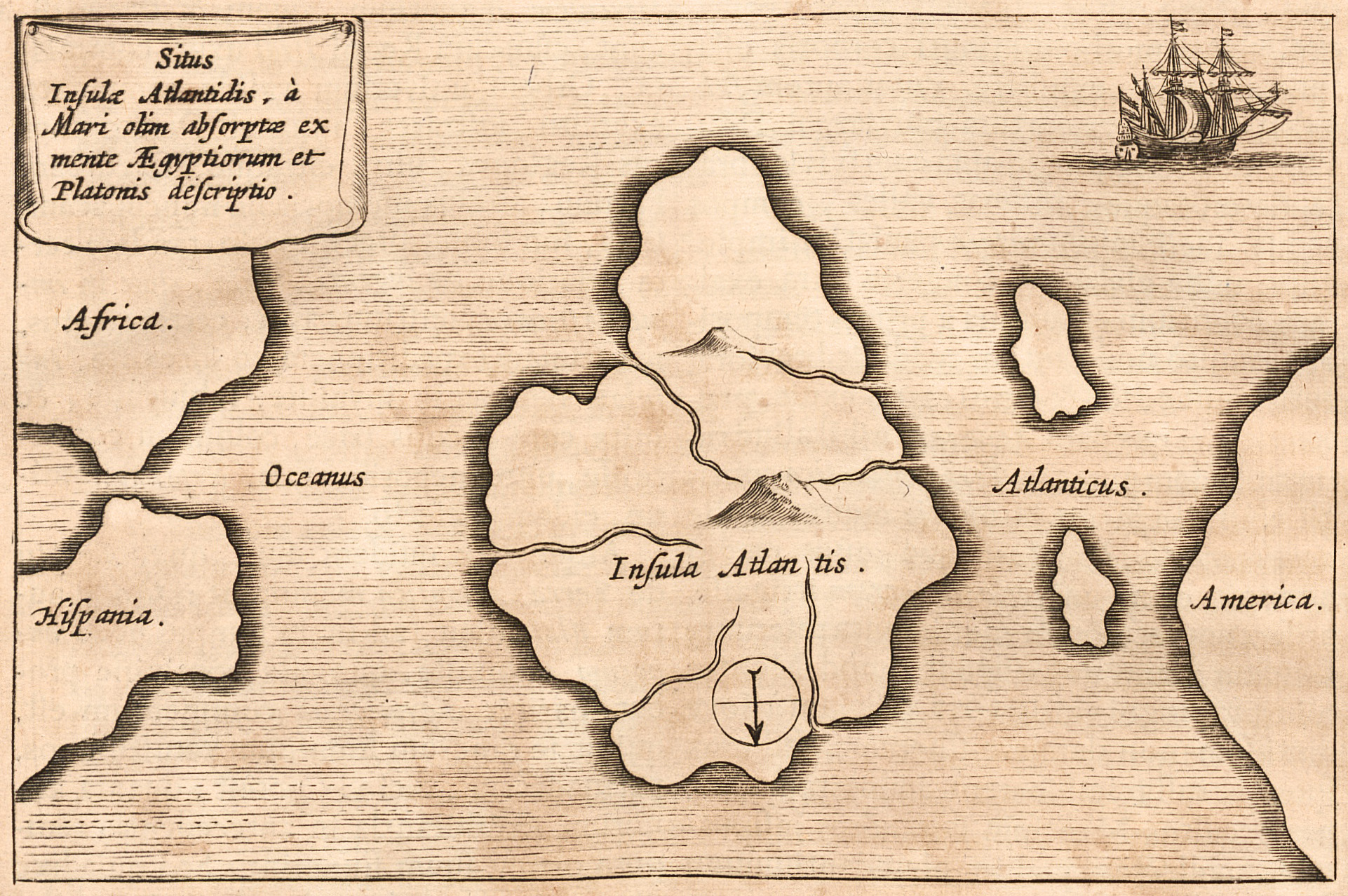
Myth, Metaphor, or Misunderstood History Buried Beneath the Sea?
For more than two thousand years, Atlantis has hovered between legend and longing. A powerful civilization, technologically advanced, wealthy beyond measure, swallowed by the sea in a single catastrophic night. Some dismiss it as fantasy. Others search relentlessly for its ruins. The truth, as with many enduring myths, may be more complex than either side admits.
Atlantis may not be a place we lost.
It may be a story we misunderstood.
Where the story begins
The earliest and most detailed account of Atlantis comes from ancient Greek texts, where the city is described as a vast island empire that existed long before recorded history. According to the story, Atlantis was prosperous, disciplined, and powerful until arrogance and moral decay set in. The gods, displeased, destroyed it with earthquakes and floods.
Crucially, Atlantis is presented not as hearsay, but as history passed down through generations.
And that detail is where the debate begins.
Myth as moral warning
Many scholars argue Atlantis was never meant to be a literal place.
Instead, it functioned as a moral allegory. A cautionary tale about hubris, power, and the consequences of corruption. In this interpretation, Atlantis represents an ideal society that collapses when ethics fail, a mirror held up to civilizations that believe themselves invincible.
Seen this way, the destruction of Atlantis is symbolic, not geological.
But symbols often draw from reality.
A memory of catastrophe
Another theory suggests Atlantis may be a cultural memory of real disasters experienced by ancient civilizations.
The ancient world witnessed massive earthquakes, tsunamis, and volcanic eruptions. One of the most dramatic was the eruption of Thera, modern-day Santorini, around 1600 BCE. This explosion devastated nearby islands, triggered tsunamis, and severely weakened the Minoan civilization, one of the most advanced societies of its time.
Cities were buried. Coastlines reshaped. Entire populations displaced.
To survivors, it would have felt like a world ending overnight.
Over centuries, such trauma could evolve into legend.
Lost lands beneath the sea
Rising sea levels at the end of the last Ice Age submerged vast areas once inhabited by humans. Entire coastlines disappeared. Settlements were swallowed as oceans reclaimed land.
Modern underwater archaeology continues to discover submerged structures, roads, and ports in places once thought empty. These finds don’t confirm Atlantis, but they challenge the assumption that ancient people never built sophisticated coastal cities now underwater.
History, it turns out, is more fragile than textbooks suggest.
Why no definitive proof exists
Despite countless expeditions, no conclusive evidence of Atlantis has been found. No city matching the exact description. No inscriptions naming it. No ruins that clearly align with the legend.
But absence of proof is not proof of absence.
Ancient cities have been lost before. Some were rediscovered only by chance. Others may never be found, eroded, buried, or fragmented beyond recognition.
The ocean keeps secrets well.
Why Atlantis refuses to disappear
Atlantis endures because it speaks to something universal.
The fear that advanced civilizations can fall.
The idea that progress without wisdom leads to collapse.
The suspicion that history forgets more than it remembers.
Atlantis survives not because of certainty, but because of relevance.
Every era sees itself reflected in the story.
Misunderstood, not imaginary
It’s possible Atlantis was not a single city, but a composite memory. A blending of real places, disasters, and moral lessons into one powerful narrative.
In that sense, Atlantis may be both myth and history. Not a map location waiting to be pinned, but a warning encoded in story form.
The lost city may not be buried beneath the sea.
It may be buried in how we choose to interpret the past.
What really happened to Atlantis?
Perhaps it wasn’t destroyed in one night.
Perhaps it never existed as one place.
Or perhaps it existed long enough to leave an echo, not ruins.
And echoes, unlike stones, can survive forever.