A visual and cultural journey through elegance, influence, and how glamour became a form of authority rather than decoration
Glamour was once something to admire from a distance. It shimmered on cinema screens, floated down grand staircases, and belonged to women framed by soft light and scripted mystery. Today, glamour has stepped out of the spotlight and into the room. It no longer exists to be watched. It exists to be felt.
The evolution of glamour is not just a fashion story. It is a shift in power.
Old Hollywood Glamour: Elegance as Illusion
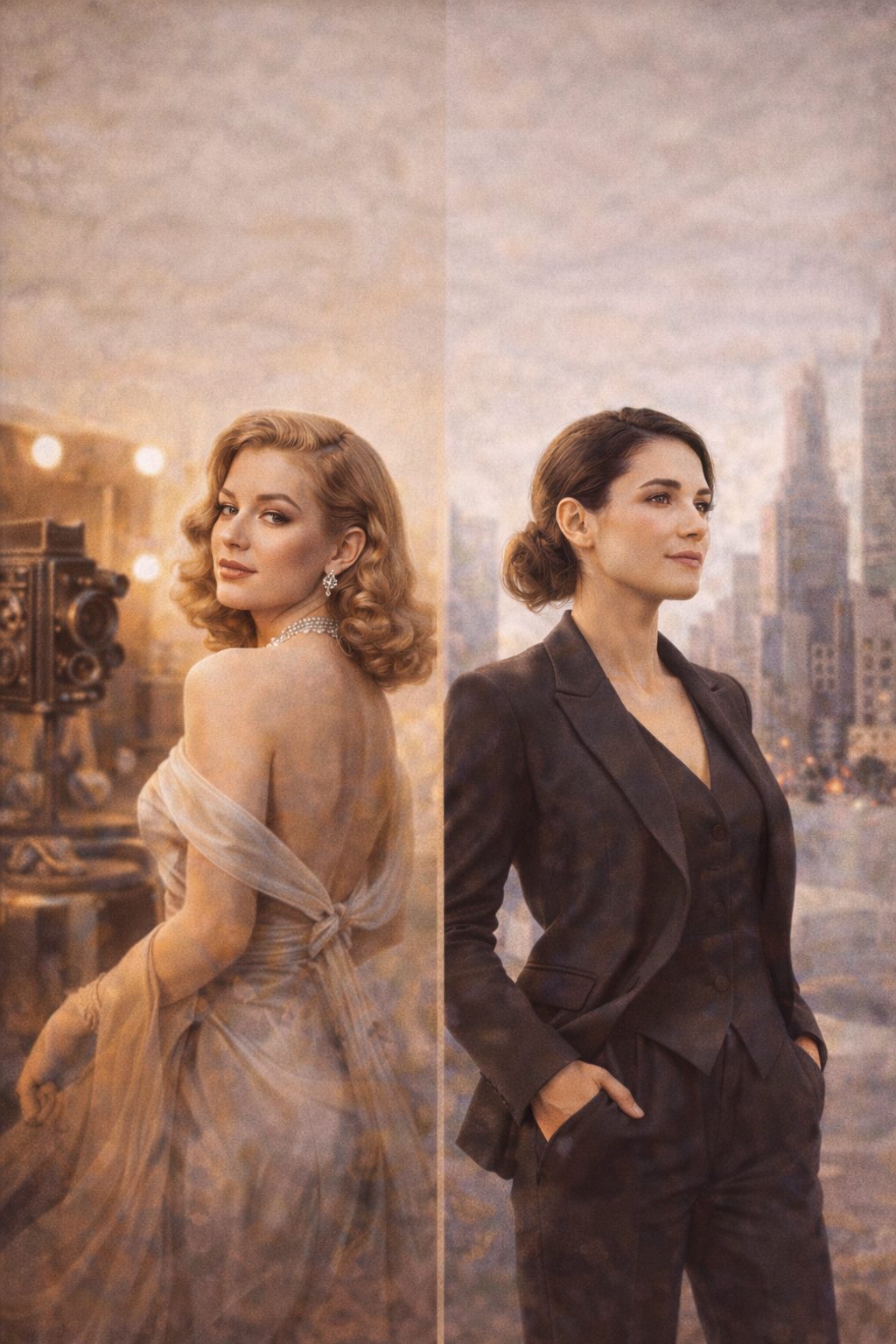
In the golden age of cinema, glamour was carefully constructed. It was lighting, posture, costume, and control. Women were styled to appear untouchable, almost unreal. Satin gowns, sculpted waves, red lips, and perfectly angled glances created an image of beauty that felt elevated above ordinary life.
This glamour was aspirational but distant. It asked to be admired, not questioned. Authority belonged to the studio system, the camera, the narrative. Glamour was decoration, designed to enchant rather than empower.
Yet even then, something deeper existed beneath the polish. Glamour suggested presence. It hinted at influence, even if that influence was constrained.
The Shift: When Glamour Left the Screen
As society changed, so did the meaning of glamour. The rigid fantasy began to crack. Women stepped into public life differently, and elegance followed them.
The polished excess of gowns gave way to sharper silhouettes. Glamour began to simplify. Less sparkle. More intention. Clothing stopped whispering “look at me” and started saying “listen to me.”
This transition marked an important moment. Glamour was no longer about being styled by others. It became about self-definition.
Modern Power Dressing: Glamour as Authority
Today’s glamour is rooted in confidence and clarity. It appears in tailored suits, clean lines, monochrome palettes, and deliberate restraint. The modern glamorous woman does not dress to impress. She dresses to command space.
Power dressing is not about masculinity or softness. It is about structure. Fit. Precision. A well-cut jacket, an intentional heel, or a minimalist dress can communicate control more effectively than embellishment ever could.
This form of glamour does not ask permission. It signals readiness, competence, and self-trust.
The Visual Language of Modern Glamour
Modern glamour favors quality over excess. Fabric matters. Movement matters. How something fits the body matters more than how loudly it announces itself.
Hair is freer. Makeup is intentional rather than heavy. Accessories are chosen, not stacked. The overall message is coherence.
Glamour now speaks in understatement. And understatement is powerful.
Glamour as Presence, Not Performance
Perhaps the most important evolution is internal. Glamour is no longer something you put on. It is something you carry.
Presence, posture, eye contact, and calm confidence define modern elegance. Authority comes from ease. The ability to enter a room without rushing, without apologizing, without shrinking.
This kind of glamour cannot be copied. It is cultivated.
From Decoration to Declaration
Old Hollywood glamour decorated women. Modern glamour declares who they are.
It reflects independence, agency, and influence. It aligns with leadership rather than fantasy. It exists in boardrooms, creative spaces, cultural movements, and everyday moments where women choose how they show up.
Glamour today is not about being seen. It is about being recognized.
In its evolution, glamour has lost none of its beauty. It has simply gained meaning.
And meaning, in the modern world, is the most powerful form of elegance there is.


