

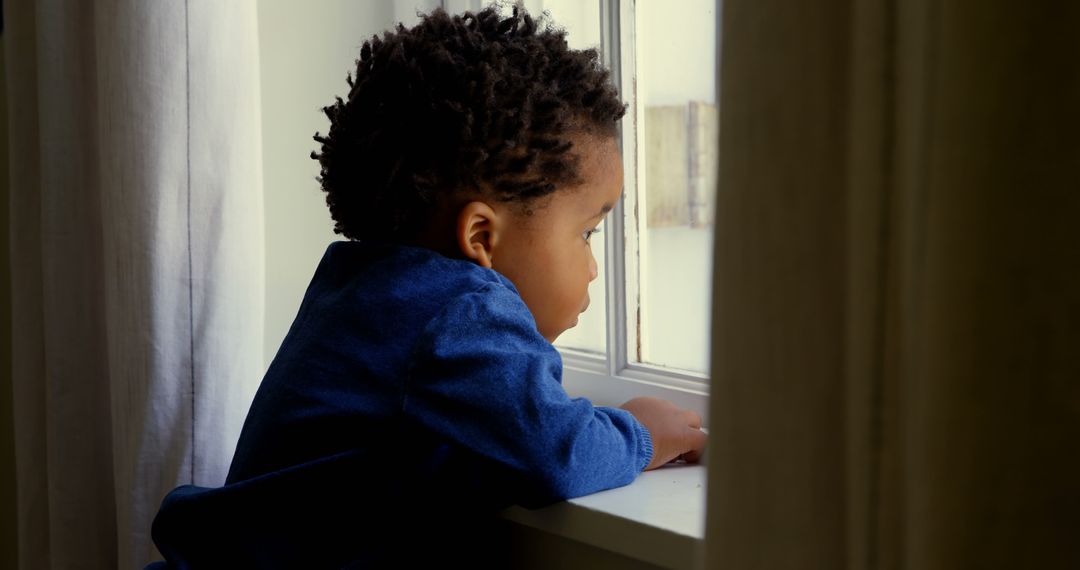
Children see the world before it hardens into rules.
They speak to empty corners, wave at nothing, and describe people adults cannot see. Most of the time, parents smile and call it imagination. But there are moments when a child says something so specific, so detailed, that imagination no longer feels like a safe explanation.
That is when fear enters the room.
Children who report seeing ghosts often do so calmly. They are not screaming. They are not hysterical. They speak with certainty, as if describing something obvious. That calmness is what unsettles adults the most.
One of the most common terrifying patterns is recognition.
A child points to a corner and says, “The man who lives here doesn’t like when you sit there.”
A child waves at an empty staircase and says, “She comes every night.”
A child asks, “Why is the lady in white crying again?”
Parents search for hidden cues. Old photos. Stories overheard. Television exposure. Often, there is none.
In some documented cases, children describe people who once lived or died in the home, using details the family did not know.
There are accounts of children naming former occupants, describing clothing from another era, or pointing out rooms where deaths occurred long before the family moved in. Parents later confirm these details through neighbors or property records, long after the child first mentioned them.
What terrifies parents is not the possibility of ghosts.
It is the accuracy.
Another deeply disturbing pattern involves routine.
Some children insist a presence appears at the same time every night. Always by the door. Always near the bed. Always watching. The child is not afraid. The adults are. Especially when the child becomes irritated that the adults cannot see what is “clearly there.”
Parents describe children adjusting behavior around these unseen figures. Saving toys for them. Avoiding certain rooms. Whispering apologies to empty air. Sleeping in specific positions “so they don’t get upset.”
In rare cases, children describe events before they happen.
A child says someone is angry. The next day, an unexplained object breaks.
A child says someone does not want visitors. A guest suddenly feels ill or panicked.
A child says someone is standing behind a parent, prompting the parent to turn around instinctively.
These moments create visceral fear because they bypass belief. The body reacts before the mind can dismiss.
Medical explanations often focus on developmental psychology. Children between certain ages have porous boundaries between imagination and perception. Their brains are still learning how to categorize experience. This explains many cases.
But it does not explain why these experiences often stop abruptly.
Many children who “see ghosts” stop talking about them entirely by age six or seven. Not gradually. Suddenly. As if a door closed. When asked later, they remember nothing or dismiss it casually.
Parents do not forget.
Some report lingering emotional effects. Anxiety in certain rooms. Nightmares that began only after the child’s experiences. A sense of being watched that never fully leaves. Even after moving homes.
Across cultures, there is an old belief that children are closer to thresholds. Between life and memory. Between perception and filtering. Ancient traditions warned adults to listen carefully when children spoke of unseen visitors, not because children were special, but because they were untrained.
Modern life teaches children quickly what not to see.
Whether these experiences are psychological, neurological, or something else entirely remains unresolved. But what unites the most terrifying cases is this.
The children were not afraid.
The adults were.
Because whatever the child described did not feel playful, random, or invented. It felt like something already there, patiently waiting to be noticed.
And once noticed, impossible to forget.