

History often presents itself as a parade of great men. Kings, generals, philosophers, inventors. But this version of the past is incomplete. Not because women were absent, but because their presence was inconvenient. Across centuries, women ruled empires, advanced science, shaped art, led armies, and changed ideas, only to have their names softened, sidelined, or erased altogether.
For generations, their achievements were treated as accidents, attributed to male advisors, or quietly removed from records. Yet traces remain, carved into stone, hidden in footnotes, or preserved by chance.
In ancient Egypt, one of the most successful rulers was a woman. Hatshepsut ruled for over two decades during a period of peace, trade expansion, and monumental construction. She commissioned temples, restored infrastructure, and strengthened Egypt’s economy. After her death, her images were systematically destroyed and her name removed from official records. Later rulers attempted to rewrite history as if her reign had never happened. Egypt remembered her greatness. Power tried to forget it.
In the ancient Mediterranean world, intellectual life was not exclusively male. Hypatia, a mathematician, astronomer, and philosopher in Alexandria, taught publicly and advised political leaders. Her influence threatened rising religious authorities. She was brutally murdered, and with her death, a symbol of female intellectual authority vanished. For centuries, her work was dismissed or lost, while her male contemporaries were preserved.
Women also fought, not as myths, but as commanders. Artemisia I of Caria led ships in battle during the Persian Wars and earned the respect of allies and enemies alike for her strategic brilliance. Greek historians recorded her achievements, then moved on, returning their focus to men whose failures were more comfortably heroic.
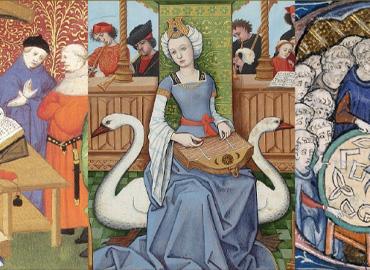
Art history tells a similar story. Countless women worked as painters, sculptors, and architects, often under the names of fathers, husbands, or studios. Their works were praised while their identities were hidden. When signatures appeared, they were questioned. When talent was undeniable, it was labeled exceptional, as if brilliance in women required explanation.
Even in science, discovery was frequently stolen through proximity. Women conducted experiments, made observations, and developed theories, only to see their work published under male names or dismissed as assistance rather than authorship. Recognition came late, if at all.
Why were these women forgotten. Because history is shaped by those who control education, archives, and storytelling. Power decides what is remembered. For centuries, acknowledging women’s authority threatened social order. It was easier to erase than to explain.
Yet erasure is never perfect. Ruins resist silence. Manuscripts survive. Letters resurface. Archaeology tells stories stone by stone. With each rediscovered name, the past grows more honest and more complex.
This recovery matters beyond fairness. When generations grow up believing women were absent from leadership, innovation, and creativity, possibility narrows. Forgotten history shapes present limitations.
Reclaiming these women does not rewrite history. It completes it. It reminds us that talent was never rare. Recognition was.
The women history tried to forget were never truly gone. They were waiting for the moment when curiosity would become courage, and the story would finally be told whole.